
24/7 Customer Support

Free returns

Same-day & Next-day Delivery

Quality Guaranteed

Unlock Your Welcome Offers: FREE Delivery | Up to 80% OFF | Free 30-day JoyPlus trial
Download the APP
Fine tip pens can make notes cleaner, illustrations more controlled and journals easier to organise. Yet choosing a suitable set is not simply a matter of picking the largest colour range. A pen designed for quick note-taking may not perform well for detailed drawing, while a marker intended for glass or wood could bleed through notebook paper.
This guide explains the practical differences between fineliner pens, fine point pens, gel pens and art markers, helping UK shoppers compare line width, ink type, tip construction and pack size before buying.
The phrase fine tip covers a wide range of nib sizes. A 0.4mm fineliner is suited to small lettering, outlines and ruler work, while a 0.5mm gel pen may create a slightly fuller line because of its ink flow. Dual-tip markers may also list a range such as 0.4mm or 0.7–2mm, depending on the nib.
Check the actual line width and tip format rather than relying on the product title alone.
Large sets can contain many shades, but they may take up more storage space and cost more than a smaller collection you will actually use. A 10- or 20-colour set may be sufficient for schoolwork, office colour coding or basic sketching. Larger sets make more sense for adult colouring, illustration and mixed-media projects where shade variation matters.
Water-based pens are generally suitable for writing, colouring and many paper projects, but thin paper can show ghosting or bleed-through. Gel ink may feel smooth and vivid but needs sufficient drying time on some surfaces. Acrylic paint pens are intended for non-porous materials as well as paper, so they require shaking, priming and secure recapping.
Always match the pen to the surface and allow for drying time, particularly when using layered colours or left-handed handwriting.
For detailed writing, technical outlines and sketching pens, look for a stated line width such as 0.4mm or 0.5mm. A metal-cased or metal-framed tip can offer better support when used with rulers and stencils, although correct pressure and storage still affect longevity.
For illustration, a set with multiple nib sizes provides more control over line weight. Pigment drawing pens may be preferable when you need a defined outline beside watercolour, but check whether the product specifies water resistance or fade resistance.
Terms such as “non-toxic” or “odourless” should not be treated as permission to use a marker on skin. Follow the product’s safety instructions and keep pens away from young children where small parts or choking hazards apply.
A triangular or textured grip can improve control during long writing or drawing sessions. Retractable gel pens avoid loose caps, while capped fineliners need to be closed promptly to reduce drying. Compact mini pens are convenient for pencil cases and travel, but their shorter barrels may feel less comfortable for extended work.
For office or classroom use, consider whether you need four practical colours, a coordinated set for colour coding or a larger supply pack.
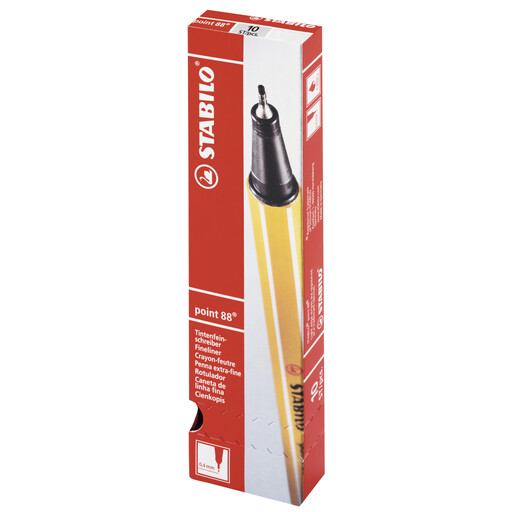
Why This Fits Their Persona: A focused pack of 10 red 0.4mm fineliners suits students, teachers and office users who need consistent colour for marking, headings or repeated project work.
The stated 0.4mm line width avoids vague fine-tip sizing, while the metal-encased tip is designed for use with rulers and stencils.
0.4mm line; metal-encased tip; suitable for writing, sketching, colouring, rulers and stencils.
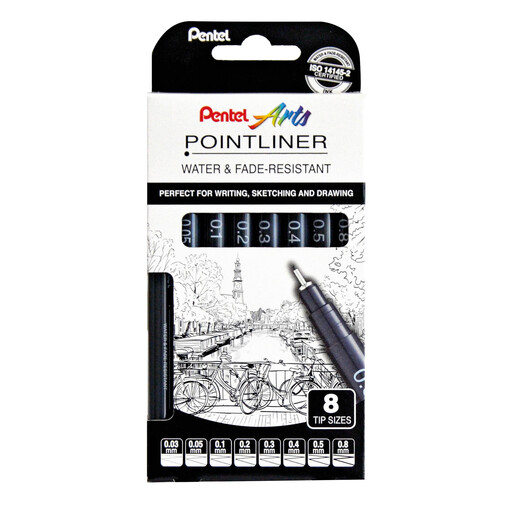
Why This Fits Their Persona: Illustrators and serious journalers can use a black drawing pen collection with multiple tip-size options for fine details, shading and heavier outlines.
The range of 11 available tip sizes makes line selection more specific than relying on a single generic fine-point description.
ISO 14145-2 certified pigment ink is specified as water- and fade-resistant; robust tips are designed to retain their shape.
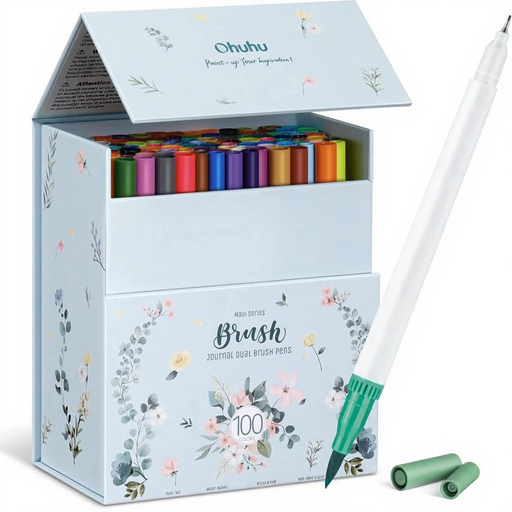
Why This Fits Their Persona: Colourists, crafters and illustrators who need broad palette coverage can use the 100-colour set for detailed fills, shading and brush-style strokes.
The set identifies both nib formats—0.4mm fineliner and 1–6mm brush—so buyers can distinguish detail work from broad coverage.
100 numbered colours; water-based ink; replacement tips and storage case included.
We have compiled a complete, real-time list of products that fully satisfy these strict selection criteria and UK safety regulations.
Some quick-drying gel pens and markers are designed to reduce smearing, but performance depends on writing speed, ink volume and paper surface. A 0.5mm retractable gel pen with quick-dry ink may be convenient for notes, while a water-based fineliner can still require care immediately after writing.
There is no fixed lifespan because usage, pressure, storage and how long the cap is left off all matter. Metal-cased tips can support consistent use, but all capped pens should be closed promptly. If a pen starts skipping, check the nib for fibres or dried ink before discarding it.
They can mark paper, but their opaque paint-style ink is generally more suited to projects where stronger coverage is wanted. For everyday notes or journaling, gel pens, fine point pens or water-based fineliners are usually easier to control and less likely to add unnecessary thickness to the page.