
24/7 全天候客户支持

免费退货

当日/次日达

品质保障

开启新人专享福利: 全场免邮 | 低至 2 折 | 免费试用 30 天 JoyPlus 会员
下载 Joybuy
Fineliner pens can look very similar online, yet the difference between a useful set and a disappointing purchase often comes down to small details. A tip that bends, ink that feathers through paper or a colour range filled with shades you never use can make an apparently affordable pack poor value.
This guide explains what to check before buying fineliner pens in the UK, whether you need them for precise writing, sketching, technical work, journalling or manga illustration.
The term fine tip covers a broad range of line widths. Some pens are designed for general writing, while others offer a more controlled line for rulers, templates and detailed illustrations. A 0.4mm fineliner pen is a practical all-round size for note-taking, outlines and light shading, but artists may also need several tip sizes for varied line weight.
A large fineliner pen set may contain many shades, but colour selection matters more than the number printed on the box. Students and journalers may prefer classic colours for coding notes, whereas illustrators may require tones suitable for layering, hatching and contrast. Fluorescent colours can be useful for emphasis, but are not always suitable for detailed artwork.
Water-based ink can perform neatly on suitable writing paper but may show through thin notebook pages. If you plan to combine pens with watercolour or wet media, look for water-resistant or waterproof fineliner pens and check the product specification carefully. “Smudge-resistant” does not necessarily mean waterproof, so avoid treating these terms as interchangeable.
Caps should also be replaced after use. Even pens with protection against drying out can lose performance if left uncapped repeatedly.
For general precision, look for a 0.4mm line width. This size is common among fineliner pens such as STABILO Point 88 and Faber-Castell fineliners. A metal-encased or metal-framed tip can be useful when working with rulers and stencils because it provides a firm edge around the fibre tip.
Artists who create varied outlines should consider a set with different nib sizes. Pentel Pointliner products, for example, are available in multiple tip sizes, allowing a drawing to move from narrow detail to heavier contours.
Water-based ink is commonly used for everyday writing pens, planning and coloured fineliner pens. Pigment ink is often selected for artwork where resistance to water or fading is important. However, performance still depends on the paper, drying time and other media used.
For manga, illustration and archival-style work, check whether the product description specifies pigmented, acid-free, pH-neutral, waterproof or fade-resistant ink. These are product characteristics rather than guarantees that every finished artwork will remain unchanged in all storage conditions.
A hexagonal barrel can help prevent rolling across a desk and may offer a familiar grip. A triangular barrel with a grip zone can support controlled writing during longer study or drawing sessions. Compact pens are convenient for pencil cases and commuting, while full-sized pens may feel more natural for extended illustration work.
Store fineliner pens capped in a cool, dry place. If the manufacturer gives a preferred storage position, follow that guidance, particularly for pigment-based art pens.
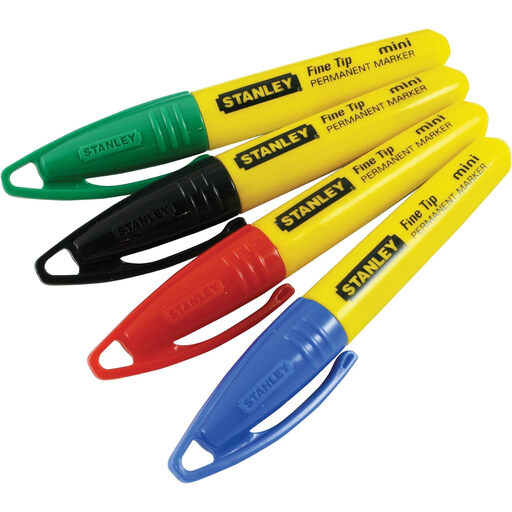
Why This Fits Their Persona: A straightforward four-colour option for students, home offices and everyday note-taking without paying for a large colour assortment.
The set clearly identifies four practical colours, avoiding a large pack where several shades may go unused. Its fine tip is intended for precise writing and drawing.
Includes black, red, green and blue; the product description specifies smooth ink flow and a lightweight design.
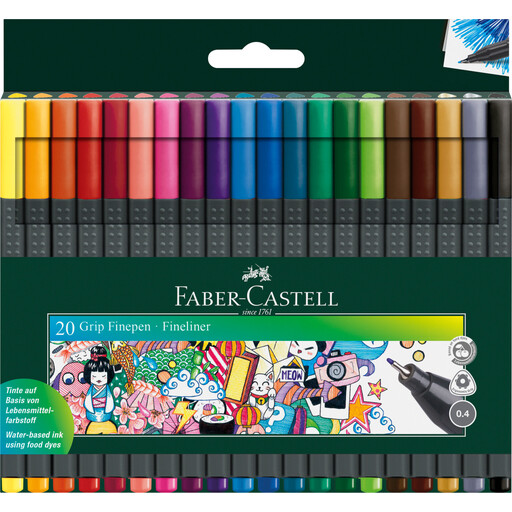
Why This Fits Their Persona: Suitable for users who value grip comfort, a broad colour range and a defined 0.4mm line for organised notes or detailed drawing.
The specified triangular barrel and grip zone address the common problem of uncomfortable handling during longer sessions. The long metal-framed tip is suited to rulers and templates.
Twenty assorted 0.4mm pens; plastic parts contain at least 56% recycled plastic according to the product information.
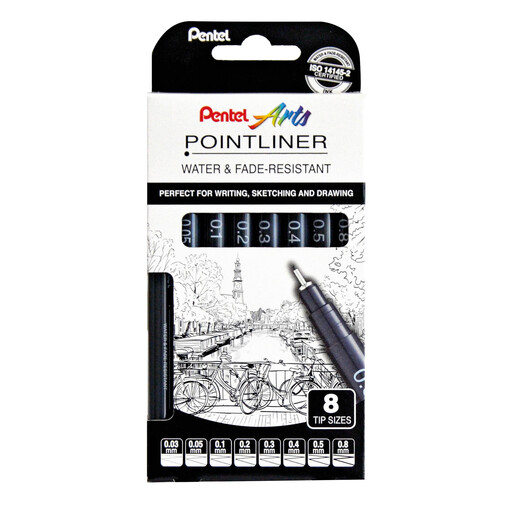
Why This Fits Their Persona: A practical choice for illustrators, designers and technical users who need black precision drawing pens across different line weights.
The range includes different tip sizes, reducing the need to force one nib to perform every drawing task. The product information specifies a robust tip designed to retain its shape.
ISO 14145-2 certified water- and fade-resistant pigment ink is specified; suitable for sketching, shading and use alongside watercolours.
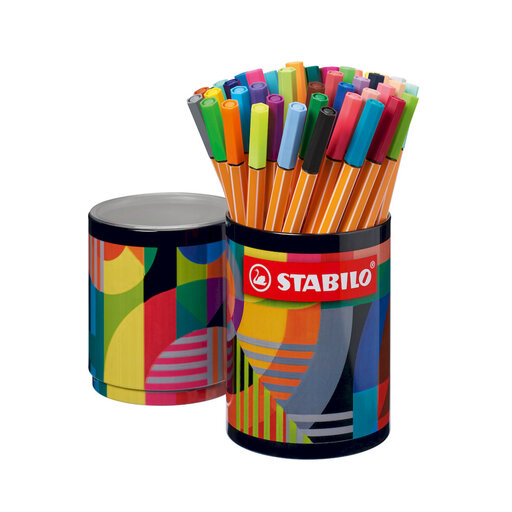
Why This Fits Their Persona: A broad colour selection for journal layouts, colour coding, doodling and creative stationery projects where variety is important.
The listed 0.4mm line width and metal-cased tip provide a clear specification instead of relying only on general “precision” wording. The tin also makes storage simpler.
Contains 45 assorted brilliant and fluorescent colours; designed for use with rulers and stencils.
We have compiled a complete, real-time list of products that fully satisfy these strict selection criteria and UK safety regulations.
Yes. A 0.4mm tip is suitable for compact handwriting, annotations, planners and detailed note-taking. Test the pen on your preferred paper first, especially if you write on both sides of thin notebooks.
Lifespan depends on writing pressure, frequency of use, paper texture and whether the cap is replaced promptly. Metal-cased tips may help with durability, but ink will still eventually run out. Keeping pens capped and stored in a cool, dry place can help maintain their performance.
Only use them with watercolour when the product information supports that application. Pigment-based, water-resistant or waterproof pens are generally more suitable for wet-media work, but allow the line to dry and test it on scrap paper first. Water-based writing pens may bleed or soften when water is applied.