
24/7 全天候客户支持

免费退货

当日/次日达

品质保障

开启新人专享福利: 全场免邮 | 低至 2 折 | 免费试用 30 天 JoyPlus 会员
下载 Joybuy
Fineliner pens can be useful for everything from precise note-taking to illustration, journaling and Manga artwork. However, choosing a pack based only on colour count or a low price can lead to disappointing results. A tip may feel too scratchy for everyday writing, ink may show through thin notebook paper, or a pen may dry out before you finish a project.
Before buying, focus on the intended surface, line width, ink type and number of pens you genuinely need. The following guide explains the key specifications and highlights suitable options for different types of UK users.
“Fine tip” is a broad description. A 0.4mm line is suitable for small handwriting, outlines and detailed colouring, while a medium felt tip creates a noticeably bolder mark. Some drawing pens also use different nib shapes or sizes within the same set.
If you need consistent precision, check the stated line width rather than relying on a product photograph. This is particularly important when using stencils, rulers or technical drawing templates.
Ink descriptions vary considerably. Water and fade-resistant pigment ink may be preferable for artwork that needs to remain legible, while water-based ink can be more suitable for everyday writing and colouring. Waterproof ink is useful when working over or alongside watercolour, but it should be clearly stated in the product information.
Do not assume that every black fineliner is suitable for wet media. Check whether the product uses pigment ink, dye ink or a waterproof formulation before adding washes or highlighters.
Large pens multipack collections can offer variety, but they may not provide good value if you mainly use black, blue or one accent colour. Conversely, a small pack can become inconvenient when you need several shades for charts, planners or creative work.
Consider your regular projects first. A pack of eight black pens may be more practical for outlining, while assorted coloured pens can suit journaling, classroom materials and decorative notes.
For detailed writing and drawing, look for a stated measurement such as 0.4mm. Smaller tips can create delicate lines, but may feel less forgiving on rough paper. A metal-encased tip can provide additional support when using a ruler or stencil.
The shape of the barrel also affects control. Hexagonal barrels can help prevent rolling across a desk and may offer a secure grip during longer writing or drawing sessions. If you switch between technical outlines and broader shading, a set with several nib varieties can reduce the need to buy separate drawing pens.
Pigment ink is made from solid colour particles and is commonly selected for resistance to water or fading, depending on the specific formulation. Dye-based ink dissolves into the liquid carrier and is often used for bright, fluid colours.
For notebooks, planners and school exercise books, check whether the ink is described as smudge-resistant or designed to reduce bleed-through. No pen can prevent show-through on every paper type, so test on a spare page if the notebook is thin.
Replace the cap securely after use and follow the stated storage guidance. Several products recommend horizontal storage to help maintain ink flow. A larger pack can be convenient for shared classrooms, offices or regular art projects, but a smaller set may be easier to organise.
Parents should also check age warnings, as pen caps and small components can present a choking hazard for young children. Keep all pens away from heat and direct sunlight unless the manufacturer states otherwise.
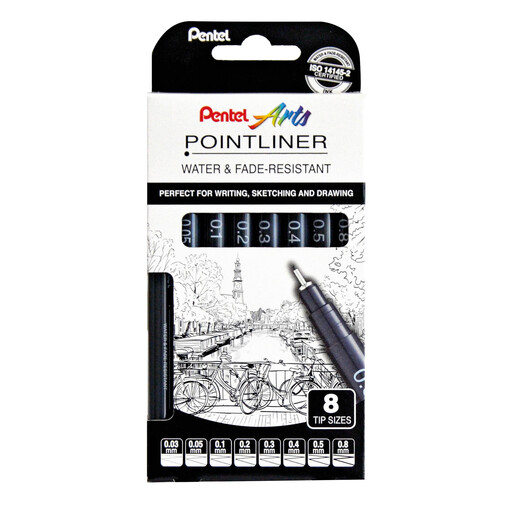
Why This Fits Their Persona: A practical starting set for students, journalers and new illustrators who mainly need black writing pens for outlines, sketches and detailed notes.
The range offers 11 tip sizes, so buyers can select a suitable line rather than treating every fine tip as identical. Its pigment ink is described as water and fade-resistant.
Eight black pens; robust tips designed to retain their shape; suitable for writing, sketching, shading and use with watercolours.
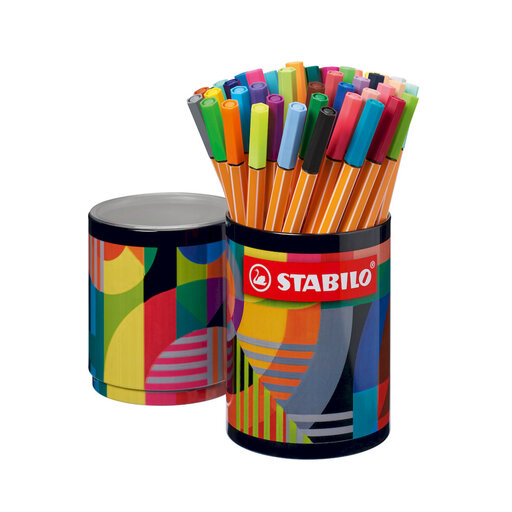
Why This Fits Their Persona: A broad colour selection for stationery enthusiasts, illustrators, teachers and households creating planners, patterns or detailed colouring projects.
The stated 0.4mm line width makes the precision level clear, while the metal-cased tip is designed for use with rulers and stencils.
Tin of 45 assorted colours, including brilliant and fluorescent shades; high protection against drying out when uncapped is stated in the product details.
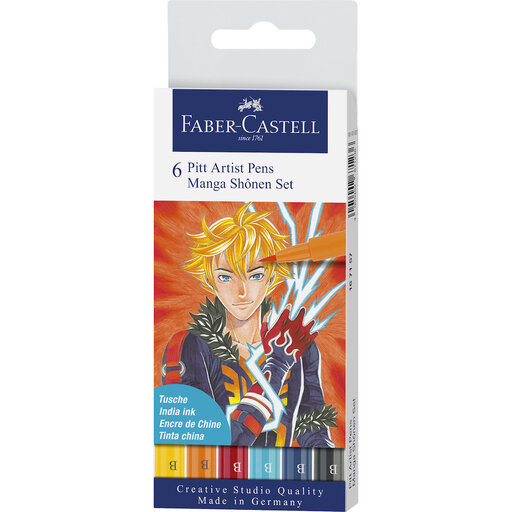
Why This Fits Their Persona: A focused set for Manga artists and illustrators who need varied nibs and waterproof pigment ink for line work and expressive marks.
The product details specifically describe the ink as pigmented, waterproof and extremely fade-resistant, rather than leaving wet-media compatibility unclear.
Six nib varieties; acid-free and pH-neutral ink is specified; designed for Manga Shônen projects and detailed illustration.
Fineliner pens are not always the right tool for every task. Ballpoint pens generally suit everyday forms, schoolwork and office writing, with the BIC Orange Fine Ballpoint Pen offering a stated 0.8mm tip and an average writing length of 3,500 metres.
For bold, colourful notes, felt tip pens such as the Paper Mate Flair range provide medium points and smudge-resistant ink. They can work well for journaling and drawing, although paper suitability should still be checked.
Teachers and office workers should choose whiteboard markers for dry-wipe boards rather than ordinary writing pens. The BIC Ecolutions Velleda 1701 uses low-odour ink, a 1.5mm line width and a blocked tip designed to resist bending under pressure.
We have compiled a complete, real-time list of products that fully satisfy these strict selection criteria and UK safety regulations.
Yes. They are commonly used for outlines, hatching, lettering and detailed colouring. Choose the line width according to the scale of your work, and select waterproof pigment ink if you plan to apply water-based media.
Lifespan depends on ink capacity, writing pressure, paper texture and whether the cap is replaced promptly. Store pens as directed, keep them capped and avoid leaving them in hot cars or direct sunlight.
The cost depends on pack size, ink formulation and intended use. Ballpoint pens can be economical for high-volume everyday writing, while fineliner pens may offer more control for detail, colour coding and creative work. Compare the number of pens with your actual usage rather than selecting solely by pack price.