
24/7 Customer Support

Free returns

Same-day & Next-day Delivery

Quality Guaranteed

Unlock Your Welcome Offers: FREE Delivery | Up to 80% OFF | Free 30-day JoyPlus trial
Download the APP
Choosing fineliner pens can seem straightforward until you compare tip sizes, ink types, colour ranges and pack quantities. A pen that works neatly for quick notes may not be suitable for illustration, colouring or bullet journalling.
As the Joybuy Product Recommendation Officer, I focus on practical differences rather than packaging claims. Here are the main buying pitfalls to avoid, followed by a selection matched to different everyday needs.
A pen may be described as having a 0.4mm or 0.5mm tip, but the visible line can vary according to the nib construction, ink flow and paper surface. A very fine point is useful for small handwriting and detailed drawing, but it may feel scratchy on rough paper.
For reliable precision, check both the stated line width and the tip design. Metal-encased fibre tips can offer additional protection when used with rulers or stencils, while softer felt tips may be more comfortable for expressive writing.
Large stationery pen sets can look good value, but unused shades may dry out before they are needed. Consider whether you need a practical four-colour set, a coordinated palette for journalling, or a larger selection for illustration and colouring.
Also check whether “assorted colours” means a genuinely broad palette or simply several variations of a few core shades.
Most fibre-tip pens and felt tip pens need their caps replaced securely after use. Leaving them open, storing them near a radiator or exposing them to direct sunlight can affect ink flow.
Retractable felt tip pens can be more convenient for desks, classrooms and travel because there is no loose cap to lose. However, the mechanism still needs to be closed fully between uses.
If your main purpose is technical drawing or illustration, look for a robust or metal-cased tip. For creative writing and journalling pens, comfort and smooth ink flow may matter more than the smallest available line.
Water-based ink is common in fineliners and coloured pens. It can produce bright lines but may show through thin notebook paper. Test a spare sheet if you use lightweight planners or Bible paper.
Pigment ink, such as the water- and fade-resistant ink listed for the Pentel Pointliner, may be more suitable for archival-style drawing and work that needs consistent contrast. Permanent markers use stronger alcohol-based ink and should be reserved for suitable surfaces and well-ventilated areas.
A four-pack is practical for schoolwork, office notes and basic labelling. Larger stationery pen sets offer more creative flexibility but take up more space. Mini pens can fit pencil cases and handbags, while a tin or carry case helps keep assorted colour pens organised.
For children, check age warnings, avoid allowing pens to be chewed and supervise products containing small parts. Always follow the safety information supplied with the product.
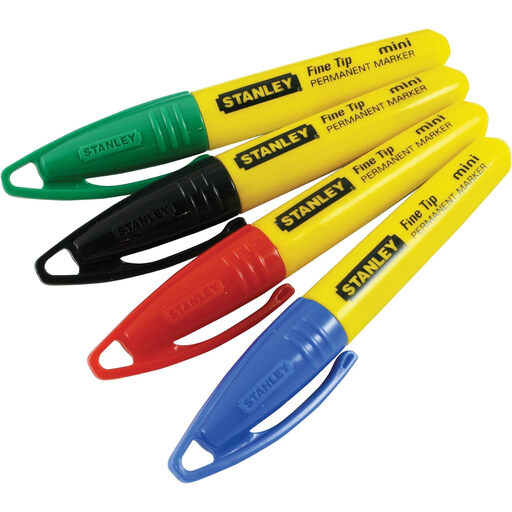
Why This Fits Their Persona: A straightforward option for students, home offices and everyday colour-coding, with black, red, green and blue included.
The four-colour format avoids paying for a large palette when core colours are sufficient for notes and marking.
Fine tips, lightweight barrels and four commonly used ink colours.
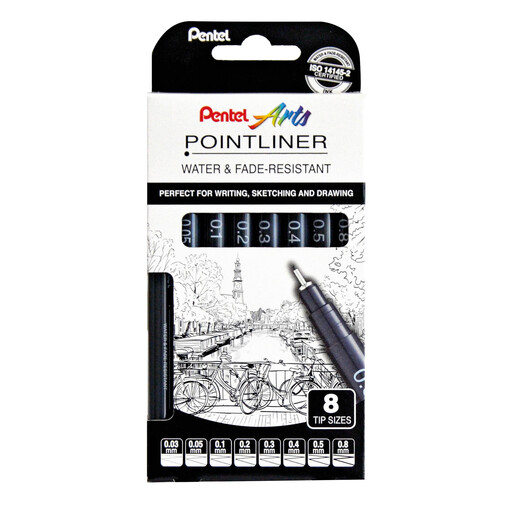
Why This Fits Their Persona: Designed for illustrators, designers and writers who want a choice of 11 tip sizes for controlled line variation.
Checking tip-size choice prevents relying on one nib for both intricate details and heavier outlines.
Black pigment ink is listed as water- and fade-resistant, with robust tips for consistent lines.
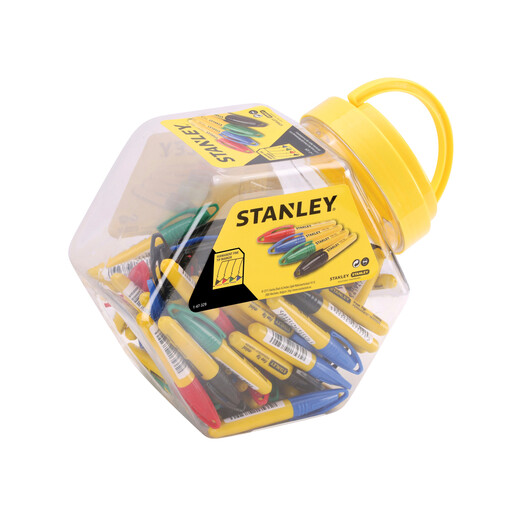
Why This Fits Their Persona: A bulk option for classrooms, offices, workshops and creative projects where pens are used frequently.
The 72-pack reduces the need to replace individual markers during larger marking or labelling tasks.
Mini fine tips, assorted core colours and quick-drying, smudge-resistant ink as listed.
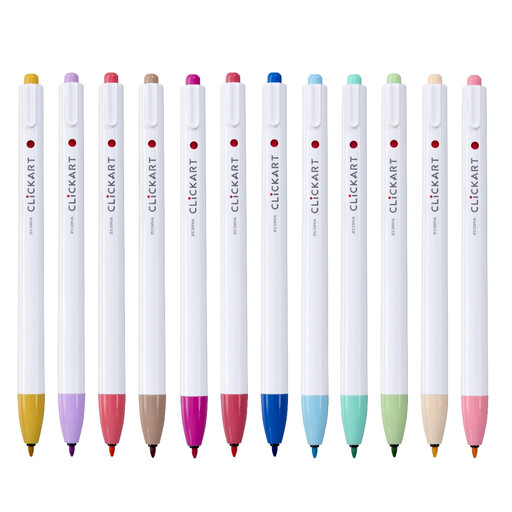
Why This Fits Their Persona: A portable choice for planners, hand lettering and note-taking, particularly when loose caps are inconvenient.
The retractable design addresses lost-cap problems; the product information also lists “Moist Keep” technology.
Twelve light shades, a 0.6mm listed line width and a compact carry case.
We have compiled a complete, real-time list of products that fully satisfy these strict selection criteria and UK safety regulations.
They can be, but ink-drying speed and paper type are important. Quick-drying or smudge-resistant formulas may reduce marks across the hand. Try writing from different angles and allow fresh ink a moment to settle, especially with gel or water-based ink.
Lifespan depends on how often they are used, writing pressure, storage and whether the cap is replaced. A pen used daily for dense notes will naturally run out sooner than one used occasionally for outlining. Large packs can be sensible for classrooms or offices, while smaller sets help reduce unused colours at home.