Runners who want pace at a glance
If you want elapsed time, distance and current pace on your wrist, a basic GPS running watch is a relevant option. Garmin lists those run-tracking functions for the Forerunner 55.


A basic GPS running watch is worth considering if seeing pace and distance on your wrist would help you train for your first 10K without checking your phone. Start with a phone app if you are happy to carry your phone; choose a GPS smartwatch if its everyday functions matter too, provided it works with your phone and its charging routine suits you. Training-plan features add value only if you intend to follow the sessions.
For a first 10K, the useful starting point is how you want to see your run information and whether you will use a training plan—not how many advanced metrics a device offers.
If you want elapsed time, distance and current pace on your wrist, a basic GPS running watch is a relevant option. Garmin lists those run-tracking functions for the Forerunner 55.
On-watch workouts are more relevant if you will follow scheduled runs or interval sessions. Garmin lists adaptive plans and suggested workouts for the Forerunner 55, while COROS describes training plans and pre-planned workouts for its running-watch range.
A GPS smartwatch can combine run tracking with calls and notifications. Check the exact phone requirement first: Apple says Watch SE 3 requires an iPhone 11 or later with iOS 27 or later.
Decide first whether you need run information on your wrist without carrying a phone. Then weigh training prompts, charging and phone compatibility against how you actually plan to run.
Choose it when: You want pace and distance on your wrist during regular runs, with optional structured sessions.
Allow for: Companion-app setup and battery figures that depend on the GPS settings you use.
Choose it when: Calls, notifications and other everyday functions matter alongside run tracking.
Allow for: Phone requirements and a charging routine suited to your use; an all-day battery figure is not a GPS-workout estimate.
Choose it when: You already carry your phone and want to record runs before committing to a dedicated watch.
Allow for: Carrying the phone and checking which route or training tools require a subscription.
| Concern | What to check | Who this matters to |
|---|---|---|
| Live pace and distance | Check which metrics appear during a run and how the device records an outdoor route. | If I want to adjust my pace without taking out a phone, I need readable distance and pace while I run. About 36% of consumers put that live information first. |
| Training structure | Check for on-watch workouts or plans you would use for a 10K, and whether they require another service. | A written plan is easier for me to follow when I can see the next session on my watch. For about 29% of consumers, structured training is the primary need. |
| Charging and wear | Compare battery estimates for the GPS mode you expect to use, then consider charging frequency and fit. | If I wear a device throughout the week, I want it ready for a run without an awkward charging routine. Keeping it charged and comfortable comes first for about 21% of consumers. |
| Phone and app fit | Confirm your phone model and operating system; check which app features need a subscription. | I would rather start with my existing phone than buy a watch that cannot sync with it or access the tools I expect. About 14% of consumers prioritise that fit. |
Pace and distance readings can vary with route and satellite conditions, so a satellite-mode label alone cannot tell you how a watch will perform where you run.
Check the seller’s change-of-mind return conditions before purchase. On familiar runs, look at readings over several outings rather than judging one unusual result.
An all-day smartwatch estimate and a dedicated watch’s GPS-mode estimate describe different use. COROS also gives different PACE 3 estimates for different satellite modes.
Compare the mode you expect to use, including any music and display settings, and plan charging around your weekly runs.
Strava lists routes, advanced analysis and custom training plans among its subscription features. A watch’s included workouts and a separate app’s tools are not necessarily the same thing.
Identify the functions you will use, then check their availability and any trial renewal terms before enabling a service.
Apple says current Watch SE 3 requires an iPhone 11 or later with iOS 27 or later. That requirement affects setup as well as the choice of watch.
Check your exact phone model and software version before purchase. If you use Android, look for documented Android support for the watch and its companion app.
The Forerunner 55 is Garmin’s entry-level dedicated GPS running-watch option.
The PACE 3 is a running-watch option for someone who expects to use planned workouts and wants to assess GPS-mode battery life.
Apple Watch SE 3 is a GPS smartwatch option for someone who wants everyday watch functions as well as run tracking.
These products span GPS smartwatches, a running-focused watch and a fitness tracker for a phone-led approach. Choose by the tracking method and phone fit you need, rather than treating them as interchangeable first-10K watches.
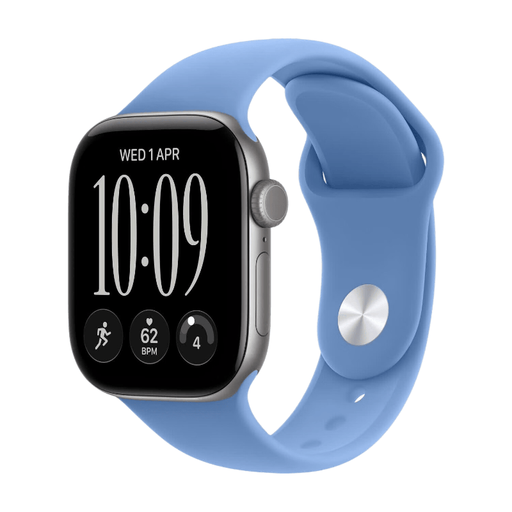 Image unavailable
Consider this smartwatch if you want a GPS model for runs as well as everyday watch functions. The listed variant has a 42mm Space Grey aluminium case and an M/L Navy Blue Sport Band.
Apple specifies iPhone 11 or later with iOS 27 or later for Watch Series 12. Check the workout displays and charging routine you want before choosing it for regular training.
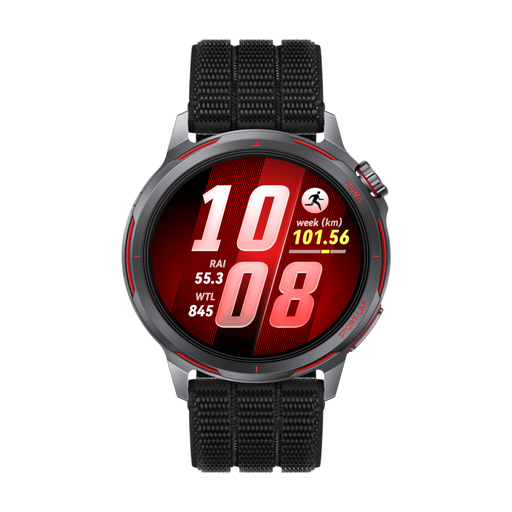 Image unavailable
This running-focused GPS watch is worth examining if you want run information on your wrist. Check how its pace, distance and route displays work for the sessions you intend to do.
If you want guided 10K workouts, confirm the exact training-plan functions before choosing this model. Check phone compatibility and battery life in your intended GPS mode too.
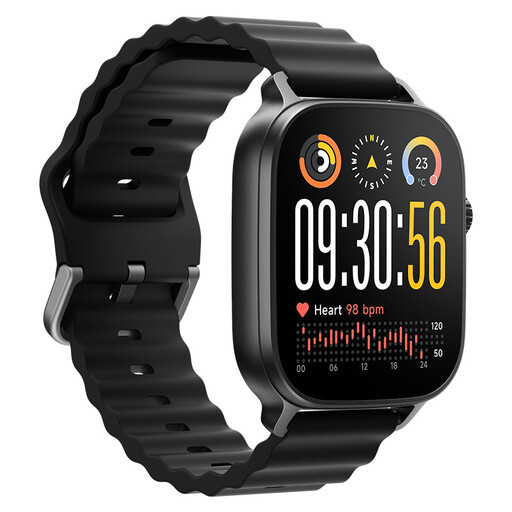 Image unavailable
This general smartwatch is an option to assess if you want GPS alongside other watch functions. Its title specifies a 1.97-inch AMOLED screen and independent 5-GNSS GPS.
Confirm that its run screens show the information you need, that its companion app works with your phone and how long it lasts during GPS workouts. Do not use the title’s general battery claim as a GPS-workout estimate.
Image unavailable
This GPS smartwatch suits consideration if you want run tracking and everyday Apple Watch functions in one device. The listed variant has a 44mm Midnight aluminium case and an S/M Midnight Sport Band.
Apple requires iPhone 11 or later with iOS 27 or later. Its up-to-18-hour all-day battery figure is not a GPS-workout estimate; check the run metrics and charging pattern you need.
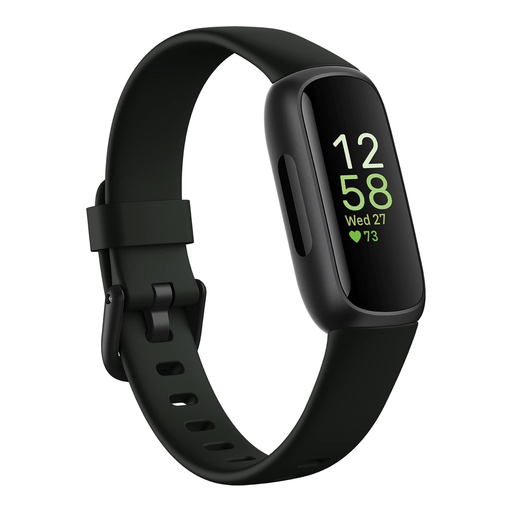 Image unavailable
Consider this fitness tracker for a phone-led approach if you are willing to carry your phone on runs rather than rely on a watch with independent GPS.
Check how route, pace and distance tracking works with your phone, whether the app is compatible and which information you can see on your wrist during a run.
No. A phone app can record basic runs, so you can start there if carrying your phone works for you. A GPS watch becomes more useful when wrist-viewable pace and distance or on-watch sessions would help you follow your training.
Compare estimates for the GPS mode you intend to use, rather than an all-day figure against a GPS-workout figure. Garmin states up to 20 hours in GPS mode for Forerunner 55; COROS states up to 38 hours in standard full-GPS mode for PACE 3. Apple’s up-to-18-hour figure for Watch SE 3 describes all-day use, so it is not a like-for-like comparison.
Check the exact watch and companion app against your phone before buying. Garmin says Garmin Connect supports most qualifying Android and Apple devices; COROS specifies iOS 13 or later or Android 5.0 or later for pairing. Apple requires iPhone 11 or later with iOS 27 or later for Watch SE 3.
No. Check the particular watch, companion app and service you plan to use. Strava lists routes, advanced training analysis and custom training plans as subscription features, while Garmin and COROS describe plan features for particular running watches. Read any trial renewal terms before subscribing.
Contact the seller and keep your order details and evidence of the fault. GOV.UK explains that the Consumer Rights Act 2015 covers remedies for faulty goods; those rights are distinct from a seller’s voluntary change-of-mind return policy.