What to consider before buying
Interchangeable-lens mirrorless
Consider it when: you want to practise with a starter zoom and may add lenses for new subjects.
Trade-off: the body is only part of the kit; lens size, compatibility and future lens choices matter too.
Compact digital camera
Consider it when: you want a single camera and do not expect to change lenses.
Trade-off: the built-in lens cannot be exchanged as your interests change, so check its range against the subjects you want to photograph.
Used DSLR or mirrorless
Consider it when: the cost of a complete learning kit is a key constraint and you are prepared to assess an individual listing.
Trade-off: the model name or cosmetic grade does not tell you everything about that particular camera’s condition or included accessories.
For a first dedicated camera, compare the whole setup you would use, not just the camera body; if video matters, add your filming and sound needs to that check.
| Concern |
What to check when buying |
Who this matters to |
| A system to learn with |
Check the body mount, included zoom and compatibility of a lens you may want for a future subject. Canon’s specified EOS R adapters cover particular EF and EF-S lenses on EOS R bodies. |
If I want to explore different subjects, I need to know which lenses could work with my chosen body. Around 27% of consumers prioritise a compatible future lens path. |
| Everyday handling |
Consider the complete camera-and-lens setup, zoom range, and whether you prefer a screen or viewfinder for framing. |
If I want a camera for family photos and days out, I care about carrying and using the whole setup. Around 27% of consumers prioritise everyday handling and family-photo use. |
| Complete-kit cost and used condition |
Compare the body and compatible lens together. For a used listing, read its individual condition notes, photographs, included accessories and warranty terms. |
If I need a usable body-and-lens kit within my spending limit, I will check what is actually included and assess the individual copy. Around 20% of consumers prioritise complete-kit cost and used-purchase considerations. |
| Video and sound |
Check the exact body’s recording mode, screen position and audio connections against how and where you plan to film. |
If I want to film myself or record speech, I need to know how I will frame the shot and connect or monitor sound. Around 20% of consumers prioritise beginner-video needs. |
| One camera, no lens changes |
Check that a compact’s built-in lens covers the scenes you want to shoot and that its controls suit the way you want to learn. |
If I do not want to choose or carry interchangeable lenses, a self-contained camera may suit my priorities. Around 6% of consumers put avoiding lens decisions first. |
Joybuy camera choices
These Joybuy listings include compact-style cameras and interchangeable-lens mirrorless kits for photography and beginner video. Compare each model’s stated features and included lens with the way you plan to shoot.
 No image available
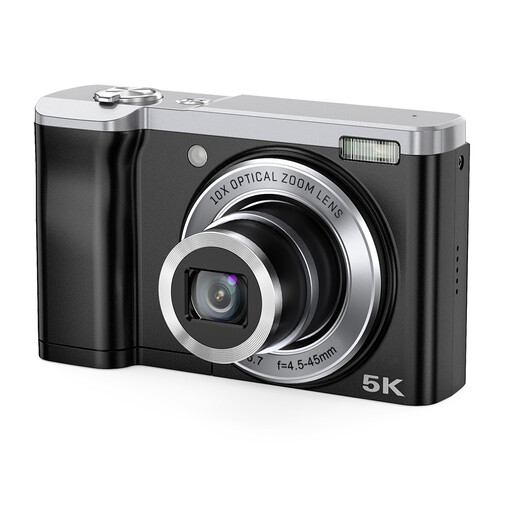
Songdian 5K Digital Camera, 56MP, Black
Consider this listing if you are looking at a digital camera with optical zoom rather than an interchangeable-lens kit.
The product name states 5K, 56MP, 10× optical zoom, and front and rear cameras.
Joybuy
 No image available
Sony A6700 APS-C Mirrorless Camera with 16–50 mm Lens
Consider this listing if you want an interchangeable-lens camera and are checking which lens is included in the bundle.
The product name identifies an APS-C mirrorless camera with a 16–50 mm lens.
Joybuy
 No image available
Sony Alpha ZV-E10 II K with 16–50 mm Power Zoom Kit Lens
Consider this kit if you are comparing an interchangeable-lens camera for photography and beginner video.
The product name states a 16–50 mm f/3.5–5.6 Power Zoom lens, 26 megapixels, 4K 60p video and 4:2:2 10-bit recording.
Joybuy
 No image available
Sony ZV-E10K Interchangeable-Lens Vlog Camera with 16–50 mm Power Zoom Lens
Consider this kit if you want an interchangeable-lens camera and are comparing a bundle that names its included zoom lens.
The product name identifies a 16–50 mm Power Zoom lens.
Joybuy
 No image available
Sony ZV-1F Compact Vlog Camera, 1-Inch Sensor
Consider this compact-camera listing if you are comparing a camera that does not name an interchangeable-lens kit.
The product name identifies a 1-inch sensor; check whether the named lens description suits the subjects you plan to photograph.
Joybuy
First-camera questions
Can I use a lens from another camera system on my first body?
Do not assume that it will fit. Check the exact lens and body mount: the Nikon D3500 uses Nikon F mount, Sony specifies E-mount for the ZV-E10 II, and Canon’s stated EF and EF-S adapter route applies to EOS R bodies. Compatibility for one lens family does not establish compatibility across unrelated mounts.
Do I need to buy another lens straight away with a mirrorless camera?
Not necessarily. The cited Canon EOS R50, Nikon Z50II and Panasonic G100D kits name a starter zoom. Check that the offer is the kit rather than a body-only listing, then practise with the included lens before deciding whether a specific subject calls for another one.
What should I check when buying a used camera?
Read the individual listing’s condition notes and included-accessory details before ordering. Check the named lens, battery and charger against the listing; MPB says its cosmetic grades do not establish which accessories are included, and its used-kit warranty covers faults during normal use rather than accidental damage or consumables such as batteries.
Does a 4K label alone tell me whether a camera suits beginner video?
No. Match the exact camera’s recording mode, screen position and audio connections to how you plan to film. Canon specifies a vari-angle screen, microphone jack and 4K 30p for the cited EOS R50 kit; Nikon lists microphone and headphone sockets on the Z50II, while the D3500 is specified for Full HD movies.
Does a used-camera seller’s warranty replace my UK consumer rights?
No. For eligible online purchases from a trader, GOV.UK says a customer can notify the trader within 14 days of receiving an item that they wish to cancel, with a further 14 days to return it. Separate rights apply to faulty or misdescribed goods; check the transaction and applicable exceptions rather than assuming the same rules apply to a private sale or an in-person change-of-mind purchase.


