What matters when choosing?
Start with the subject you most want to capture, then decide how much equipment you are willing to carry and manage.
| Concern | What to check | Who this matters to |
|---|
| Carrying convenience |
Compare the ready-to-carry camera and lens kit, or the built-in optical zoom on a fixed-lens model. |
If I want a camera for day trips and everyday moments, I need one that fits what I am willing to carry. About 25% of consumers put carrying convenience first. |
| Family photos and learning |
Check focusing options for people, available controls and the range of the supplied lens. |
For family occasions, I want to start shooting without mastering every control, while leaving room to learn. About 31% of consumers make that balance their primary concern. |
| Action and distant subjects |
Compare the exact zoom or compatible lenses, plus autofocus and burst specifications in the modes you intend to use. |
When wildlife or sport is my main subject, I need to know whether the camera setup can frame it and respond to movement. Reach and responsiveness come first for about 19% of consumers. |
| Video and sharing |
Check recording modes and restrictions, the required card speed, and app compatibility with your phone. |
If I plan to record events or make videos, I need a recording setup and a way to handle the files afterwards. About 25% of consumers prioritise video and sharing. |
Joybuy camera selections
These selections cover mirrorless lens kits for learning photography and video, a fixed-lens compact for travel, and an action-camera bundle for outdoor recording. Choose by your main subject and check each kit’s recording and accessory requirements.
 No image available
Sony Alpha ZV-E10 II K with 16-50 mm f/3.5-5.6 Power Zoom lens
Consider this mirrorless kit if you want to start with an included lens and use the camera for both stills and video.
The listed variant is APS-C, with 26 Megapixels and 4K60p video. Check the required memory-card type and speed for the recording mode you intend to use, and confirm the complete kit dimensions if carrying size matters.
View on Joybuy
 No image available
Sony ZV-E10K with 16–50mm Power Zoom lens
This interchangeable-lens kit is worth considering if you want a first lens supplied with a camera intended for personal video as well as photos.
Check whether the supplied 16–50mm lens frames your usual subjects, particularly if distant subjects are a priority. Confirm memory-card compatibility for the recording mode you plan to use.
View on Joybuy
 No image available
Sony ZV-1 II compact travel camera
Choose a fixed-lens format like this if avoiding a separate lens choice matters more than building an interchangeable-lens kit.
The listed variant has a 1-inch stacked sensor, wide-angle zoom lens, 20MP stills and 4K video. The listing describes the camera as not water-resistant; check phone-transfer compatibility and memory-card requirements if those affect your plans.
View on Joybuy
 No image available
Sony Alpha 7 III with 28–70mm zoom lens
Consider this mirrorless kit if you want an included lens and are willing to assess the complete setup rather than choosing on body size alone.
The listed camera is full-frame and comes with a 28–70mm zoom lens. Check the combined carrying weight, lens coverage for your subjects and memory-card requirements before choosing it for travel or events.
View on Joybuy
 No image available
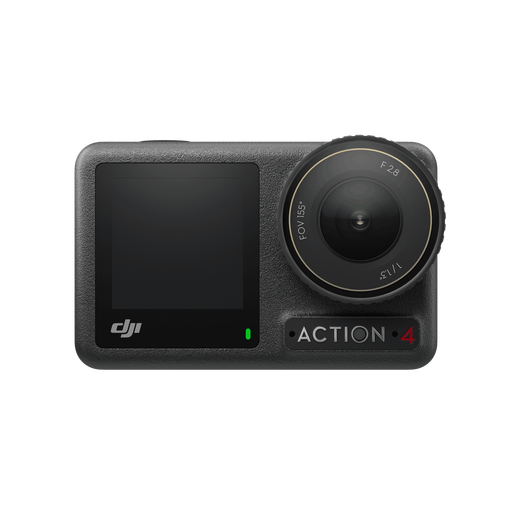
DJI Osmo Action 4 Adventure Combo
This action-camera bundle suits an outdoor-video priority more directly than a plan to learn interchangeable-lens photography.
Its listed features include waterproof construction, a 155° field of view and video up to 4K/120fps. Check the manual’s card requirements for your chosen mode and confirm the current DJI Mimo installation route and phone compatibility if you need the app.
View on Joybuy
Frequently asked questions
Should my first camera be compact, bridge, mirrorless or DSLR?
Choose by the job you expect it to do: a compact camera keeps the lens built in, a bridge camera offers a built-in zoom route, and mirrorless or DSLR kits let you change lenses. Compare the exact model’s reach, focusing, video modes and complete kit size before deciding.
Can any lens fit a mirrorless or DSLR camera?
No. Lens compatibility depends on the mount and sometimes an adapter. Canon specifies RF and RF-S compatibility for the EOS R100, with EF and EF-S lenses requiring an adapter; check the precise body, lens and supported functions for your intended combination.
Which memory card should I buy for a first camera?
Match the card format and sustained speed class to the exact camera manual and your intended shooting mode. The SD Association advises matching the card’s performance symbols to the device; a faster class is not automatically required for every mode.
Will a camera transfer photos and videos to my phone?
It can if the particular camera, app, phone and file format support the transfer method. Check current compatibility before buying for immediate sharing; Sony UK notes that RAW files may not display correctly on a phone.
Which accessories do I need at the start?
Check what the exact kit includes and whether you need a compatible memory card to begin shooting. Add another lens only if the supplied one does not cover your subjects; a spare battery, card reader or external microphone depends on how long you shoot, how you transfer files and whether you plan spoken video.


