Choose a tablet only if the person can use its configured controls for their everyday tasks and the household can support setup and account recovery. Test those routines with the intended user before choosing a screen size; if a familiar phone or computer already works better, a new tablet need not replace it.
Who this is for
Households setting up a first tablet together
You can help with accounts, updates and charging, but need a routine the intended user can follow between visits or calls. Ofcom identifies low digital confidence as a barrier to online access, while GOV.UK recognises that some people need help using online services.
People who need clearer on-screen information
Text size, magnification, contrast or spoken feedback may matter more than the display measurement. Apple, Google and Samsung document accessibility options, but the useful settings and navigation need checking on the device the person will use.
People who need easier physical handling
Holding the tablet, reaching its controls and keeping it charged are part of the choice. Ofcom has reported accessibility barriers associated with unsuitable devices; try the planned position and any stand or input accessory with the intended user.
What matters when choosing
Start with the online tasks the person wants to complete. Then compare the device’s controls, physical setup and the help available when something goes wrong.
iPad
Consider it when: The household can configure and practise accessibility controls during initial setup; Apple Support documents options available at that stage.
Allow for: VoiceOver changes touch gestures, so having the option available does not mean the person will find it easy to use.
Android tablet
Consider it when: Android’s display or navigation options fit the person’s needs and the required controls are confirmed on the exact model.
Allow for: Google says feature names and navigation can vary by device and market; Samsung also notes model-dependent availability.
Fire tablet
Consider it when: Reading or media are the main tasks and the household has checked the needed Fire OS accessibility settings.
Allow for: Amazon says VoiceView changes navigation gestures; practise how to use and turn it off.
Keep a familiar device or use support
Consider it when: A phone or computer already handles the task, or the person needs help completing an online service.
Allow for: The existing screen or input method may still be awkward; test the task rather than assuming either device is sufficient.
| Concern |
What to check |
Who this matters to |
| Setup and ongoing help |
Try unlocking and reconnecting to Wi-Fi. Agree who can help with updates and safe account recovery. |
If I can learn a few tasks but might get stuck after an update, I need someone to help me get going again. About 31% of consumers put a manageable setup and support routine first. |
| Readable content |
Adjust text, contrast or magnification on the actual device, then try the sites or apps the person needs. |
When on-screen text is hard to follow, I need to see and understand the task before I can complete it; about 25% of consumers make readability and accessibility their primary concern. |
| Physical handling |
Try the normal use position and charging routine; check that any stand, case or input accessory fits the exact model. |
If holding the tablet or tapping accurately is difficult, I need a stable way to use it. Physical handling comes first for about 25% of consumers. |
| Fit for the task |
Try the first intended tasks on an existing device and check whether the service offers another access or support route. |
If I can already use a familiar phone or need help with a complex form, I want to know whether another tablet would help at all; about 19% of consumers prioritise that decision. |
Buying pitfalls
-
Choosing by screen size alone
A larger display does not establish that text is readable, gestures are manageable or the tablet is comfortable to hold. Ofcom identifies accessibility and unsuitable devices among the barriers people can face.
Try the first intended tasks with the relevant display settings and in the position in which the person will normally use the tablet.
A stand case or alternative input accessory may add parts to set up and manage.
-
Enabling a screen reader without practising
Apple’s VoiceOver and Amazon’s VoiceView change how touch navigation works. Unfamiliar gestures can interrupt a task even when the feature meets a genuine need.
Practise basic navigation together and keep a simple reminder of how to turn the feature on and off.
-
Treating the purchase as the whole solution
A device does not by itself address confidence, connectivity or the need for help with an online service. Ofcom describes these as distinct barriers, and GOV.UK recognises a role for assisted digital support.
Plan the first tasks, a support contact, Wi-Fi access, charging and safe account recovery. Check the service’s support options when independent completion is difficult.
-
Assuming a feature works everywhere
Google says Android feature names and navigation can vary, while Samsung notes that some options depend on the model. A device setting also does not establish how well a particular site or app will work for this person.
Check the exact model, its software and the services the person intends to use before relying on a particular control.
Brands to consider
Apple
Apple Support documents iPad accessibility options that can be adjusted during initial setup, including VoiceOver, Zoom and display settings.
- Setup-time controls give a helper an opportunity to configure the device with the intended user.
- VoiceOver changes gestures; practise the chosen controls rather than assuming they will feel familiar.
Samsung
Samsung documents screen-reader and visual-adjustment options for its mobile devices alongside Android accessibility features.
- Display and navigation settings are worth testing when on-screen information is difficult to use.
- Samsung says availability can vary by model specification; check the exact Galaxy tablet and its software.
Amazon
Amazon documents Fire tablet settings including VoiceView and other display-related accessibility controls.
- These controls can be considered when checking a Fire tablet for reading or media tasks.
- Amazon says accessibility features can change device behaviour, including navigation gestures; demonstrate the chosen settings first.
Tablet selections on Joybuy
These tablets offer different starting points for a household-supported setup. Compare their listed configurations, then test the controls and everyday tasks that matter to the intended user.
 No image available
Apple 11-inch iPad Air (2026, M4) Wi-Fi 128GB, Starlight
Consider this iPad if someone can help configure and practise Apple’s documented setup-time accessibility controls. The listed model has an 11-inch display and Wi-Fi connectivity; try its text settings, gestures and normal use position with the intended user. If an external keyboard matters, confirm compatibility and what is included.
View on Joybuy
 No image available
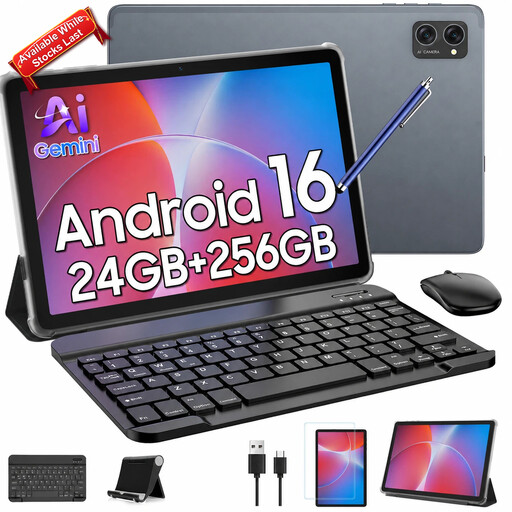
TABWEE T20 10.1-inch tablet with keyboard, mouse and stylus
Consider the listed input accessories if touchscreen typing is the main obstacle, but check whether the person can manage the extra parts. The product name specifies a 10.1-inch display and 256 GB ROM. Confirm the supplied Android version, bundle contents and required accessibility controls before choosing this configuration.
View on Joybuy
 No image available
HONOR Pad X9a 11.45-inch Wi-Fi 128GB, Grey
This is a tablet to assess for tasks the person will do where Wi-Fi is available. Its listed display is 11.45 inches; screen size alone does not settle readability or handling. Try the needed display and navigation controls on the exact model.
View on Joybuy
 No image available
Xiaomi Pad 8 8G RAM 128GB Wi-Fi, Gray
Consider this Wi-Fi tablet alongside the person’s intended browsing or communication tasks. Compare how it feels in the planned use position, and check the exact model’s accessibility controls before relying on them. If a stylus is part of the plan, confirm compatibility and whether one is included.
View on Joybuy
Common questions
Should a tablet replace a phone or laptop the person already uses?
Not if the familiar device handles their tasks more comfortably. Try the intended service on it first: the NHS says its services can be used on a phone, tablet or computer, including through its website.
Which controls should we try before choosing a tablet?
Try the text and display settings, magnification, any needed spoken feedback, and the gestures used to navigate. Check external input if touchscreen typing is difficult. Google says Android feature names and navigation can vary by device and market, and Samsung notes model-dependent availability for some controls.
How can I help with someone’s first online task?
Work through the task together and, where possible, let the person enter their own information. GOV.UK recommends this approach in its assisted digital guidance; also agree how they can ask for help with the task later.


