
24/7 Customer Support

Free returns

Same-day & Next-day Delivery

Quality Guaranteed

Unlock Your Welcome Offers: FREE Delivery | Up to 80% OFF | Free 30-day JoyPlus trial
Download the APP
Choosing fish cat food can seem straightforward until you compare ingredient lists, feeding instructions and pack sizes. A tuna pouch may be a complete meal, a treat or a complementary topper, while a “senior” recipe may be unsuitable for a younger cat. Packaging can also make a small quantity appear better value than it is.
This guide explains the main buying traps, the specifications worth checking and several suitable options for different UK households.
A product labelled tuna or salmon may contain only a stated percentage of that fish in the chunks. For example, several fish-selection pouches list 4% of the named fish in the chunk, alongside meat and animal derivatives. This does not automatically make the food unsuitable, but it is important to distinguish the flavour name from the full composition.
If you want a more clearly stated fish recipe, Encore Tuna Fillet in Broth lists 75% tuna fillet, while Encore Tuna Fillet with Salmon in Broth lists 70% tuna fillet and 5% salmon. Both are described as complementary foods, so they should not replace a nutritionally complete diet.
Grain-free cat food simply excludes ingredients such as wheat, maize or rice. It does not, on its own, confirm that the recipe is nutritionally complete, lower in calories or appropriate for a sensitive digestive system.
Check the statutory description and feeding instructions. A complete and balanced cat food should be labelled as a complete pet food for the relevant life stage. Lily’s Kitchen Tuna with Salmon Shredded Fillets, for instance, is labelled as a complementary pet food in the supplied product information, despite its grain-free recipe.
A large cat food multipack may reduce the cost per pouch, but only if your cat enjoys the flavours and eats the recommended amount before the product reaches its storage limit. Conversely, single-serve pouches and trays can help reduce waste in smaller households.
Age also matters. Adult cat food, senior cat food and kitten recipes are not interchangeable. The supplied Whiskas 7+ Fish Favourites is designed for cats aged seven and above, while Whiskas 11+ Fish Favourites is intended for cats aged 11 and above.
This is the first filter. Choose complete and balanced cat food for the main diet unless your vet has advised another feeding plan. Complementary wet foods, broths and fish treats can add variety, but they need to be served alongside a complete food.
For example:
Always check the current packaging, as formulations and statutory wording can change.
Wet fish cat food commonly contains around 79–86% moisture in the listed products. Jelly, broth and gravy can make meals appealing and contribute water through food, but fresh drinking water should still be available.
Dry fish cat food is much lower in moisture. Harringtons Dry Cat Food Salmon contains a stated 10% moisture and provides 365 kcal per 100g. Its feeding amount must therefore be measured carefully, especially for indoor or less active cats. Keep dry food sealed in a cool, dry place to preserve texture.
Look for the intended age range, protein and fat percentages, feeding guidance and any known allergens. A senior formula may have different nutritional priorities from adult cat food. Do not select a product solely because it contains tuna or salmon.
For cats with diagnosed medical conditions, persistent digestive problems or suspected allergies, ask a veterinary professional before changing food. Product descriptions are not a substitute for individual veterinary advice.

Why This Fits Their Persona: A 40-pouch multipack gives households a practical way to stock several fish flavours for an adult cat without buying numerous small packs.
The supplied information identifies it as 100% complete and balanced for adult cats, rather than a complementary fish treat.
Four fish varieties, 85g pouches and stated moisture of 83% make portion planning straightforward.
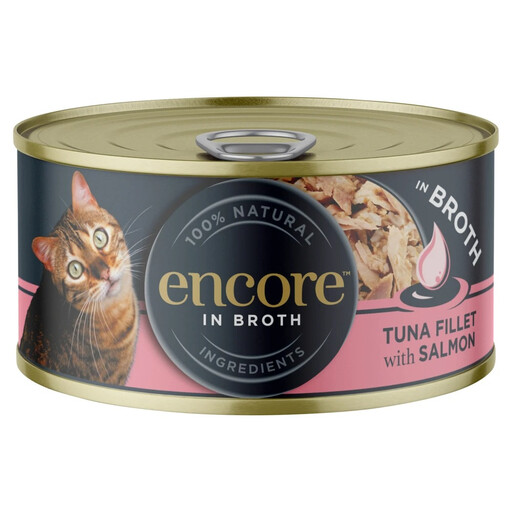
Why This Fits Their Persona: Suits owners who want visibly defined fish fillet pieces in a broth as an occasional meal addition or topper.
Its complementary status is clearly stated, helping prevent owners from treating a topper as the sole daily diet.
The composition lists 70% tuna fillet and 5% salmon, with 80% moisture and 2% crude fat.
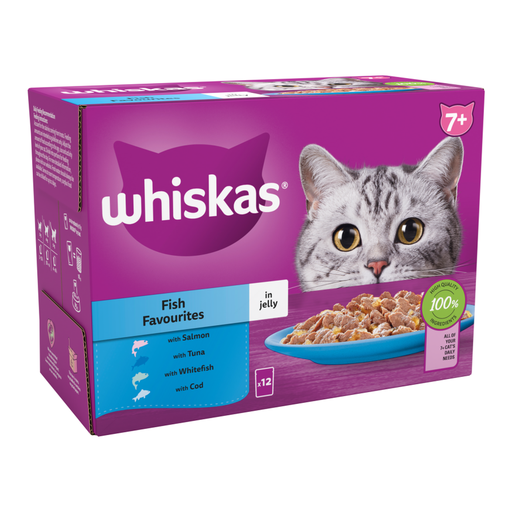
Why This Fits Their Persona: Designed for cats aged seven and above, this 12 x 85g pack offers age-specific wet food in manageable servings.
The age range is explicit, and the supplied description identifies the food as a 100% complete and balanced meal.
The jelly format contains 84.5% moisture and includes salmon, tuna, whitefish and cod flavours.
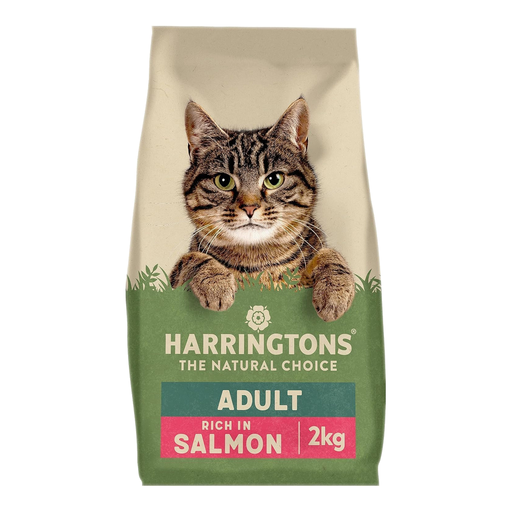
Why This Fits Their Persona: The 2kg bag is practical for regular feeding in a multi-cat home or for owners seeking a longer-lasting dry-food format.
The product information states its adult age range, feeding quantities and 10% moisture, making portion control more transparent.
The recipe lists 28% salmon meal, at least 30% crude protein and added FOS prebiotic, with no wheat, maize or soya listed.
We have compiled a complete, real-time list of products that fully satisfy these strict selection criteria and UK safety regulations.
Wet food contains substantially more moisture than dry food, so it can contribute to daily water intake. However, it does not remove the need for fresh drinking water. Choose between jelly, broth or gravy according to your cat’s preference and the recipe’s nutritional status.
A complete tuna-based cat food may be suitable as part of an adult cat’s diet when fed according to the label. Tuna fillet products labelled complementary should not be used as the sole food. Rotate flavours where practical and check the full composition rather than relying on the word “tuna” on the front of the pack.