
24/7 Customer Support

Free returns

Same-day & Next-day Delivery

Quality Guaranteed

Unlock Your Welcome Offers: FREE Delivery | Up to 80% OFF | Free 30-day JoyPlus trial
Download the APP
For many UK cat owners, the sight of their feline friend enjoying a fish-based meal is a familiar one. Whether it's the rich scent of salmon or the delicate taste of trout, fish is a firm favourite in the cat world. However, navigating the aisles—both physical and virtual—can be overwhelming. With choices ranging from crunchy biscuits to succulent chunks in jelly, how do you select the right option for your pet?
This guide is designed to help you understand the different types of fish cat food available. We will explore key factors to consider and highlight a few popular choices, from complete daily meals to occasional tasty treats, to help you make an informed decision for your cat.
Before you add to your basket, considering a few key points can ensure you're meeting your cat's needs.
The debate between wet and dry cat food is common among owners. Neither is inherently better; they simply serve different purposes.
Understanding the terminology on the packaging is crucial.
A quick scan of the ingredients can tell you a lot. Look for named fish sources, such as salmon, tuna or trout, which indicate the primary flavour. Many quality fish-based foods are also fortified with Omega 3 & 6 fatty acids, which are known to support healthy skin and a glossy coat and other essential vitamins and minerals like Taurine.
Here are a few recommendations that cater to different preferences and needs, from daily dry food to multipacks and treats.
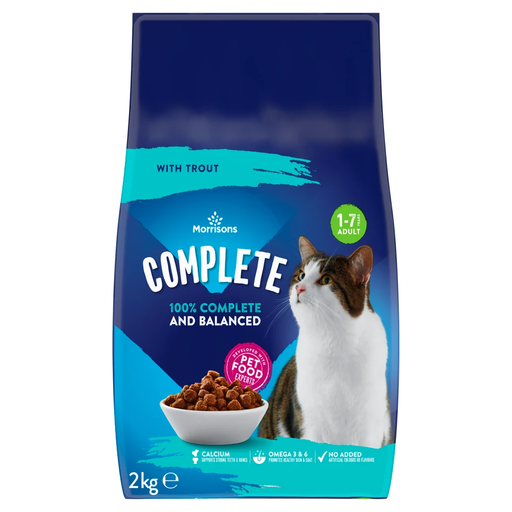
Why It Stands Out: This is a straightforward, nutritionally complete dry food that offers excellent value. Formulated with pet food experts, it provides a balanced meal with a flavour many cats enjoy. The crunchy kibble is designed to be palatable while helping to maintain dental health.
Pros:
Who is it for? This is a practical choice for owners seeking an affordable and nutritionally balanced dry cat food trout option for their adult cat.
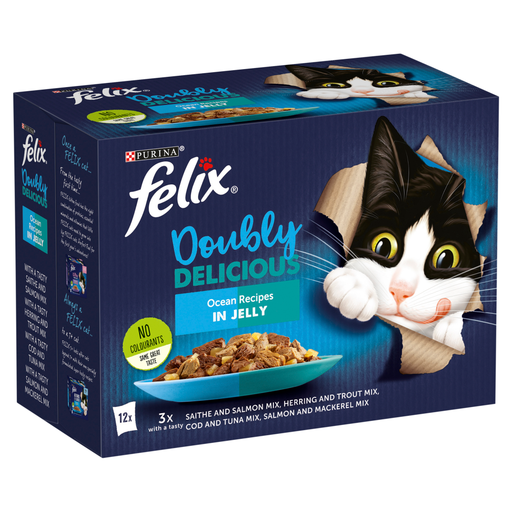
Why It Stands Out: This cat food fish multipack is designed to keep mealtimes interesting. Each pouch contains a combination of two different fish flavours, such as Saithe and Salmon or Cod and Tuna, all suspended in a tasty jelly. It provides variety and hydration in one convenient package.
Pros:
Who is it for? Ideal for owners of cats who prefer wet food or tend to get bored with single-flavour meals. It’s a great way to introduce a variety of fish into their diet.
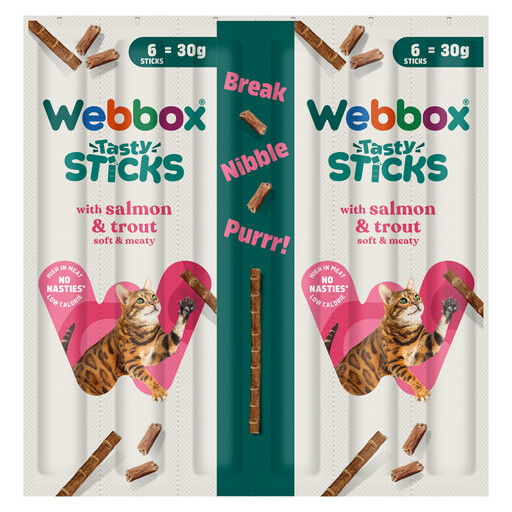
Why It Stands Out: These semi-moist sticks are a complementary treat designed for rewarding your cat. Made with salmon and trout, they have a soft texture that is easy to chew. Each stick is individually wrapped to maintain freshness, making them a convenient and high-value treat.
Pros:
Who is it for? For any cat owner looking for delicious salmon cat treats to use as a special reward. Their suitability for kittens makes them a versatile choice for multi-cat households.
If your cat has a particular fondness for trout, we have a wider selection of both wet and dry foods featuring this popular fish. Explore our full range to find their next favourite meal.
1. Is fish cat food good for cats every day? Yes, provided it is labelled as a 'complete' food. A complete fish cat food is formulated to provide all the nutrients an adult cat needs daily. While many owners like to offer a variety of proteins, a diet based on a complete fish recipe is nutritionally sound.
2. Can kittens eat fish-flavoured cat food? Kittens have specific nutritional requirements for growth, which differ from those of adult cats. Their main meals should be a food specifically formulated for kittens. While some complementary treats, like the Webbox Tasty Sticks mentioned above, are suitable for kittens, their primary diet should be kitten-specific food. Always check the product's feeding guidelines.
3. What is the difference between 'ocean fish' and a specific fish like salmon? 'Ocean fish' is a general term that typically refers to a mix of whitefish varieties. A food labelled with a specific fish, such as 'salmon' or 'trout', uses that fish as the main protein and flavour source. Both can be excellent choices, but if your cat has a known preference or you want more clarity on the ingredients, a single-source fish recipe is a good option.