Fish-and-chips fans comparing fat
If you want a familiar fish-and-chips dinner, the useful comparison is between the nutrition of complete meals or the combined portions of fish and chips—not a fish fillet against a whole meal.


Choose a complete fish-and-chips meal if you want to assess one stated portion; choose separate fish and chips if you want to compare and portion each component yourself. For a lower-fat choice, compare fat per 100g on like-for-like products, then check saturated fat, salt and the amount you will serve. A lower-fat chip product does not establish the fat content of the finished plate.
If you want a familiar fish-and-chips dinner, the useful comparison is between the nutrition of complete meals or the combined portions of fish and chips—not a fish fillet against a whole meal.
Choosing fish and chips separately lets you decide on each portion, but you need both packs to assess the finished plate.
Coated fish may contain wheat as well as fish. Check the ingredients and highlighted allergens on the pack you are buying, rather than relying on the product format.
Choose this when: You want one labelled meal and its stated portion as the starting point for your decision.
Bear in mind: Check whether it is sold frozen or chilled and suitable for freezing. The M&S Fish and Chips example is a ready-to-cook chilled product suitable for freezing.
Choose this when: You want to select the fish, chips and their portions independently.
Bear in mind: This takes two label checks; neither component’s nutrition panel describes the whole dinner on its own.
| Priority | What to check | Your needs |
|---|---|---|
| Fat and saturates | Compare total fat and saturated fat per 100g on like-for-like products, then check your portion. The NHS describes 3g fat or less per 100g as low fat; a product’s name or coating style does not establish that result. | I want the numbers on the label, rather than a lighter-sounding name, to guide my choice. |
| Whole-meal portion | Check whether the panel covers fish alone or fish with chips, and note the stated serving size. For separate products, assess the fish and chip portions together. | If I am putting dinner together from two packs, I need to account for what I will serve from both. |
| Salt | Compare salt per 100g and for the portion you intend to serve. The NHS describes 0.3g salt or less per 100g as low and more than 1.5g per 100g as high. | Salt matters to my choice alongside fat, particularly when fish and chips have separate labels. |
| Fish format | Use battered, breaded and lightly dusted to find options, then compare exact product panels. Sainsbury’s lists Young’s Chip Shop Cod Fillets at 16.2g fat per 100g oven baked; that figure covers the fish, not chips. | I may prefer a particular coating, but I do not want to mistake its name for a nutrition result. |
| Ingredients and cooking | Read the current pack for allergens, storage and appliance instructions. Sainsbury’s Young’s battered cod listing includes cod and wheat flour. | Before I buy or cook coated fish, I need to check that its ingredients and preparation directions work for my household. |
A fish-only panel leaves out the chips, so its serving figures cannot describe the full dinner.
Compare complete meals with complete meals. If buying separate packs, assess the portions of fish and chips you intend to serve.
Battered, breaded and lightly dusted describe different product formats, not fixed fat or salt values.
Use the format to narrow your options, then compare the exact packs per 100g and by intended portion.
Iceland’s pages for its Low Fat Straight Cut Chips and McCain 5% Fat Chips marked both unavailable when checked.
Confirm current availability and compare the current pack with alternatives before settling on the chip component.
Coated fish can contain wheat as well as fish, while storage and cooking directions differ between products.
Check the physical pack for highlighted allergens and follow its storage and cooking instructions.
These ranges provide different starting points for comparing a complete meal with separately sold fish and chips; individual products still need their own label checks.
M&S lists both a fish-and-chips meal and frozen breaded cod, making the distinction between a whole meal and a fish component clear.
Its frozen fish range includes battered and breaded fish, fish fingers, plain fillets and meals.
Tesco groups frozen coated fish into battered, breaded and lightly dusted categories.
Its frozen fish range includes breaded cod, battered haddock fish fingers and lightly dusted lemon sole.
Its chip listings include Iceland Low Fat Straight Cut Chips and McCain 5% Fat Chips.
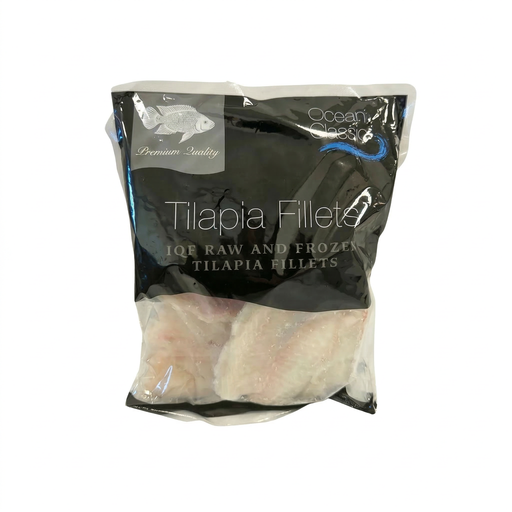
These frozen fillets are fish components for a dinner assembled with separately chosen chips. Neither listing describes a complete fish-and-chips meal; check both packs and the portions you intend to serve.
 No image available
Choose these frozen tilapia fillets if you are selecting the fish and chips separately. The title states 1kg total and 800g net; use the net quantity when planning portions, and check the current pack for nutrition, storage and cooking directions.
 No image available
These frozen, skinless boneless fillets are a separate fish component, not a complete meal. Confirm the usable fish quantity on the pack before planning portions, and check its current nutrition, storage and cooking directions alongside those for your chosen chips.
No. Check the exact product’s fat per 100g: the NHS describes 3g or less per 100g as low fat for solid foods. A cooking description or coating category does not establish the figure.
Compare fat per 100g across like-for-like products, then check saturated fat, salt and your intended serving. A complete-meal panel covers fish and chips together; with separate packs, assess both portions.
Not by themselves. The fish, chips and their serving sizes all contribute to the finished plate, so check the nutrition of both components before judging the meal.
Check the pack for fish and any other highlighted allergens. Sainsbury’s listing for Young’s battered cod includes cod and wheat flour; ingredients can differ between products, so read the label of the one you buy.
Follow the storage and appliance instructions on the exact pack, and cook the fish until piping hot throughout. Refreezing directions also vary: M&S says not to refreeze its frozen Breaded Cod after thawing.