Households serving fish fingers regularly
A larger pack is worth considering when familiar fish fingers appear often at tea time. Check how many you normally cook at once before deciding whether two large packs will be useful.


Two larger fish-finger packs make sense when they are a regular tea-time choice and you have room to keep both frozen as directed. If the second pack is less certain to be eaten, pair a familiar larger pack with a smaller fish-finger pack or a different frozen fish format; check the fish species, ingredients, cooking directions and bone warnings on each.
A larger pack is worth considering when familiar fish fingers appear often at tea time. Check how many you normally cook at once before deciding whether two large packs will be useful.
A smaller second pack leaves room to try cod, pollock or another format without committing the same freezer space to two large packs.
Fish and wheat appear in several of the fish-finger products described by Asda, Sainsbury’s and Birds Eye. If a child has a food allergy, the current ingredients and allergen information must come before pack-size decisions.
Start with the amount your household will use, then check whether the second pack adds a format the child will eat. Treat each pack’s ingredients and cooking instructions separately.
| Priority | What to check | Your needs |
|---|---|---|
| Pack size | Compare finger or fillet count with net weight. Check stated servings where available, freezer space and the date on each pack. | We serve fish fingers often enough to use a larger staple pack; for the second pack, I’d rather choose a smaller alternative than repeat a format we may not finish. |
| Fish and coating | Read the declared fish species, fish percentage and coating ingredients on the exact product. Compare fish percentages only when their declared basis is the same. | My child accepts a particular fish or coating, so two packs with different names may not be interchangeable at tea time. |
| Allergens | Check the current ingredient list and allergen declaration for each pack, including the coating. Do not use an old listing or pack image in place of the current label. | Where a child has a food allergy, I need to establish whether each product contains the relevant allergen before buying or serving it. |
| Cooking | Use the cooking method and directions for that product and appliance. Check that the food is cooked thoroughly before serving. | An oven method may fit our weekday routine, but I cannot apply one fish finger’s time to a different pack or use an air fryer without suitable directions. |
| Frozen storage | Follow each pack’s storage directions and date marking. Check for product-specific instructions about thawing or refreezing. | There needs to be room to keep both packs frozen as directed, rather than buying more than we can store or use. |
A different fish species or coating may make the second pack less useful, even when its size suits the freezer.
If acceptance is uncertain, keep one familiar staple and choose a smaller alternative. Read the fish and coating ingredients before buying two of the same format.
An uneaten pack also occupies freezer space that could hold meals the household uses regularly.
Omega-3 declarations and fish species are product-specific. An Omega 3 name does not establish that every fish-finger pack supplies the same amount or meets the NHS advice to include oily fish.
Use the exact pack’s fish species and nutrition panel. If you are planning an oily-fish meal, check that the fish chosen is oily fish rather than relying on the product name.
Products described by Asda, Sainsbury’s and Birds Eye declare fish and wheat-containing ingredients. A coating or recipe change can matter to a child with a food allergy.
Read the current ingredients and allergen warnings for every product. The NHS advises avoiding a food when you are unsure whether it contains an allergen the person must avoid.
Directions can depend on both the product and the appliance. Asda’s air-fryer directions for its cod fish fingers, for example, specify arranging them in a single layer.
Follow the selected pack’s method and check that the food is cooked thoroughly before serving; do not crowd an air fryer while relying on directions for a single layer.
These brand and retailer examples help identify pack formats and on-pack checks; they do not indicate which products are available through Joybuy.
Birds Eye has branded fish-finger packs in both larger and smaller formats.
Young’s lists fish fingers alongside chunkier and battered fish formats.
Tesco’s own-label fish fingers include pack sizes suited to different stocking patterns.
Sainsbury’s has own-label cod and Alaska pollock fish-finger formats.
Asda offers an own-label frozen cod fish-finger pack with appliance-specific directions.
M&S offers frozen fish fingers as another format to compare with a household’s familiar pack.
These Young’s four-fillet packs offer a different format for the second freezer choice, rather than another large pack of fish fingers. Decide whether fillets suit your child’s tea time before pairing one with a familiar staple.
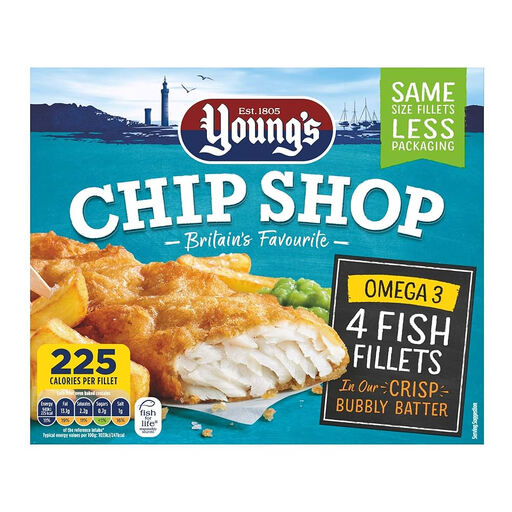 No image available
Consider this four-fillet format if a different fish meal would be more useful than a second large fish-finger pack. The pack is 400g; four fillets should not be assumed to equal four child servings. Check its current allergen information and cooking directions before serving.
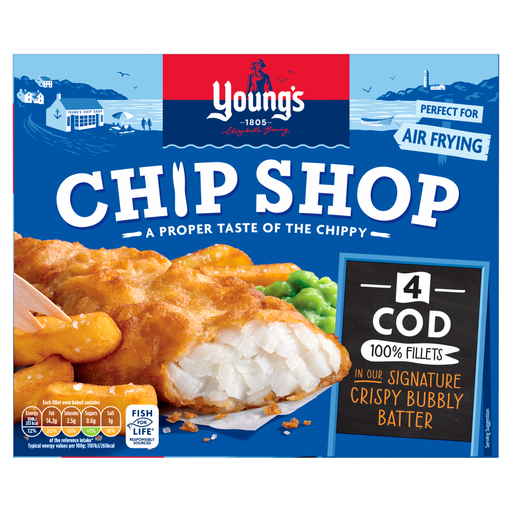 No image available
For a household that already serves cod fillets, this four-piece, 400g pack is a possible alternative to more fish fingers. Check the pack’s cooking directions, allergen declaration and bone warning before serving it to a child.
Choose two large packs if fish fingers are served regularly, both formats are likely to be eaten and you can store them frozen as directed. Otherwise, one familiar larger pack plus a smaller alternative lets you plan another kind of tea without committing the same freezer space twice.
Do not assume that an Omega 3 product name establishes this. The NHS advises including one portion of oily fish among at least two weekly fish portions; check the fish species and the individual product’s nutrient declaration when planning meals.
Use an air fryer when the selected pack gives directions suitable for that method and appliance. Asda’s directions for its Flaky Cod Fish Fingers specify 200°C for 8 minutes from frozen in a single layer; that time should not be transferred to a different product or arrangement. Check that the food is cooked thoroughly before serving.
Check the current ingredients and allergen declaration for every pack: fish and wheat appear in the Asda, Sainsbury’s and Birds Eye examples described here. If you are unsure whether a product contains an allergen the child must avoid, do not serve it. The NHS says to call 999 for a severe reaction involving breathing difficulty or sudden swelling of the lips, mouth, throat or tongue.
Follow the instruction on the exact pack. Marks & Spencer says its 10 Fish Fingers must be kept frozen at −18°C and must not be refrozen after thawing; check other products’ own storage directions rather than assuming they carry the same wording.