Parents comparing fillets and fish fingers
If you want less added coating in a toddler dinner, NHS guidance identifies white fish as a low-fat option. Compare the individual pack rather than assuming every fish finger has the same fat content.


Choose an uncoated white-fish fillet when avoiding breadcrumb coating is the priority; choose fish fingers when their format makes the meal more practical, comparing fat and salt on the exact pack. Lower fat should not be the goal for every fish meal: NHS guidance for young children also recommends including oily fish in the weekly diet. Whichever format you choose, check allergens and bones, and follow the pack’s cooking instructions.
If you want less added coating in a toddler dinner, NHS guidance identifies white fish as a low-fat option. Compare the individual pack rather than assuming every fish finger has the same fat content.
A plain white-fish fillet can suit one dinner without replacing oily fish throughout the week. NHS guidance for young children recommends at least one portion of oily fish a week.
Fish and wheat appear in the checked breaded products. Read the current allergen label, check for bones and supervise eating; the Department for Education’s early-years food-safety guidance says to remove bones from fish.
Start with the fish and coating, then compare the nutrition label and plan how you will prepare and serve it.
| Priority | What to check | Your needs |
|---|---|---|
| Fish and coating | Check the species, whether it is coated, and fat per 100g. Tesco Groceries lists 6.6g fat per 100g for its Omega 3 Fish Fingers and 11.6g for its Cod Fish Fingers; their stated cooking bases differ, so this is a pack-specific comparison. | I would rather serve an uncoated fillet, or I need the convenience of fish fingers and want to compare their labels. |
| Fish variety | Distinguish white fish from oily fish rather than using an omega-3 label as a substitute for the species name. NHS guidance for young children recommends at least one portion of oily fish a week. | Lower fat matters for this dinner, but I also want room for different types of fish across the week. |
| Salt | Read salt per 100g and consider the amount served alongside sauces and sides. NHS inform states a daily maximum of 2g salt for children aged 1 to 3; it is not a target for one meal. | I want to know how the fish and the rest of dinner contribute to the day’s salt. |
| Allergens and bones | Check the current ingredients and allergen label, then inspect the cooked fish for bones. The Department for Education advises removing bones from fish served to young children. | Before serving, I need to check that the ingredients fit the child’s allergy needs and that the fish can be prepared for supervised eating. |
The checked omega-3 fish fingers are made with Alaska pollock, a white fish. An omega-3 label also does not establish that a breaded product has less fat than another pack.
Check the species and the declared fat and salt. Keep oily fish as a separate consideration when planning the week’s meals, in line with NHS guidance for young children.
A pack’s serving figure may not match the amount served to a toddler. Salt from the fish still contributes to the child’s whole-day intake.
Compare products per 100g, then consider the portion actually served and any salty sauces or sides. NHS inform gives a daily maximum of 2g salt for children aged 1 to 3.
Breading changes what is in the product. NHS guidance notes that frying can increase fish fat content, particularly with batter.
If coating is the deciding factor, look at natural fillets first. If fish fingers suit the meal better, compare the exact pack’s ingredients, fat and cooking directions.
The checked breaded products contain fish and wheat, and Tesco Cod Fish Fingers warn that some bones may remain. A familiar shape does not remove those considerations.
Read the current label, follow its cooking instructions, remove any bones and supervise the toddler while they eat.
The Tesco-listed Birds Eye examples include cod fish fingers and an Omega 3 fish-finger product; their figures describe those products, not the whole range.
The checked Tesco own-label products offer two fish-finger labels to compare.
Young’s lists natural frozen fish fillets as well as coated fish products.
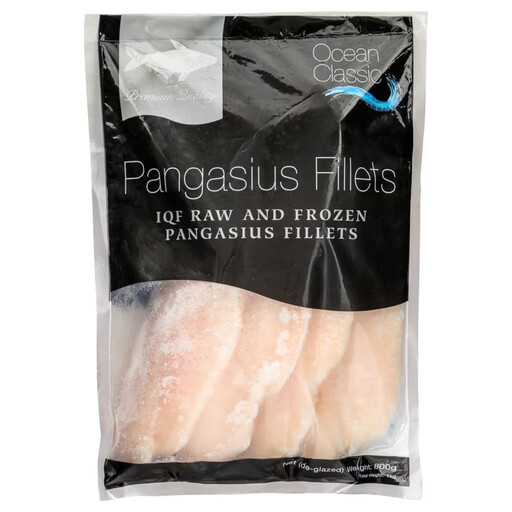
This fillet option is relevant if you are considering fish without a breadcrumb coating for a toddler dinner; use its current pack label to make the final comparison.
 No image available
Consider these fillets if you prefer that format to fish fingers for this meal. The product name specifies skinless and boneless pangasius, IQF 170/200g, with a total weight of 1kg (800g net); check the current nutrition and allergen label before choosing a portion. Allow time to thaw in the fridge as instructed, and inspect the fish for bones before serving despite the boneless description.
No. NHS guidance identifies white fish as a low-fat option but also recommends at least one portion of oily fish a week for young children. Choosing a plain white-fish fillet for one dinner need not exclude oily fish from the wider weekly menu.
Compare fat and salt per 100g, then check the stated serving and cooking basis. Tesco Groceries lists 6.6g fat per 100g for its Omega 3 Fish Fingers and 11.6g for its Cod Fish Fingers, but their stated cooking bases differ; those figures do not describe every fish finger.
It contributes to the whole day’s intake, not just the fish dinner. NHS inform states a maximum of 2g salt a day for children aged 1 to 3, so consider the amount of fish served along with sides, sauces and other meals.
No. The checked breaded products contain fish and wheat, while Tesco Cod Fish Fingers warn that some bones may remain. Check the current allergen label against the child’s needs and follow the Department for Education’s advice to remove bones from fish and supervise young children while they eat.
Follow the directions on the exact pack: the checked fish-finger products specify frozen-storage and cooking instructions, while preparation can differ by product. Check whether the pack calls for cooking from frozen or thawing first, cook as directed and follow its advice on refreezing.