
24/7 Customer Support

Free returns

Same-day & Next-day Delivery

Quality Guaranteed

Unlock Your Welcome Offers: FREE Delivery | Up to 80% OFF | Free 30-day JoyPlus trial
Download the APP
Choosing a new fishing reel can feel like navigating a maze of technical jargon and marketing promises. With so many options available, it is easy to end up with a reel that underperforms, corrodes after a few trips or simply is not suited to your style of fishing. As your Joybuy Product Recommendation Officer, my role is to help you identify the key features that matter and avoid the common pitfalls that lead to a disappointing purchase.
Before you spend your hard-earned money, let's look at two frequent traps anglers in the UK fall into:
To ensure your next reel is a reliable partner, focus on these essential specifications. Understanding them will help you match a reel to your exact needs, whether you're after a lightweight fishing reel for a day on the river or a heavy duty fishing reel for battling powerful species.
The gear ratio (e.g., 5.2:1) tells you how many times the spool rotates with a single turn of the handle. This directly impacts your retrieve speed.
The drag system applies controlled friction to the spool, allowing a hooked fish to take line without it snapping. A poor drag is jerky and unreliable, often resulting in lost fish.
The reel's frame and spool material determine its weight, rigidity and lifespan.
To help you match a reel to your angling profile, here are a few options selected for their practical features and suitability for UK conditions.
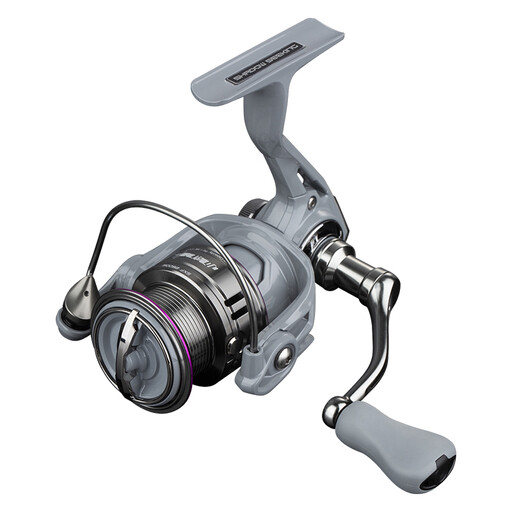
Why This Fits Their Persona: This spinning reel is an excellent all-rounder for those who enjoy lure fishing in the UK's rivers, lakes and streams. Its user-friendly design is suitable for both newcomers and experienced anglers looking for a reliable backup.
It avoids the trap of being overly specialised. As a versatile spinning reel, it handles a wide range of freshwater techniques, preventing the need to buy multiple reels when starting out.
A balanced gear ratio suitable for various lure presentations. Its construction is well-suited for freshwater environments.
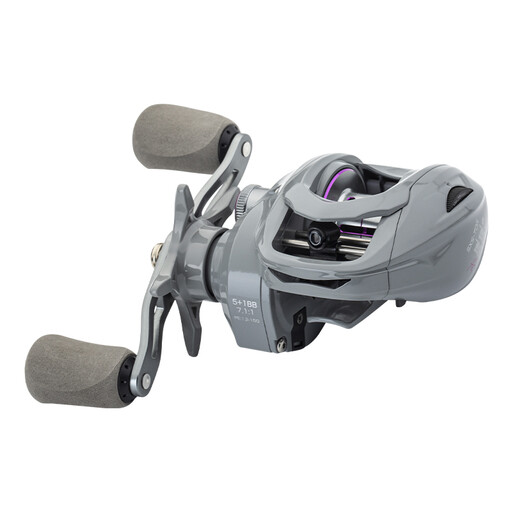
Why This Fits Their Persona: This is for the angler who spends their time on the UK coastline. A proper surf fishing reel needs to achieve maximum casting distance and withstand the harsh, corrosive saltwater environment.
It directly counters the corrosion trap with its metal aluminium body, designed for saltwater durability. The long-cast spool shape is purpose-built for distance, unlike standard freshwater spools.
Features a large-capacity, long-cast spool for superior distance. The rigid metal frame provides the strength needed for surf fishing conditions.
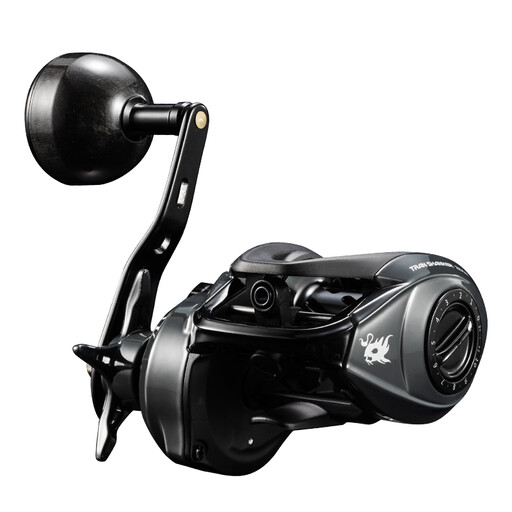
Why This Fits Their Persona: For the angler who demands accuracy when casting lures for species like pike and perch. A baitcasting reel offers superior control over casting distance and placement, and this model's light weight reduces fatigue.
This specialised casting reel avoids the frustration of using a general-purpose spinning reel for techniques that require pinpoint accuracy, preventing the backlash and poor control common with the wrong setup.
Its lightweight design makes it comfortable for a full day of repeated casting. The braking system provides the fine-tuned control needed for accurate lure presentation.
We have compiled a complete, real-time list of products that fully satisfy these strict selection criteria and UK safety regulations.
A spinning reel hangs below the rod and is generally easier for beginners to use, as it is less prone to line tangles (backlash). It is highly versatile for light lures and baits. A casting reel (or baitcasting reel) sits on top of the rod and offers greater casting accuracy and power, making it a favourite among experienced anglers for heavier lures and lines.
To maximise the life of your sea fishing reels UK, maintenance is vital. After every trip, you should:
Not necessarily. The ideal gear ratio depends entirely on your fishing technique. A high-speed retrieve is great for covering water quickly with lures, but a lower, more powerful ratio is better for fighting large fish or using baits that require a slow, methodical presentation. Choosing the right ratio for your application is more important than simply picking the highest number.