
24/7 Customer Support

Free returns

Same-day & Next-day Delivery

Quality Guaranteed

Unlock Your Welcome Offers: FREE Delivery | Up to 80% OFF | Free 30-day JoyPlus trial
Download the APP
Choosing the right fishing tackle can feel like navigating a minefield of marketing claims and technical jargon. For many UK anglers, a promising purchase can quickly lead to disappointment on the bank or at the coast. The wrong gear not only hinders your performance but can be a significant waste of money. As a Joybuy Product Recommendation Officer, my role is to help you sidestep these issues by focusing on what truly matters.
This guide cuts through the clutter, highlighting common purchasing pitfalls and breaking down the essential features you need to consider. We will look at how to match equipment to your specific angling discipline, whether you are targeting bass along the coast or carp in a quiet lake.
Before investing in new equipment, be aware of these frequent traps that catch out even experienced anglers:
To make an informed choice, focus on these key technical parameters. They are far more important than marketing buzzwords.
Understanding these three elements is crucial for matching a rod to its intended purpose.
A reel is more than just a winch; its internal mechanics dictate its performance.
Instead of a generic list, we have matched specific equipment to distinct angler profiles to help you find gear that genuinely suits your needs.
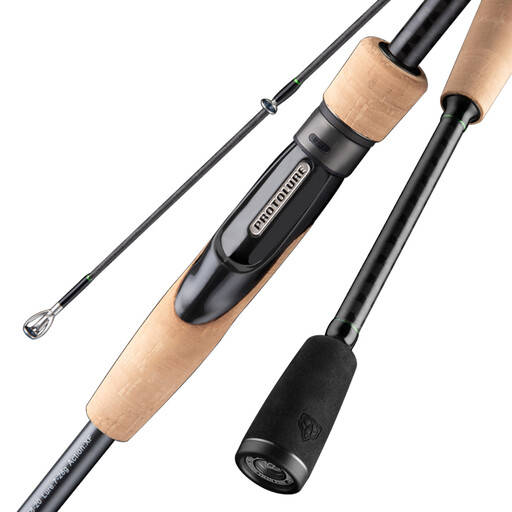
Why This Fits Their Persona: This angler needs a lightweight, responsive rod for casting lures for hours from rocky shorelines or a small boat. Sensitivity is key to detecting subtle takes from wary bass.
This is a purpose-built sea bass rod, not a generic "all-purpose" model. Its fast action and carbon construction are specifically engineered for lure fishing performance.
The high-modulus carbon blank provides excellent sensitivity for feeling lure action and bites. Its two-piece construction makes it easy to transport and store.
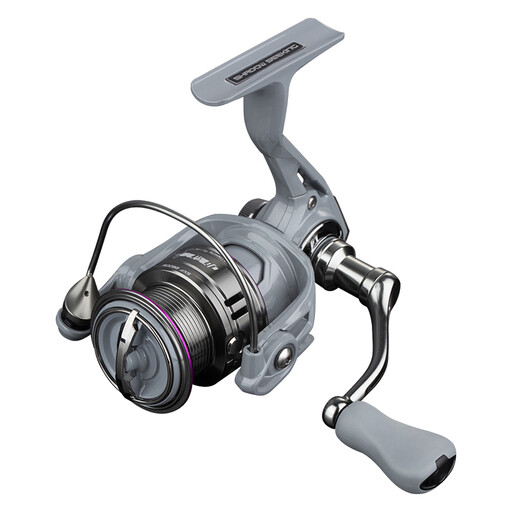
Why This Fits Their Persona: This angler targets a range of species in rivers and lakes, from perch to trout. They need a reliable and smooth spinning reel that can handle different lure types and line diameters.
By choosing a quality reel like this, you can pair it with an appropriately weighted rod, avoiding the unbalanced setup that causes fatigue and poor casting performance.
Features a smooth, micro-adjustable drag system and a balanced rotor design, which are critical for playing fish on lighter lines and ensuring consistent lure retrieval.
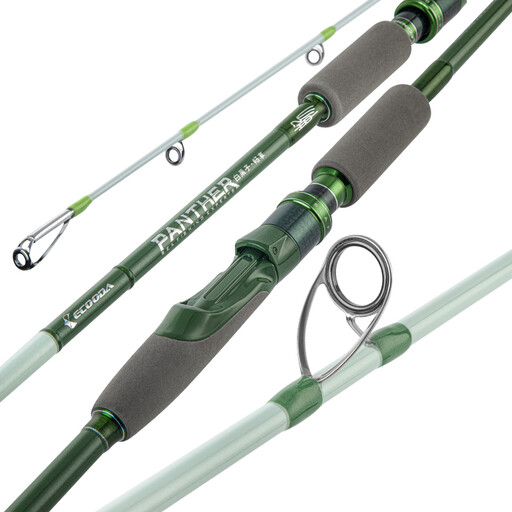
Why This Fits Their Persona: This angler requires robust and powerful gear to handle heavy jigs and fight large species like cod, pollack or even sharks from a boat. Durability and lifting power are paramount.
This is a dedicated boat fishing rod, built with the power and resilience needed for vertical fishing. It avoids the brittle carbon trap by using a composite blank designed for strength over casting finesse.
It possesses immense backbone for lifting heavy fish from the depths, paired with durable, corrosion-resistant guides and reel seat suitable for the harsh saltwater environment.
We have compiled a complete, real-time list of products that fully satisfy these strict selection criteria and UK safety regulations.
Here are answers to a few common questions UK anglers have about their gear.
A simple way to check the balance of your fishing tackle is to assemble the rod and reel and place your index finger on the rod blank just in front of the reel stem. If the outfit balances at this point, it is well-matched. If it tips significantly forward or backward, it is unbalanced, which will cause wrist strain and reduce casting efficiency during a long session.
A spinning reel is mounted underneath the rod and is generally easier for beginners to use, with less risk of line tangles (backlashes). It excels with lighter lures and lines. A baitcasting reel sits on top of the rod and offers more cranking power and casting precision, especially with heavier lines and lures. It requires more practice to master casting without creating a "bird's nest" of tangled line.
The lifespan of a fluorocarbon fishing line depends on usage. For an active angler fishing once or twice a week, it is good practice to replace the line every 3-4 months. Fluorocarbon is susceptible to nicks and abrasion from rocks and snags, which weakens it. Always check the last few feet of your line for rough patches after fishing and trim it back as needed to prevent losing a fish to a weakened line.