
24/7 Customer Support

Free returns

Same-day & Next-day Delivery

Quality Guaranteed

Unlock Your Welcome Offers: FREE Delivery | Up to 80% OFF | Free 30-day JoyPlus trial
Download the APP
Navigating the world of fitness trackers can feel like a workout in itself. With so many models available, each offering a different set of features, finding the right Fitbit fitness tracker to match your personal health goals and lifestyle can be a challenge. Are you focused on daily steps and sleep, or do you need advanced metrics for marathon training?
As the Joybuy Product Recommendation Officer, my role is to help you cut through the clutter. This guide provides a straightforward breakdown of some popular Fitbit models available in the UK, helping you understand the key differences so you can make an informed choice that supports your wellness journey.
Before diving into specific models, consider what you need from a tracker. Focusing on these key areas will help narrow down your options significantly.
First, identify what you want to track. If your goal is to increase daily movement, count steps and monitor sleep patterns, a foundational activity tracker with heart rate monitoring will serve you well. However, if you're interested in a deeper understanding of your body's responses to stress, heart health or blood oxygen saturation (SpO2), you'll want to look for models with more advanced sensors. A dedicated Fitbit sleep tracker function is standard across the range, but premium models offer more detailed analysis.
How and where you exercise matters. If you're a runner, cyclist or outdoor walker who wants to track your route and pace without carrying your phone, a Fitbit with GPS built-in is a key feature. For those who are happy to take their phone along, models with 'Connected GPS' use your phone's signal to record this data. Additionally, if your routine includes swimming, a waterproof fitness tracker is essential. Most current Fitbit devices are water-resistant to 50 metres, making them suitable for the pool or shower.
Modern trackers do more than just count steps. Many offer smartwatch-like features such as on-wrist notifications, contactless payments and music controls. Consider which of these conveniences are important to you. Generally, devices with more advanced features and brighter, always-on displays may require more frequent charging. A Fitbit comparison often comes down to balancing a rich feature set with the convenience of a longer battery life.
Here are our recommendations, selected to suit a range of different user needs and preferences.
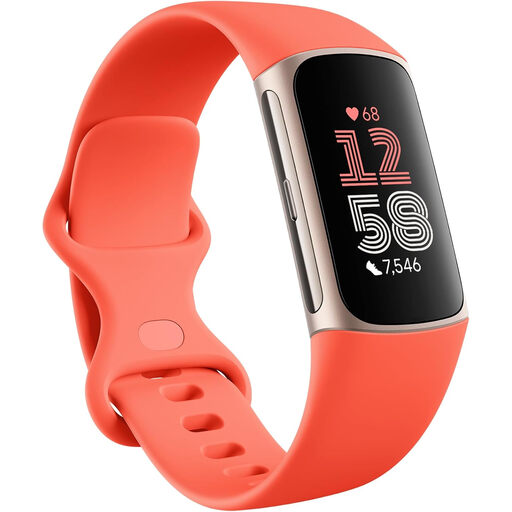
Why It Stands Out The Charge 6 strikes an excellent balance between a dedicated fitness band and a smart device. It integrates built-in GPS for phone-free workouts and includes Google essentials like Maps for on-wrist navigation and Wallet for contactless payments. Its advanced health tracking, including an EDA sensor for stress management, makes it a powerful tool for those serious about their fitness and wellness.
Pros
Who is it for? This tracker is ideal for active individuals who want detailed workout data, including GPS tracking and the convenience of smart features without the bulk of a full smartwatch.
View the Fitbit Charge 6 Fitness Tracker - Coral/Gold
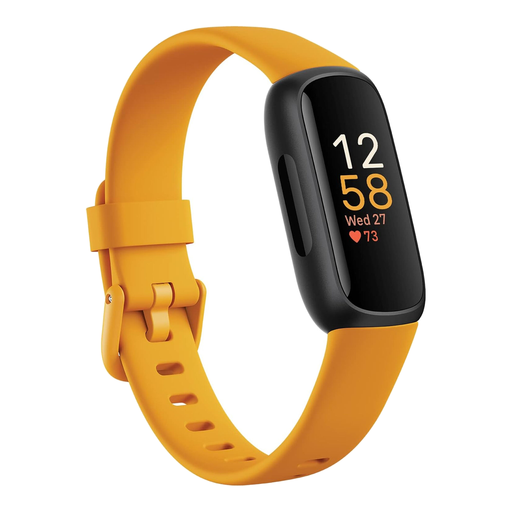
Why It Stands Out The Inspire 3 focuses on the fundamentals and executes them exceptionally well. It's a slim, lightweight and comfortable tracker designed for 24/7 wear. Its standout feature is an impressive battery life of up to 10 days, meaning you can set it up and forget about daily charging. It covers all the core metrics, including heart rate, sleep and stress, making it a fantastic entry point into the Fitbit ecosystem.
Pros
Who is it for? The Inspire 3 is a great choice for beginners, users focused on general wellness or anyone who values simplicity and long battery life in a discreet package.
View the Fitbit Inspire 3 Black/Morning Glow
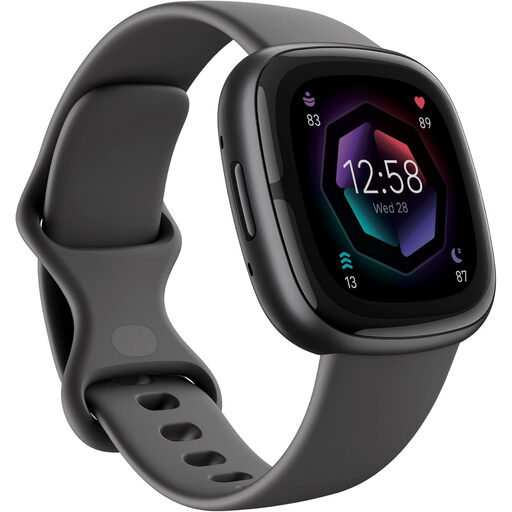
Why It Stands Out The Sense 2 is Fitbit's most advanced health-focused smartwatch. It goes beyond standard tracking with sensors that can take an on-wrist ECG reading (for informational purposes) and a continuous EDA (cEDA) sensor for all-day stress detection and management. Combined with built-in GPS and a large, vibrant display, it offers the most comprehensive overview of your health and fitness data.
Pros
Who is it for? This device is suited for data-driven users who want the most detailed health metrics available from a Fitbit, particularly those interested in closely monitoring stress and heart health indicators.
View the Fitbit Sense 2 - Shadow Grey/Graphite
This table provides a quick Fitbit comparison to help you see the main differences between our recommended models.
| Feature | Fitbit Inspire 3 | Fitbit Charge 6 | Fitbit Sense 2 | | :--- | :--- | :--- | :--- | | Built-in GPS | No (Uses Phone's GPS) | Yes | Yes | | ECG App | No | No | Yes | | EDA Sensor (Stress) | No | Yes | Yes (cEDA) | | Battery Life | Up to 10 days | Up to 7 days | Up to 6+ days | | Display | Colour Touchscreen | AMOLED Touchscreen | OLED Touchscreen | | Ideal User | Wellness Beginner | Active User | Health-Focused User |
If these models aren't quite what you're looking for, or if you'd like to compare them with other brands, we have a wider selection. Explore our full range of workout monitors to find the perfect device for your fitness journey in the Fitbit watch UK market and beyond.
Do I need a Fitbit Premium subscription? All Fitbit trackers provide essential health and fitness stats—like steps, distance, calories and sleep stages—without a subscription. A Fitbit Premium membership unlocks more personalised insights, a Daily Readiness Score, advanced sleep analytics and a library of workouts and mindfulness sessions. Many new devices include a trial period, allowing you to see if the extra features are right for you.
Can you use a Fitbit fitness tracker without a phone? You will need a compatible smartphone to set up your Fitbit and to sync and view your long-term data in the Fitbit app. However, for tracking an activity, models with built-in GPS like the Charge 6 and Sense 2 can record your workout route, pace and distance independently, so you can leave your phone at home.
Are Fitbit trackers waterproof? Most current Fitbit devices, including the Inspire 3, Charge 6 and Sense 2, are water-resistant to 50 metres. This means they are safe to wear for swimming in a pool or the sea, as well as in the shower. However, it is generally recommended to avoid exposing them to hot water, such as in a hot tub or sauna, and to rinse and dry the device after it gets wet.