
24/7 Customer Support

Free returns

Same-day & Next-day Delivery

Quality Guaranteed

Unlock Your Welcome Offers: FREE Delivery | Up to 80% OFF | Free 30-day JoyPlus trial
Download the APP
Finding a home workout routine that is both effective and enjoyable can be a challenge. Many of us in the UK live with limited space, and high-impact exercises aren't always suitable for our joints. A fitness rebounder, or mini trampoline, offers a compelling solution, providing a fun, space-efficient way to get your heart rate up with low-impact cardio.
But with so many models on the market, choosing the right one can feel overwhelming. This guide is designed to help you understand the key features to look for in a fitness rebounder. As a Joybuy Product Recommendation Officer, my role is to provide clear, practical advice to help you find a product that fits your home, fitness goals and family's needs.
Before you start bouncing, consider these key factors. Getting them right will ensure you select an indoor exercise trampoline that you'll use safely and consistently.
The way a rebounder creates its bounce is a crucial distinction.
Your available space is a primary consideration. Measure the area where you plan to use the rebounder, ensuring there is ample clearance overhead and around the sides.
Not all mini trampolines are created equal. It's vital to match the product to the user.
Based on features, user needs and overall design, here are our recommendations to help you find a suitable match.
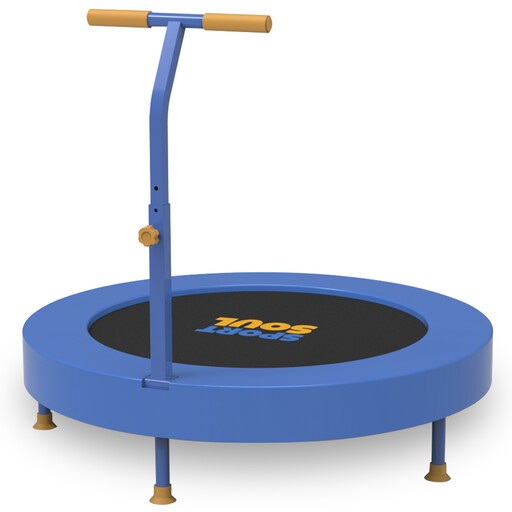
Why It Stands Out: This model is designed with the youngest users in mind. Instead of springs, it uses 24 elastic resistance bands, which provide a quieter and gentler bounce. The integrated foam pad and adjustable T-shaped handlebar offer added stability and safety for little ones finding their feet.
Pros:
Who is it for? This is an ideal kids mini trampoline for parents looking to encourage active indoor play. It is strictly for children, with a maximum user weight of 25kg (55 lbs).
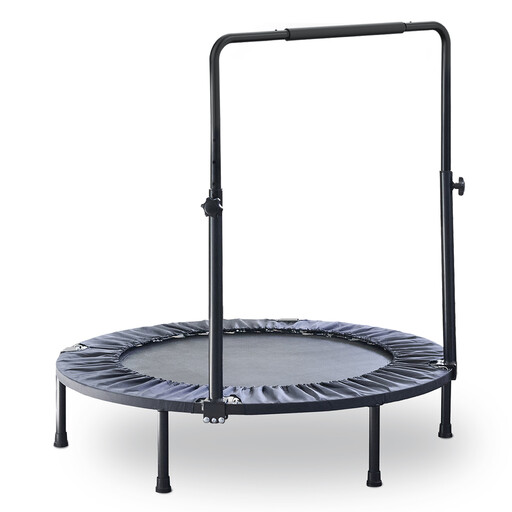
Why It Stands Out: This model strikes a great balance between performance and convenience for adults starting their rebounding journey. The 40 steel springs deliver a responsive bounce suitable for effective cardio, while the adjustable handle provides the confidence and stability needed to learn new movements. Its folding design makes it a practical choice for any home gym.
Pros:
Who is it for? Adults looking for a reliable indoor exercise trampoline to begin a fitness routine. It supports a maximum user weight of 80kg (176 lbs) and is great for those who value the extra stability of a handlebar.
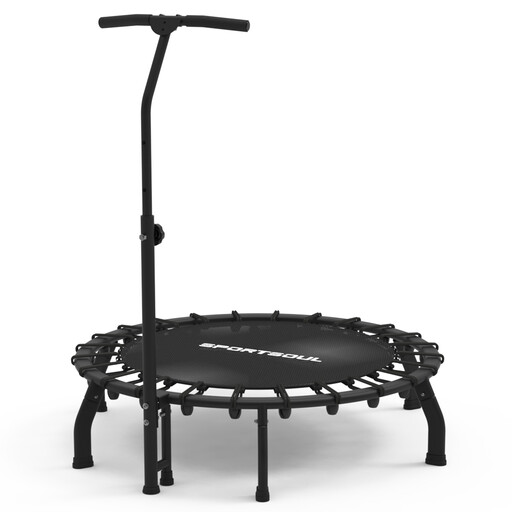
Why It Stands Out: Built for durability and performance, this rebounder is designed to handle more demanding workouts. Its key feature is the high weight capacity, supported by a heavy-duty steel frame and a high-quality spring system. This makes it a robust and reliable piece of equipment for a dedicated home gym.
Pros:
Who is it for? This is a strong choice for individuals seeking a sturdy home gym rebounder for regular, sustained use. Its high weight limit accommodates a broader range of users for serious fitness training.
While these three models cover a range of common needs, they are just the start. If you're looking for different sizes, features or other types of home fitness gear to complement your routine, we invite you to explore our full collection.
Browse our complete range of Workout Fitness Equipment here.
1. Is a fitness rebounder a good workout? Yes, rebounding is an effective form of low-impact cardio. It can help improve cardiovascular fitness, coordination and balance. Because the mat absorbs much of the impact, it is generally considered gentler on the joints than activities like running on pavement.
2. Can you lose weight by using a mini trampoline? Rebounding is a cardiovascular exercise that burns calories, which is a key component of weight management. When used consistently as part of an active lifestyle and combined with a balanced diet, it can certainly contribute to achieving weight loss goals.
3. How do I choose between a rebounder with springs and one with bands? This comes down to personal preference and workout style. Spring-based rebounders tend to offer a firmer, higher bounce, which can be good for more intense exercise. Band-based models are typically much quieter and provide a softer, lower-impact bounce that some people find more comfortable, especially for longer sessions or if they have sensitive joints.