
24/7 Customer Support

Free returns

Same-day & Next-day Delivery

Quality Guaranteed

Unlock Your Welcome Offers: FREE Delivery | Up to 80% OFF | Free 30-day JoyPlus trial
Download the APP
Navigating the world of fitness smartwatches can feel like running a marathon through a maze of marketing claims. With so many options available, it is easy to end up with a device that over-promises and under-delivers. As a Joybuy Product Recommendation Officer, my role is to help you sidestep the common purchasing mistakes and find a watch that genuinely fits your lifestyle and fitness goals.
Before you add a new watch to your basket, let's look at a few common pitfalls that UK buyers often encounter:
To make an informed choice, focus on the specifications that have a real impact on your daily use. Here are the non-negotiables to check.
For runners, cyclists and hikers, a smartwatch with GPS is essential. This means the watch has a built-in Global Navigation Satellite System (GNSS) chip and can track your route and distance accurately without being connected to your phone. Cheaper models may use "Connected GPS," which relies on your phone's signal. For true phone-free workouts, look for models that specify standalone or built-in GNSS, often supporting multiple systems like GPS, GLONASS and Galileo for a more reliable signal.
As mentioned, this is a critical point of failure. To ensure your watch survives your activities, understand the ratings:
A smartwatch with long battery life simplifies your routine. Look at the battery capacity (measured in mAh) and the manufacturer's stated life under "typical usage," not just "standby." Also, confirm the watch is compatible with your smartphone. Most modern watches are an Android and iOS compatible smartwatch, but always check the required operating system version (e.g., Android 8.0+ or iOS 13.0+) to ensure seamless connectivity.
Instead of a one-size-fits-all approach, we have matched some standout options to different user needs.
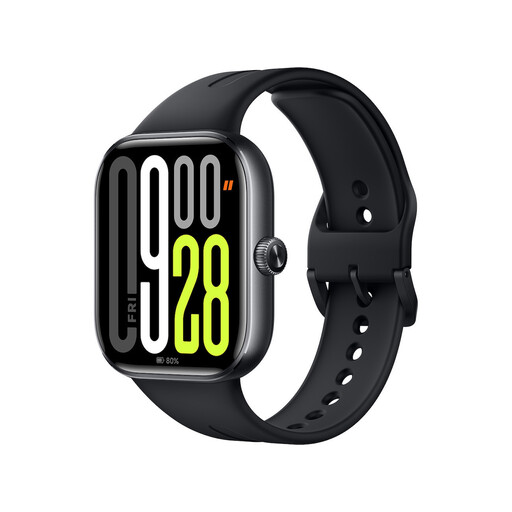
Why This Fits Their Persona: This user wants a reliable, stylish watch for everything from gym sessions and park runs to daily errands. It needs to track workouts accurately, handle calls and not require constant charging.
It directly counters the battery life pitfall with a stated typical usage of up to 24 days. Its clear 5ATM rating also removes any ambiguity about its suitability for swimming.
Exceptional battery performance and a large, bright 2.07-inch AMOLED display that is easy to read outdoors. It also includes a built-in heart rate monitor watch and sleep tracker.
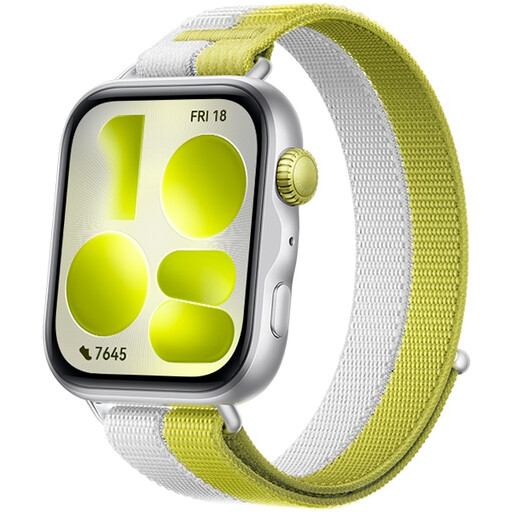
Why This Fits Their Persona: This tech-savvy individual wants advanced tracking, smart conveniences and a polished design. They value precise GPS for outdoor sports and the ability to make contactless payments from their wrist.
It avoids ambiguity with clearly stated specifications, including multi-band GNSS for superior location accuracy and a 5 ATM rating. The health features are positioned for wellness, not diagnosis.
Features an advanced multi-band GNSS system for highly accurate tracking and includes an NFC payment watch function for on-the-go convenience. It is also compatible with both Android and iOS.
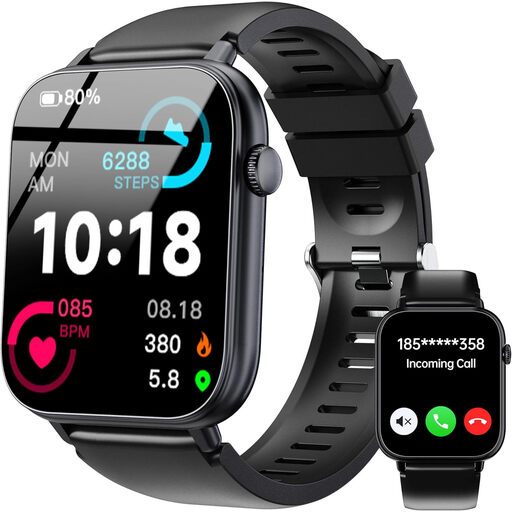
Why This Fits Their Persona: Perfect for someone new to fitness tracking who wants the core features—step counting, heart rate, notifications—and a few smart extras without a significant financial commitment.
This watch manages expectations effectively. Its IP68 rating is clearly suited for daily workouts and rain, preventing the user from mistakenly buying it for swimming and facing disappointment.
It offers desirable features like a large screen and Bluetooth calling watch functionality at a highly accessible price point, providing excellent value for an entry-level device.
We have compiled a complete, real-time list of products that fully satisfy these strict selection criteria and UK safety regulations.
The optical sensors used for tracking heart rate are generally reliable for monitoring trends and effort levels during exercise. However, accuracy can be affected by watch fit, skin tone and movement. For all health metrics, including heart rate and sleep tracking, the data should be considered a reference for your general wellness, not a substitute for medical-grade equipment or professional advice.
Yes, but functionality will vary. If your watch has built-in GPS, you can track outdoor workouts like runs and cycles without your phone. Some models also allow for offline music playback. However, for features like receiving notifications, making calls or using a voice assistant, you will typically need a Bluetooth connection to your smartphone.
A fitness smartwatch can generally be expected to last between two to four years. The primary limiting factor is the lithium-ion battery, which will gradually lose its ability to hold a full charge over time. Additionally, as software evolves, older models may eventually stop receiving updates, which could limit access to new features or security patches.