
24/7 Customer Support

Free returns

Same-day & Next-day Delivery

Quality Guaranteed

Unlock Your Welcome Offers: FREE Delivery | Up to 80% OFF | Free 30-day JoyPlus trial
Download the APP
A fitness tracker smartwatch can make daily movement, workouts, sleep and phone notifications easier to manage. However, product pages often use similar-looking claims for very different functions. A low-cost activity tracker watch may cover your essentials, while a premium health and fitness smartwatch may add built-in GPS, calls and a brighter display at a noticeably higher price.
The key is to match the device to your routine rather than choosing by feature count alone.
“GPS” does not always mean the watch can record a route independently. Connected GPS uses your phone’s location service, so you normally need to carry your smartphone during a run or walk. A smartwatch with GPS built in can track routes without the phone, although GPS use can reduce battery life.
If you mainly exercise near home with your phone in a pocket or running belt, connected GPS may be sufficient. For longer runs, hikes or phone-free sessions, look for independent GNSS or GPS.
Heart rate, blood oxygen, sleep and stress features can help you observe patterns, but consumer wearables are generally intended for general fitness and wellness information. They should not be used for diagnosis or to replace advice from a qualified healthcare professional.
Be particularly cautious with listings that present blood pressure or temperature readings as definitive health assessments. Check the manufacturer’s instructions, app requirements and intended use before buying a heart rate monitor smartwatch.
Water-resistance ratings are not interchangeable. 5 ATM commonly indicates resistance equivalent to a stated water pressure, while IP67 and IP68 describe protection against dust and water under defined laboratory conditions. These ratings do not automatically mean the device is suitable for hot showers, saunas, diving or prolonged immersion.
Look for the product’s specific water-use guidance. Straps may also have different limitations from the watch body.
A long battery life smartwatch is useful for sleep tracking because frequent charging creates gaps in your records. Compare the quoted battery figure with the usage conditions: always-on display, GPS, Bluetooth calls and frequent notifications can reduce the stated duration.
For example, the Fitbit Inspire 3 lists up to 10 days, while the HUAWEI WATCH FIT 4 Pro lists up to 10 days in typical use and up to four days with its always-on display enabled. The Apple Watch SE 3 lists up to 18 hours, which may suit users who prefer a fuller smartwatch experience and do not mind daily charging.
Before purchasing, check both your phone’s operating system and the required companion app. The Fitbit Inspire 3 supports iOS 14 or later and Android 9 or later. The HUAWEI WATCH FIT 4 Pro supports Android 8 or later and iOS 13 or later. Bluetooth is required for syncing, notifications and, on some models, calls.
Also distinguish between notification support and independent communication. A watch may display calls and messages but still need your phone nearby. Cellular models can offer more independence but may involve network compatibility and additional service costs.
A slim tracker can be more comfortable overnight, whereas a larger sports smartwatch may be easier to read outdoors. Check case dimensions, strap range and weight, particularly if you plan to wear the device continuously.
For swimming, follow the stated rating and care instructions. The HUAWEI WATCH FIT 4 Pro is listed with 5 ATM, IP6X and free-diving certification up to 40 metres, but the supplied guidance excludes hot showers, saunas and scuba diving beyond that depth. A “waterproof fitness tracker” still requires sensible maintenance: rinse after pool or sea use and dry the watch and charging contacts thoroughly.
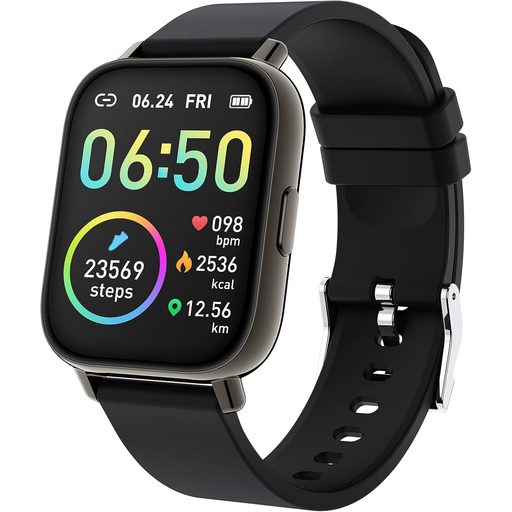
Why This Fits Their Persona: A practical starting point for shoppers wanting step counting, sleep monitoring, notifications and multiple workout modes without immediately moving to a premium watch.
Its listing clearly identifies 24 sports modes and smartphone compatibility, helping buyers distinguish everyday tracking from a phone-independent GPS watch.
1.69-inch HD display; step, distance, calorie, heart-rate and sleep functions; IP68 rating listed.
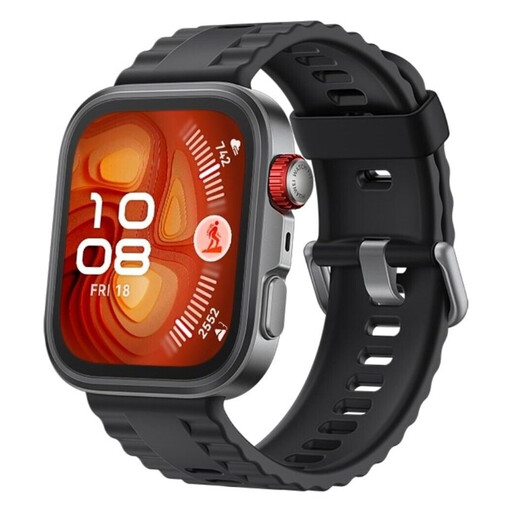
Why This Fits Their Persona: Suits users who want a bright display, built-in route tracking, premium materials and broader outdoor activity support.
The specifications separate built-in dual-band GNSS from connected GPS and provide detailed limits for swimming and diving.
1.82-inch AMOLED display; sapphire glass; dual-band GNSS; typical battery life listed as up to 10 days.
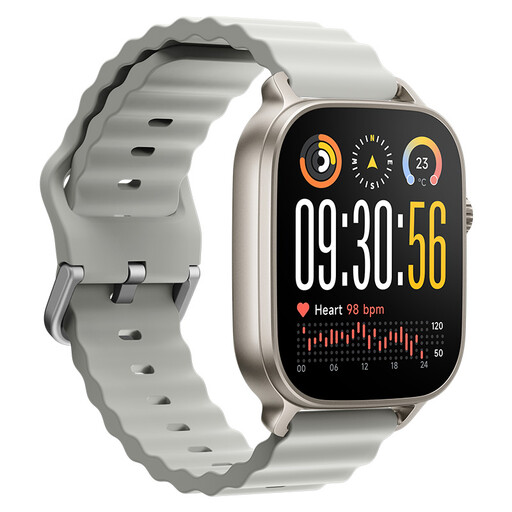
Why This Fits Their Persona: A suitable option for active users seeking independent positioning, Bluetooth calling, a large screen and a broad selection of sports modes.
Its product details state 5-GNSS independent positioning, making the GPS capability clearer than listings that only say “GPS” without explaining the connection.
108 sport modes; 1.97-inch AMOLED screen; IP68 rating listed; battery described as up to 14 days in typical use.
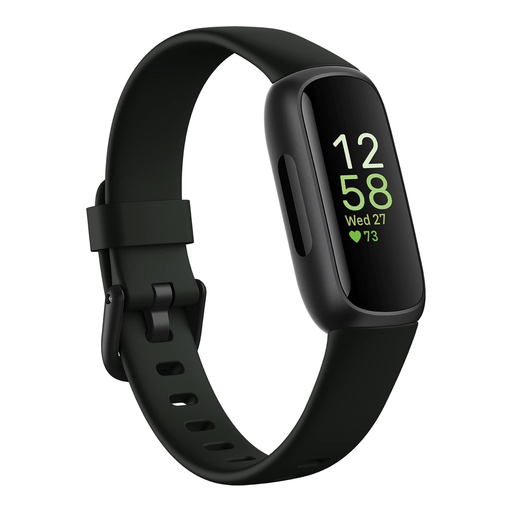
Why This Fits Their Persona: Its slim, lightweight design and stated battery duration make it suitable for users prioritising continuous daily activity and sleep tracking.
The listing specifies connected GPS, 5 ATM water resistance and battery variation, so buyers can assess its limits before ordering.
Up to 10 days’ battery life; automatic sleep stages and Sleep Score; 20+ exercise modes; 13.8g tracker weight.
We have compiled a complete, real-time list of products that fully satisfy these strict selection criteria and UK safety regulations.
Basic tracking usually works without your phone nearby, with data syncing to the app later. However, connected GPS, notifications, music controls and some calling features may require a smartphone connection. If phone-free route tracking matters, select a model with built-in GPS or GNSS.
It depends on the model and settings. Slim activity trackers may last several days or longer, while watches with bright displays, calls and frequent GPS use may need more regular charging. Always-on display, continuous heart-rate monitoring and GPS can reduce the advertised battery figure.
Only if the product’s instructions permit it. Check the exact ATM or IP rating, whether the rating applies to swimming and whether the strap is water suitable. Avoid assuming that IP68 means diving or hot-shower protection, and rinse the device with fresh water after pool or sea use where instructed.