
24/7 Customer Support

Free returns

Same-day & Next-day Delivery

Quality Guaranteed

Unlock Your Welcome Offers: FREE Delivery | Up to 80% OFF | Free 30-day JoyPlus trial
Download the APP
A new flat-screen television can transform your living space, but the bulky stand it comes with often takes up valuable surface area. If you're aiming for a clean, modern aesthetic and want to reclaim your space, a fixed TV wall mount is an excellent solution. These mounts hold your television securely against the wall, creating a sleek, picture-frame effect that complements any room.
This guide is designed to help you navigate the key considerations when choosing a flat tv wall mount. We will cover the essential features to look for, from VESA compatibility to weight capacity and provide our top recommendations to help you find a secure and stylish mounting solution for your home.
Before you add a mount to your basket, there are a few technical details to confirm. Getting these right ensures a safe installation and a perfect fit for your television.
The most critical factor is VESA compatibility. The VESA standard refers to the pattern of four screw holes on the back of your television. This pattern is measured in millimetres (e.g., 200 x 200 mm or 400 x 400 mm). Your chosen VESA wall mount must support your TV's specific VESA pattern.
You can find your TV's VESA size in its user manual or on the manufacturer's website. If you cannot find it, you can measure the distance between the holes yourself—first horizontally, then vertically. Many brackets are described as a universal tv wall mount, meaning they support a wide range of VESA patterns, but it is always wise to double-check the exact specifications.
Every TV mount is rated for a specific range of screen sizes and a maximum weight capacity. While screen size is a helpful guideline, the television's weight is the more important safety metric. Always check the weight of your TV without its stand and ensure the mount's load capacity is comfortably higher. A secure tv wall mount is one that is rated well above your television's actual weight, providing peace of mind.
A key benefit of a non-tilting tv mount is its ability to sit very close to the wall. This distance is known as the 'profile'. A low profile tv bracket or slim tv wall bracket can position your TV just a few centimetres from the wall, achieving that desirable minimalist look.
Installation is another important factor. Many modern mounts are designed to be an easy install tv bracket, often featuring a simple three-step process and built-in spirit levels. However, always consider your wall type. Plasterboard (stud) walls require fixing the mount directly to the wooden studs for support, while solid brick or concrete walls need the appropriate heavy-duty wall plugs and screws.
After analysing the features that matter most to UK homeowners—security, a low profile and straightforward installation—we have selected a few standout options.
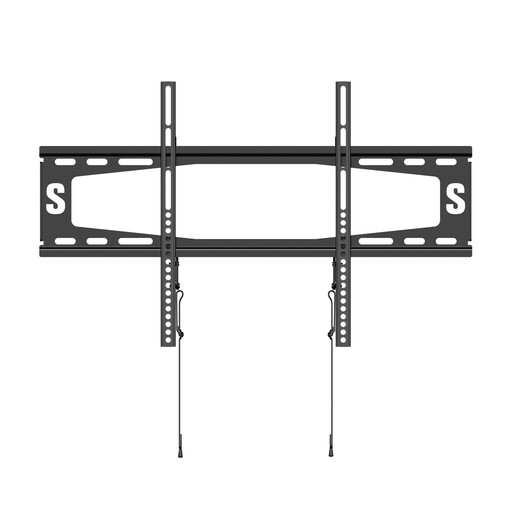
Why It Stands Out: This mount is an excellent choice for larger modern televisions. Its key feature is the super-slim profile, placing your TV just 1.21 inches (approx. 3 cm) from the wall. The installation process is simplified into three steps and the design includes a lateral shift feature, allowing you to slide the TV left or right on the wall plate for perfect centring after mounting.
Pros:
Who is it for? Ideal for homeowners with large-screen TVs who want a secure, minimalist setup without a complicated installation process.

Why It Stands Out: The Zootude mount is built for strength and reliability. Constructed from high-quality cold-rolled steel, it boasts an impressive maximum load capacity of 100 kg, making it one of the sturdiest options for its size class. It maintains a slim profile of just 2.5 cm from the wall and includes a practical anti-drop lock design for added security during and after installation.
Pros:
Who is it for? A great choice for anyone with a mid-sized TV (up to 55 inches) who prioritises maximum strength and a robust, long-lasting installation.
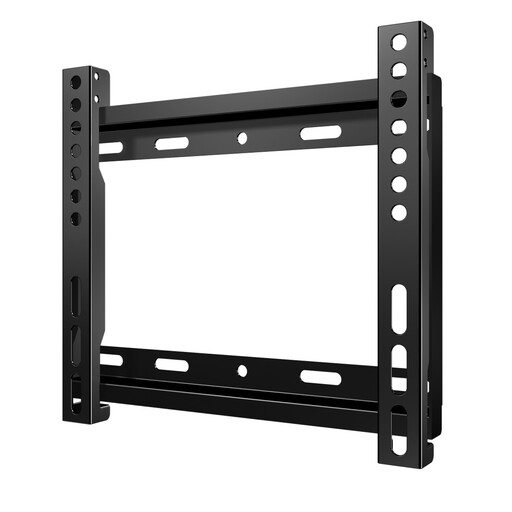
Why It Stands Out: Perfect for smaller screens in bedrooms, kitchens or home offices, this Sanus mount offers an exceptionally slim profile. It positions the TV just 1.06 inches (approx. 2.7 cm) from the wall, making it one of the most discreet options available. Like its larger counterpart, it features a simple three-step installation and a lateral shift mechanism for easy centring.
Pros:
Who is it for? Anyone looking to mount a smaller television in a secondary room where space is at a premium and a flush fit is essential.
A fixed TV wall mount is perfect for viewing areas where the seating position is directly in front of the screen. However, if your room layout requires adjusting the screen angle to reduce glare or accommodate different viewing positions, you might consider a tilting or full-motion mount.
To see a wider variety of mounting solutions, explore our full collection of TV wall mounts and bracers.
Yes, many fixed mounts are designed for DIY installation and come with clear instructions and all necessary hardware for standard wall types. The key is to carefully read the manual, ensure you have the right tools (a drill, stud finder and spirit level are common), and correctly identify your wall type to use the appropriate fixings.
The VESA standard is a set of guidelines established by the Video Electronics Standards Association. It defines the distance in millimetres between the four mounting holes on the back of a TV. This standardisation is crucial because it ensures that any VESA-compliant mount will physically fit any VESA-compliant TV, as long as the specific pattern (e.g., 400 x 400 mm) is supported by the mount.
This is determined by the mount's 'profile'. A low profile tv bracket is specifically designed to minimise this gap. Most fixed mounts offer a profile between 2 cm and 4 cm, creating a very tidy look that hides the bracket completely behind the television. The products recommended above have profiles ranging from approximately 2.7 cm to 3 cm.