Parents packing drinks for younger children
For an everyday school drink, start with water or milk, as recommended by the NHS. Treat a fizzy drink as a separate, occasional purchase rather than the routine lunchbox option.


For a child’s everyday school drink, choose water or milk: the NHS recommends these for children and advises avoiding sugary fizzy drinks. If you are buying an occasional sparkling drink for an older teenager or adult, compare sugar and caffeine on the exact variant; caffeine-free Fanta Orange still contains sugar, while a zero-sugar cola is not necessarily caffeine-free.
For an everyday school drink, start with water or milk, as recommended by the NHS. Treat a fizzy drink as a separate, occasional purchase rather than the routine lunchbox option.
Check sugar and caffeine separately. A drink labelled zero sugar can still list caffeine, and a caffeine-free fruity drink can still contain sugar.
Multipacks offer individual cans, but the pack count does not tell you what is in each drink. Compare the exact variant’s ingredients, nutrition information and can size.
Decide who the drink is for and whether it is an everyday school drink or an occasional fizzy choice. Then check the exact pack rather than relying on its flavour or front-of-pack wording.
| Priority | What to check | Your needs |
|---|---|---|
| Everyday drinks | For children’s routine drinks, consider water or milk first. The NHS recommends these for children and advises avoiding sugary fizzy drinks. | I’m choosing something for a child to drink regularly at school, not an occasional fizzy drink. |
| Sugar and portion | Compare sugars per 100 ml and the amount in the can you expect to serve. Coca-Cola GB lists Fanta Orange at 4.5 g sugars per 100 ml; Joybuy’s information for a 330 ml can lists 15 g. | For an occasional can, I want to know what the whole portion contains, not just what the flavour or product name suggests. |
| Caffeine | Check the exact variant name and ingredients. PepsiCo UK describes Pepsi Max Caffeine Free as containing zero caffeine and zero sugar; Coca-Cola GB lists caffeine among the ingredients of Coca-Cola Zero Sugar and Dr Pepper Zero. | Caffeine avoidance matters for the person who will drink it, so a zero-sugar claim alone does not settle my choice. |
| Flavour | Choose a flavour the intended drinker wants, then check its separate sugar and caffeine information. Coca-Cola GB describes Fanta Orange as caffeine-free, but lists sugars at 4.5 g per 100 ml. | I’d like a fruity fizzy drink, but I don’t want to assume fruit flavour means sugar-free. |
| School policy | Check the individual school’s current packed-lunch policy before buying drinks for lunchboxes. Department for Education school-food guidance covers food and drink provided in state-funded schools in England; it does not establish a rule for every parent-packed lunch. | If these cans are intended for a lunchbox, I need to know what that school permits. |
Zero-sugar wording answers a sugar question, not the question of what to pack every day. The NHS recommends water and milk as drinks for children.
Buy the everyday drink first, and consider fizzy drinks separately as occasional choices.
Coca-Cola Zero Sugar and Dr Pepper Zero list caffeine in their ingredients, while Pepsi Max Caffeine Free is a distinct variant.
If caffeine avoidance matters, check both the full variant name and its ingredient list.
Coca-Cola GB describes Fanta Orange as caffeine-free but lists 4.5 g sugars per 100 ml. Joybuy’s product information lists 15 g per 330 ml can.
Read the sugar information per 100 ml and for the portion you plan to serve.
Department for Education guidance addresses food and drink provided in state-funded schools in England. A family packing its own lunch needs to check the individual school’s expectations.
Read the school’s current written packed-lunch policy before buying cans for school.
These examples show why the precise variant matters; a brand name alone does not establish its sugar or caffeine content.
Coca-Cola Zero Sugar is a cola variant for shoppers comparing listed sugars.
Pepsi Max Caffeine Free is a distinct cola variant for shoppers checking both sugar and caffeine.
Fanta Orange is a fruity option for shoppers who prefer a non-cola flavour.
Dr Pepper Zero is a distinct flavour option for shoppers comparing zero-sugar variants.
Sprite offers a citrus-flavour alternative to cola; the range includes a Sprite Zero Sugar variant.
These canned multipacks offer cola, citrus and fruit-flavour options for occasional household drinks. For a child’s everyday school drink, the NHS recommends water or milk instead.
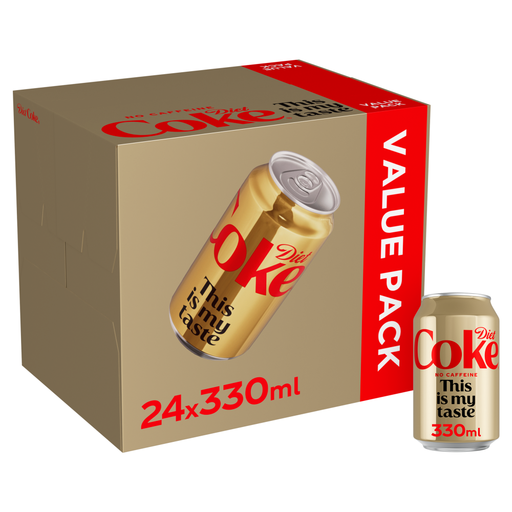 No image available
A cola multipack to consider when caffeine avoidance matters. Check the exact pack’s ingredients and sugar information, including its phenylalanine notice if relevant to the intended drinker.
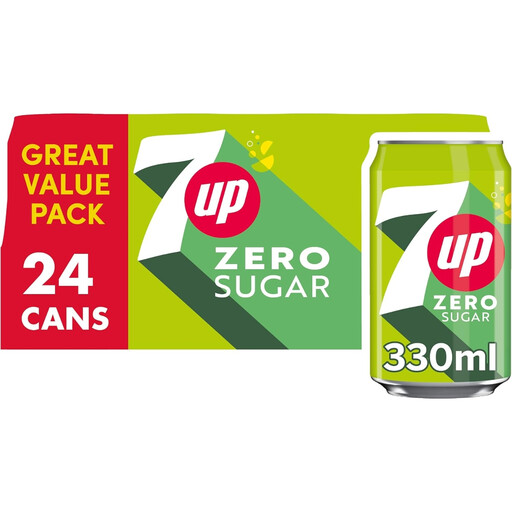 No image available
A lemon-and-lime option in individual cans. If avoiding caffeine or checking for phenylalanine matters, read the ingredients and labelling on the exact pack.
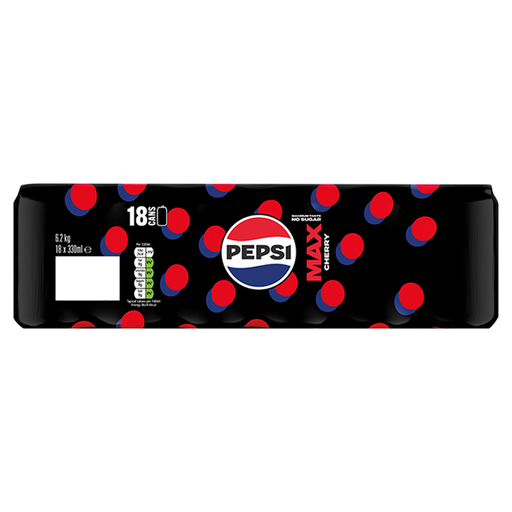 No image available
A cherry-cola choice for occasional household drinks. Its ingredients list includes caffeine; check the pack if the intended drinker avoids caffeine or needs to check its phenylalanine notice.
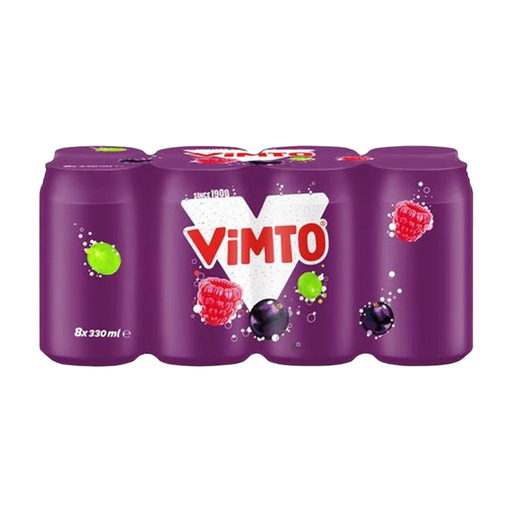 No image available
A fruit-flavour option in an eight-can pack. Compare the sugar information for a full can, and check the ingredients for caffeine and barley if either matters to the intended drinker.
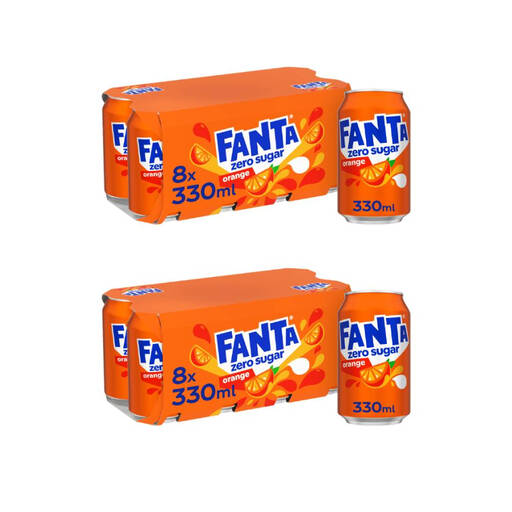 No image available
An orange-flavour option in a 16-can pack. Check the exact pack’s sugar figure rather than relying on its Zero Sugar name, and confirm its caffeine status if avoiding caffeine matters.
Choose water or milk. The NHS recommends these as drinks for children and advises that children avoid sugary fizzy drinks; an occasional fizzy purchase is a different decision from the routine school drink.
No. Coca-Cola GB lists caffeine in Coca-Cola Zero Sugar and Dr Pepper Zero, while PepsiCo UK identifies Pepsi Max Caffeine Free as a separate, zero-caffeine and zero-sugar variant. Check the exact product name and ingredients.
Coca-Cola GB describes Fanta Orange as caffeine-free, but lists 4.5 g sugars per 100 ml. Joybuy’s information for a 330 ml can lists 15 g sugars, so compare both the variant and the portion before choosing it.
The July 2026 announcement from the Department of Health and Social Care and Department for Education concerns high-caffeine energy drinks, not a general ban on ordinary fizzy drinks. It describes a planned sales restriction in England from April 2027, subject to Parliamentary approval.
The Department for Education’s school-food guidance concerns food and drink provided in state-funded schools in England. Check the individual school’s current packed-lunch policy before buying drinks to send in from home.