Parents choosing a routine after-school drink
If the drink will be served regularly to a child, the starting point is water or milk. The NHS recommends those drinks for children and advises avoiding sugary fizzy drinks.


For children, make water or milk the usual after-school drink: the NHS advises avoiding sugary fizzy drinks. If your household wants an occasional sparkling option, compare sugars per 100ml and check the exact variant for caffeine, sweeteners and any phenylalanine warning; a zero-sugar label alone does not answer all of those questions.
If the drink will be served regularly to a child, the starting point is water or milk. The NHS recommends those drinks for children and advises avoiding sugary fizzy drinks.
If carbonation and a sweet soft-drink flavour matter, compare the sugars line per 100ml on the exact variant. A familiar brand name can appear on drinks with different sugar contents.
Look for a drink explicitly identified as caffeine-free and check its ingredients. Pepsi UK lists caffeine in Pepsi Max, despite its 0g sugars per 100ml, while Pepsi Max Caffeine Free is a distinct variant.
Decide what will be served routinely before comparing fizzy drinks. For an occasional sparkling option, use the exact pack label to check sugar, caffeine and ingredients.
| Priority | What to check | Your needs |
|---|---|---|
| Usual drink | Start with water or milk for children, as the NHS recommends. If choosing sparkling water, check that it is plain rather than a sweetened soft drink. | I’m choosing something to serve with an after-school snack on ordinary days, not just for an occasional treat. |
| Sugar and serving | Compare sugars per 100ml, then the amount in the can or bottle. Coca-Cola GB lists 10.6g sugars per 100ml for Original Taste and 0g for Coca-Cola Zero Sugar Caffeine Free; Pepsi UK lists 15g in a 330ml serving of Pepsi Classic. | If I do buy a fizzy drink, I want to know how much sugar is in the amount that will actually be served. |
| Caffeine | Check the exact variant’s ingredients or an explicit caffeine-free label. Pepsi UK lists caffeine in Pepsi Max but identifies Pepsi Max Caffeine Free as a separate option. | I want carbonation without assuming that a zero-sugar cola is also caffeine-free. |
| Sweeteners | Read the ingredient list and any phenylalanine warning on the exact drink. Coca-Cola GB lists aspartame and a phenylalanine warning for Coca-Cola Zero Sugar Caffeine Free. | When choosing a sweetened alternative, I need to check its ingredients as well as its sugars line. |
| Pack size | Check the number of cans and their volume against how often the drink is intended to be served. | An occasional after-school drink does not necessarily call for a large multipack. |
Sugar content differs by variant. Coca-Cola GB lists 10.6g sugars per 100ml for Original Taste, compared with 0g for Coca-Cola Zero Sugar Caffeine Free.
For a child’s usual drink, follow NHS advice to choose water or milk. When considering a fizzy drink, compare the nutrition panel per 100ml and the serving you plan to pour.
Pepsi UK lists 0g sugars per 100ml for Pepsi Max, but its ingredients include caffeine. Pepsi Max Caffeine Free is a different product.
If caffeine avoidance matters, check the exact variant rather than relying on its zero-sugar wording.
A multipack may contain considerably more cans than the household intends to serve on occasional snack days.
Check the can count and choose a pack size that fits the intended use, rather than letting the promotion decide the usual drink.
The Department for Education’s September 2026 school-food guidance addresses food and drink provided in state-funded schools in England. That scope is different from a privately bought snack consumed at home.
For food provided at school, check the rules and the school’s policy for that setting; do not treat England’s school-food guidance as a UK-wide rule for household purchases.
Compare the named cola variants rather than treating the brand as one formulation.
The distinction between Pepsi Max and Pepsi Max Caffeine Free matters when avoiding caffeine.
Sprite Zero Sugar is a lemon-lime alternative for shoppers comparing named caffeine-free fizzy drinks.
Tesco Fizzio Zero is an own-label mixed-fruit option sold in a 2-litre bottle.
These are fizzy drink options for households considering an occasional after-school sparkling drink. Water or milk remains the NHS recommendation for children’s usual drink; compare each fizzy variant’s label against the sugar, caffeine and ingredient checks above.
 No image available
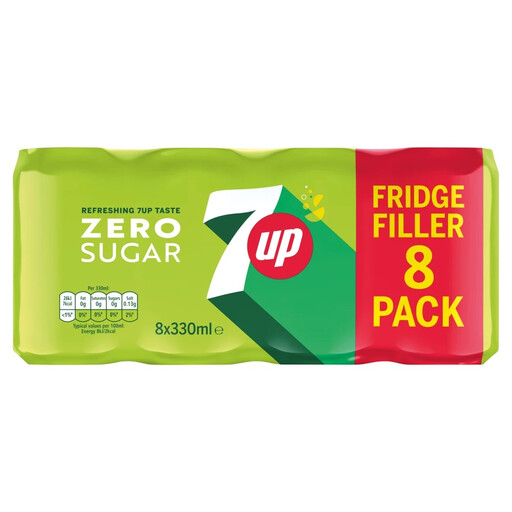
This eight-can pack may fit a plan for occasional fizzy drinks. Check the current label’s sugars, caffeine information, sweeteners and warnings for the intended drinker.
 No image available
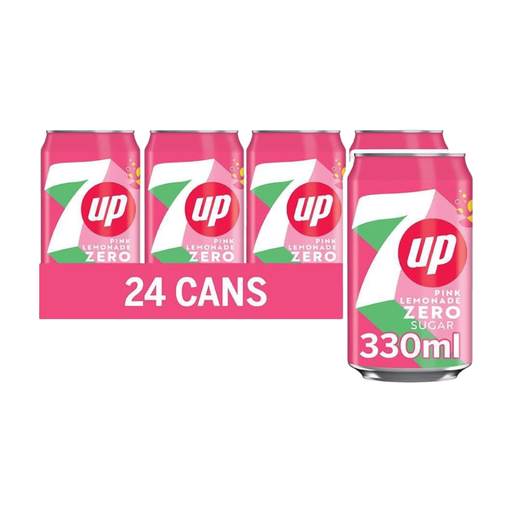
This lemonade variant comes as 24 individual cans, a quantity to weigh against occasional use. Check the exact pack’s nutrition, caffeine information, sweeteners and warnings before choosing it.
 No image available
For a household seeking a caffeine-free cola, Pepsi UK lists 0g sugars per 100ml for this named variant. It carries a source-of-phenylalanine warning, and the 24-can pack is worth weighing against occasional use.
 No image available
If caffeine avoidance matters, check this Zero Sugar variant’s ingredients rather than assuming it is the separately named Caffeine Free product. The pack contains 24 cans of 330ml each.
 No image available
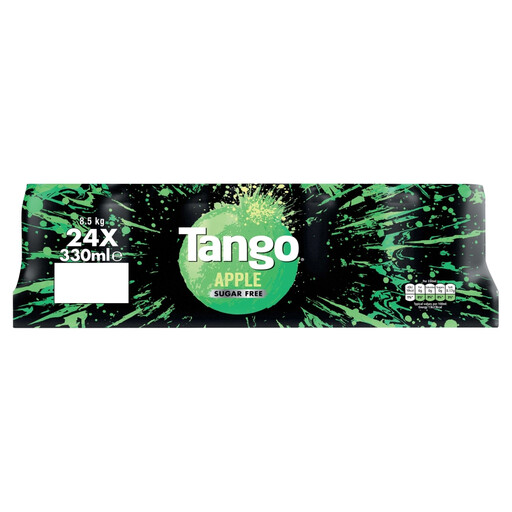
This apple-flavoured variant comes in a 24-can pack. If caffeine avoidance is important, confirm its status on the current pack label; also check the ingredients and warnings.
Water or milk. The NHS recommends these for children and advises avoiding sugary fizzy drinks, so a sweet fizzy option should not become the routine snack-time drink.
No. Pepsi UK lists 0g sugars per 100ml for Pepsi Max, but its ingredients include caffeine; Pepsi Max Caffeine Free is a distinct variant. Check the exact product when caffeine avoidance matters.
It appears on the cited zero-sugar drinks containing aspartame. If someone needs to avoid phenylalanine, check the full label of the exact drink rather than assuming all sugar-free variants have the same ingredients.
Use both figures: per 100ml helps compare drinks on the same basis, while the can size shows the amount being served. For example, Pepsi UK lists 15g sugars in a 330ml serving of Pepsi Classic.
The Department for Education’s September 2026 guidance addresses food and drink provided in state-funded schools in England, not privately bought after-school snacks eaten at home. For food served at school, check the rules and policy applicable to that school.