Families comparing sugar content
If several people drink fizzy drinks, compare sugars per 100ml across the exact variants you plan to buy. A zero-sugar name does not tell you whether a drink contains caffeine or carries an ingredient warning.


For adults choosing fizzy drinks while reducing sugar, compare the “of which sugars” figure on the exact pack, then check caffeine and ingredient warnings before choosing a format. For children, the NHS identifies water and milk as the preferred drinks; a zero-sugar fizzy drink is not a tooth-neutral everyday alternative, because its acidity can still affect enamel.
If several people drink fizzy drinks, compare sugars per 100ml across the exact variants you plan to buy. A zero-sugar name does not tell you whether a drink contains caffeine or carries an ingredient warning.
Keep the children’s everyday drinks separate from an occasional fizzy-drink purchase. The NHS identifies water and milk as the preferred drinks for children, while Lancashire and South Cumbria Integrated Care Board notes that even diet fizzy drinks can wear away tooth enamel.
A clearly labelled caffeine-free variant helps when someone wants to avoid caffeine. If a person with diabetes follows a plan for treating a hypo, keep that plan in mind too: Diabetes UK notes that sugary drinks are necessary for some people in that situation.
Choose the drink variant for the people who will have it, then decide whether shared bottles or individual cans fit how the household will use it.
| Priority | What to check | Your needs |
|---|---|---|
| Sugar content | Compare “of which sugars” per 100ml on the exact variant. PepsiCo UK lists 0g per 100ml for Pepsi Max and 4.5g per 100ml for regular Pepsi; the names are not interchangeable nutrition information. | I want to reduce the sugar in the fizzy drinks bought for the household without assuming a familiar brand or flavour tells me the amount. |
| Children’s drinks | Separate everyday drinks from fizzy-drink purchases. The NHS identifies water and milk as the preferred drinks for children; Lancashire and South Cumbria Integrated Care Board notes that acidic diet fizzy drinks can wear away enamel. | For the children, I need an everyday drink choice as well as a decision about whether to buy fizzy drinks. |
| Caffeine and ingredients | Check for a caffeine-free label and read the ingredients on the exact pack. PepsiCo UK lists Pepsi Max Caffeine Free at 0g sugars per 100ml, while its regular Pepsi Max ingredient information includes caffeine. Check any phenylalanine warning where relevant. | Someone in the household avoids caffeine, or needs to check a particular ingredient warning before sharing a multipack. |
| Pack format | Check bottle volume or can size, the number of units and where the pack will be stored. Match a shared bottle or individually portioned cans to how the household expects to use them. | I need enough for the planned occasions, without choosing a larger format solely because it looks convenient in the shop. |
A zero-sugar label describes sugar content, not dental effects. Lancashire and South Cumbria Integrated Care Board notes that acid in diet fizzy drinks can wear away enamel.
For children’s everyday drinks, start with the NHS-preferred choices of water and milk rather than treating diet fizzy drinks as tooth-neutral.
Variants from the same range can have different sugar figures. PepsiCo UK lists 4.5g sugars per 100ml for regular Pepsi and 0g per 100ml for Pepsi Max.
Read “of which sugars” per 100ml on the precise flavour and variant you are buying.
PepsiCo UK lists caffeine among regular Pepsi Max ingredients but offers a separate Pepsi Max Caffeine Free variant.
When caffeine avoidance matters, choose a product explicitly labelled caffeine free and check its ingredient list.
These ranges illustrate why the exact variant matters; a brand name alone does not establish its sugar content or ingredients.
Its UK cola range includes Coca-Cola Zero Sugar.
The UK range includes regular Pepsi, Pepsi Max and Pepsi Max Caffeine Free.
The lemon-and-lime range includes Sprite Zero.
Flavours and variants in this range have different sugar figures.
Standard and Zero variants appear as separate products in Tesco Groceries’ UK fizzy-drink cans category.
The retailer’s fizzy-drink category includes own-label and branded options.
These Zero and Sugar-Free variants include individual cans and larger bottles for different family-shop plans. Check caffeine and ingredient warnings for the particular drink before choosing its pack format.
 No image available
A caffeine-free cola option when individual cans suit the household. PepsiCo UK lists 0g sugars per 100ml for this variant; check the pack’s sweeteners and phenylalanine warning where relevant.
 No image available
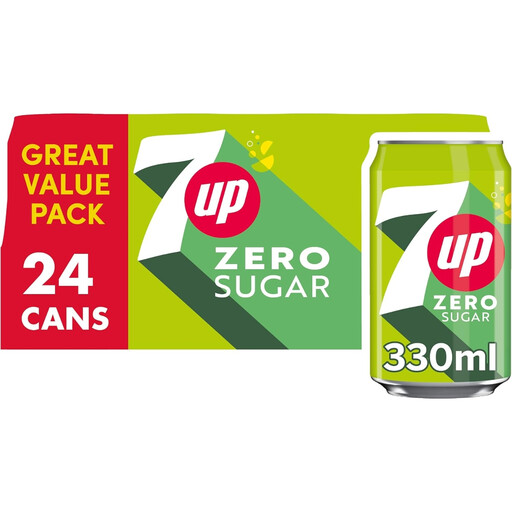
A Zero variant in a 24-can format for households choosing individual portions. Check the exact pack’s nutrition, caffeine information and ingredient warnings before sharing it across different needs.
 No image available
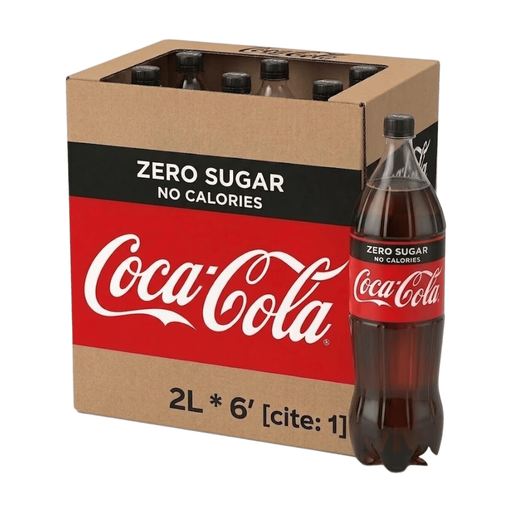
Six shared bottles suit a different serving plan from individual cans. Coca-Cola Great Britain lists 0g sugars per 100ml for this variant, but its product information includes caffeine and a phenylalanine warning; check the exact pack before serving it to others.
 No image available
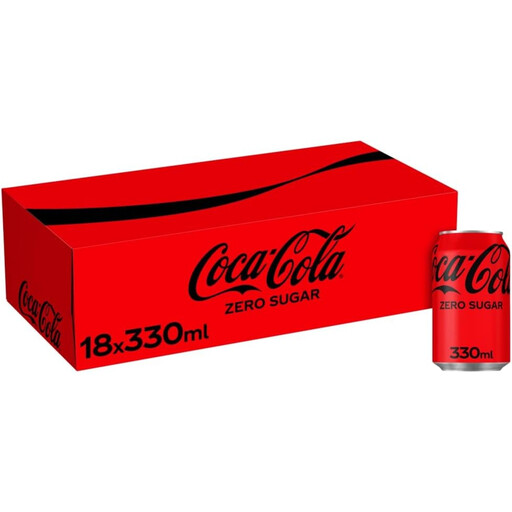
The same cola variant comes here in individually portioned cans. Coca-Cola Great Britain lists 0g sugars per 100ml and caffeine flavouring for Coca-Cola Zero Sugar; this is not a caffeine-free choice.
 No image available
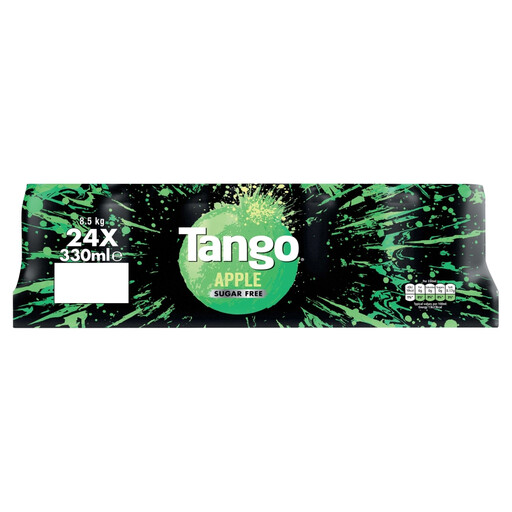
An apple-flavoured Sugar-Free variant in a 24-can pack. If anyone needs to avoid caffeine, check the exact pack label before choosing it for the household.
Choose water or milk as the everyday drinks for children: these are the NHS-preferred options. Zero sugar does not remove acidity; Lancashire and South Cumbria Integrated Care Board notes that diet fizzy drinks can wear away tooth enamel.
Do not use one rule for every situation. Diabetes UK notes that sugary drinks or glucose tablets are essential for some people when treating a hypo, so follow the individual’s care plan rather than substituting a diet drink in that situation.
Look for a specifically labelled caffeine-free variant and check its ingredients. PepsiCo UK lists Pepsi Max Caffeine Free as a separate product from Pepsi Max, whose ingredient information includes caffeine.
Some variants carry a “contains a source of phenylalanine” warning: the UK product information for Coca-Cola Zero Sugar and Pepsi Max includes one. If someone follows dietary advice relating to phenylalanine, check the exact pack and their individual guidance before choosing it.