Students choosing a regular lunch drink
If fizzy drinks are part of your lunch routine, comparing sugars per 100ml and the amount you will drink helps distinguish regular and zero-sugar variants. NHS guidance advises adults to limit free sugars.


For a regular lecture lunch, a zero-sugar drink is an option if you want fizz without the sugars listed in a regular cola; choose an explicitly caffeine-free variant if you also want to avoid caffeine. Plain sparkling water offers carbonation without a sweetened soft drink, while fruit-flavoured fizz varies by formulation, so compare the exact pack. Northumbria Healthcare NHS Foundation Trust notes that sugar-free fizzy drinks can still be acidic: zero sugar does not settle the dental trade-off.
If fizzy drinks are part of your lunch routine, comparing sugars per 100ml and the amount you will drink helps distinguish regular and zero-sugar variants. NHS guidance advises adults to limit free sugars.
Cola-style fizz does not always mean the same caffeine content. Pepsi UK identifies standard Pepsi Max as containing caffeine and sells a separate Pepsi Max Caffeine-Free variant; Coca-Cola GB describes Fanta Orange as caffeine free.
Choosing zero sugar changes the sugar comparison, but not every other consideration. Northumbria Healthcare NHS Foundation Trust notes that sugar-free fizz remains acidic and can contribute to tooth erosion.
Start with the flavour and format you would take to lunch, then compare the exact variant’s sugar, caffeine and ingredients rather than relying on the brand name.
| Priority | What to check | Your needs |
|---|---|---|
| Sugars | Compare sugars per 100ml, then consider the volume you expect to drink. Coca-Cola GB lists 10.6g per 100ml for Coca-Cola Original Taste and 4.5g per 100ml for Fanta Orange; Pepsi UK lists 0g for Pepsi Max. | I want to know how much sugar my lunch drink contains, rather than assuming every fruit-flavoured or cola drink is alike. |
| Caffeine | Check the full variant name and ingredients. Pepsi UK distinguishes caffeinated Pepsi Max from Pepsi Max Caffeine-Free; Coca-Cola GB describes Fanta Orange as caffeine free. | If I do not want caffeine with lunch, I need a variant explicitly identified as caffeine free. |
| Flavour and sweetness | Choose between cola, lemon-lime, fruit flavour and plain sparkling water. Check whether the chosen soft drink contains sugar or sweeteners; plain sparkling water is a different option from flavoured soft drinks. | Perhaps I want fizz without a sweetened flavour, or I would rather have lemon-lime or fruit flavour than cola. |
| Acidity | Do not use a zero-sugar label as a measure of dental acidity. Northumbria Healthcare NHS Foundation Trust notes that sugar-free fizzy drinks are still acidic and can contribute to tooth erosion. | Reducing sugar matters to me, but I do not want to mistake zero-sugar fizz for a drink without an acidic-drink trade-off. |
| Ingredients | Read the current pack for sweeteners and any phenylalanine declaration where relevant. Check the precise formulation rather than assuming two similarly named variants share ingredients. | I may need to check particular ingredients before choosing a drink; the flavour or front-of-pack name is not enough. |
| Pack format | Check the size of an individual can or bottle and how many are in the pack. Consider whether you can store and use the remaining drinks. | A single serving needs to fit my lunch routine, even if I am buying a multipack. |
Listed sugar content differs by product: Coca-Cola GB gives 10.6g sugars per 100ml for Coca-Cola Original Taste and 4.5g per 100ml for Fanta Orange, while Pepsi UK lists 0g for Pepsi Max.
Compare sugars per 100ml on the exact variant, then account for how much you intend to drink.
Northumbria Healthcare NHS Foundation Trust notes that sugar-free fizzy drinks remain acidic and can contribute to tooth erosion.
Consider how often you drink fizzy soft drinks as well as their sugar content; do not treat a zero-sugar label as an acidity label.
Pepsi UK lists caffeine in standard Pepsi Max and identifies Pepsi Max Caffeine-Free as a separate product. Similar names do not establish identical formulations.
If avoiding caffeine matters, check the full variant name and the current ingredient list before choosing.
A can or bottle may be convenient to carry, while the rest of a multipack still needs somewhere to be kept.
Check both the individual serving size and the number of servings in the pack against your usual lunch routine.
Original Taste and Zero Sugar are distinct cola choices, not interchangeable nutrition labels.
Pepsi Max and Pepsi Max Caffeine-Free let cola buyers distinguish caffeine preference from sugar content.
Sprite Zero Sugar is a lemon-lime alternative to zero-sugar cola.
Fanta Orange suits a preference for orange-flavoured fizz when zero sugar is not a requirement.
Tesco Groceries lists both Dr Pepper and Dr Pepper Zero, making the variant name important.
Tesco Groceries lists own-label zero-sugar fizzy drinks and plain sparkling water.
These options cover caffeine-free and caffeinated cola, lemon-lime and apple-flavoured fizz, and plain sparkling water. They are multipacks, so check the individual serving and the full pack before choosing one for campus lunches.
 No image available
A caffeine-free cola choice for a lunch-sized can; Pepsi UK identifies this variant as containing no sugar. The pack contains 24 cans, so consider storage and check its ingredient declarations if sweeteners or phenylalanine are relevant to you.
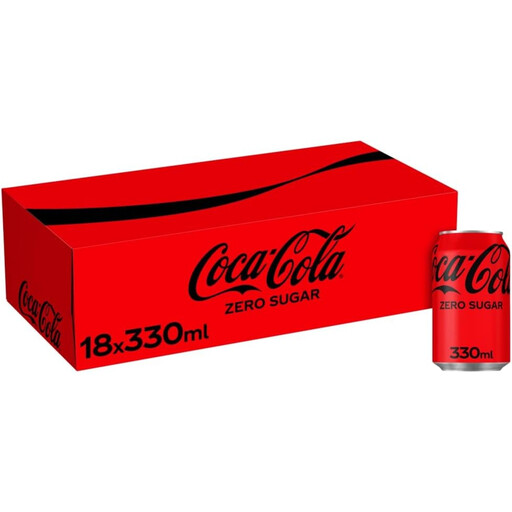 No image available
A zero-sugar cola option for someone comfortable with caffeine in the ingredients. This is an 18-can pack; check the current ingredient list if caffeine, sweeteners or a phenylalanine declaration matter to you.
 No image available
A lemon-lime option if you would rather take a can of non-cola fizz to lunch. The 24-can pack needs storage; check the current label for ingredients relevant to you, including sweeteners.
 No image available
Plain sparkling water suits a preference for carbonation without a sweetened soft drink. This is a six-bottle pack; confirm the individual bottle volume on the pack before choosing it to carry to lunch.
 No image available
An apple-flavoured alternative for a lunch-sized can when you prefer fruit flavour to cola. Check the ingredients or pack if avoiding caffeine matters; this 24-can multipack also needs storage.
No. Northumbria Healthcare NHS Foundation Trust notes that sugar-free fizz is still acidic and can contribute to tooth erosion. Compare sugar content for your sugar-related choice, but do not treat it as a measure of acidity.
Look for an explicitly caffeine-free variant. Pepsi UK identifies Pepsi Max Caffeine-Free as a no-sugar cola option, while Coca-Cola GB describes Fanta Orange as caffeine free but lists 4.5g sugars per 100ml. Check the exact pack before buying.
Check the exact variant’s ingredients, sugars per 100ml and serving volume, particularly if caffeine, sweeteners or a phenylalanine declaration matter to you. For pre-packed drinks in the UK, government food-labelling guidance also covers ingredient and allergen information, net quantity and date marking.
At Coca-Cola GB’s listed 10.6g sugars per 100ml for Coca-Cola Original Taste, 330ml contains about 35g sugars. NHS guidance advises adults to have no more than 30g of free sugars a day; compare the exact drink and serving size rather than assuming every cola variant has the same figure.