Hosts expecting different guests
Keep both cola and non-cola flavours in mind. A bottle suits a group sharing drinks during one stay; a multipack lets visitors take an unopened individual serving.


For a second home, choose no-added-sugar or zero-sugar drinks in formats that fit how often people visit: 2L bottles for groups likely to share them, or multipacks for unopened individual servings. Include flavours guests will drink, then check each label for sugar content, caffeine and sweeteners; zero sugar does not mean caffeine-free, and fizzy drinks still have an acidity-related dental consideration.
Keep both cola and non-cola flavours in mind. A bottle suits a group sharing drinks during one stay; a multipack lets visitors take an unopened individual serving.
Compare the exact drink’s nutrition panel rather than relying on its flavour or a familiar brand name. “No added sugar” and “zero sugar” should not be treated as interchangeable descriptions.
Check caffeine and sweeteners separately. Pepsi MAX No Caffeine provides a caffeine-free cola choice, but its ingredient information also lists aspartame, which matters if a guest has phenylketonuria (PKU).
Start with the label and guests’ preferences, then choose a pack format that fits the length and size of a typical stay.
| Priority | What to check | Your needs |
|---|---|---|
| Sugar labelling | Read the nutrition panel for sugars per 100ml. Check whether the exact drink says “no added sugar” or “zero sugar”, and read its ingredients. | I want a familiar fizzy drink without assuming that every diet-style or fruit-flavoured option has the same sugar content. |
| Sweeteners and PKU | Check for aspartame, also listed as E951, and any phenylalanine warning. A zero-sugar label does not establish suitability for someone with PKU. | If a guest has PKU, I need to check the ingredients of every drink rather than choosing by the front label alone. |
| Caffeine | Look for an explicit caffeine-free description and check the ingredients. Standard Pepsi MAX lists caffeine-containing flavourings, while Pepsi UK describes Pepsi MAX No Caffeine as containing no caffeine. | Some guests prefer cola without caffeine, particularly during evening stays; sugar-free alone does not answer that need. |
| Pack format | Compare the total volume and number of servings. Consider whether a 2L bottle is likely to be finished after opening or whether unopened individual portions suit visits better. | For a busy shared stay, I may use large bottles; for occasional visitors, I would rather leave individual servings unopened. |
| Flavour choice | Check the exact variety as well as the sugar description. UK listings include zero-sugar cola, lemon-lime and orange options, plus no-added-sugar lemonade. | Guests do not all want cola, so I want a non-cola choice without assuming that different flavours have identical ingredients. |
| Acidity | Do not use sugar content as a measure of a fizzy drink’s effect on teeth. The NHS notes that carbonated drinks are associated with dental erosion because of their acid content, whether or not they contain sugar. | I want water available alongside fizzy drinks, rather than treating a zero-sugar option as an all-day default. |
Standard Pepsi MAX lists caffeine-containing flavourings. Pepsi MAX No Caffeine is a separate product, and being caffeine-free does not make it sweetener-free.
Check caffeine and sweeteners independently when choosing a drink for guests.
A front-of-pack zero-sugar claim does not identify every sweetener. Aspartame contains phenylalanine and is unsuitable for someone with PKU.
If a guest has PKU, read the full ingredients and warning on the exact pack and avoid drinks containing aspartame.
The NHS associates carbonated drinks with dental erosion due to their acid content, regardless of whether they contain sugar or sweeteners.
Stock water as well as fizzy drinks rather than relying on a zero-sugar label to settle the choice.
A large bottle may remain open after a short visit, while an unopened multipack allows individual servings to be kept for later stays.
Estimate how many people will be there and compare total litres against expected use before choosing the format.
These examples show different flavours and label checks; a brand name alone does not establish the ingredients of every variety.
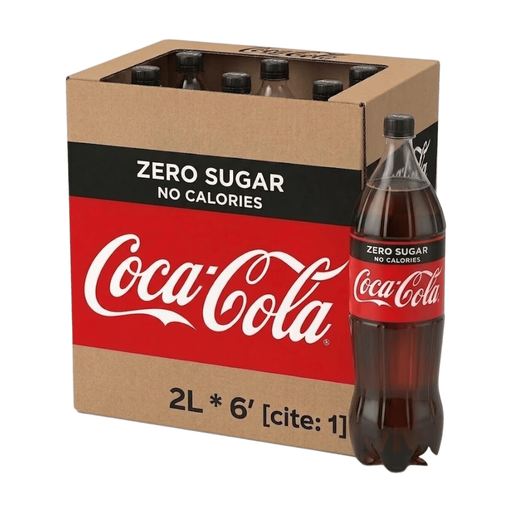
Coca-Cola Zero Sugar is a cola option for guests who want that flavour without a sugar-containing version.
Pepsi MAX and Pepsi MAX No Caffeine serve different caffeine preferences within the zero-sugar cola range.
Sprite Zero Sugar offers a lemon-lime alternative to cola.
Fanta Zero Orange is an orange-flavoured option for a mixed second-home stock.
Dr Pepper Zero provides another flavour choice for guests who do not want a standard cola.
Tesco’s own-label No Added Sugar Cloudy Lemonade offers a non-cola option.
These options cover zero- or sugar-free cola and non-cola flavours in shared-bottle and multipack formats. Choose among them by expected use, flavour and the ingredient checks that matter to your guests.
 No image available
Six 2L bottles give a group separate bottles to open during a shared stay. Check storage space and likely use before choosing this quantity; guests avoiding caffeine or aspartame also need the current ingredient information.
 No image available
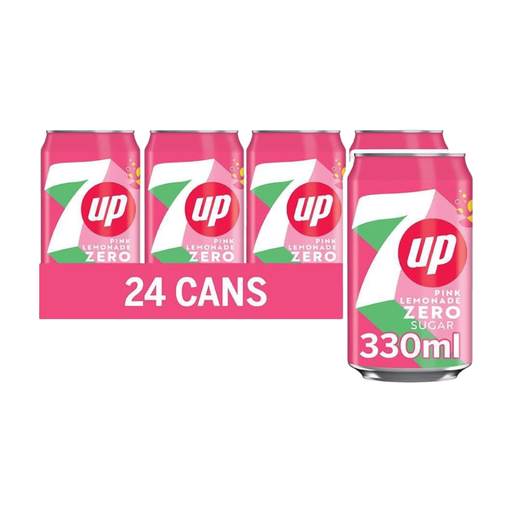
This 24 × 330ml pack gives occasional visitors individual portions and a non-cola choice. Check the pack for the exact flavour—the product information describes pink lemonade—and for aspartame if a guest has PKU.
 No image available
This 24 × 330ml multipack suits guests who want individual cola servings without caffeine. Caffeine-free does not mean aspartame-free, so check the ingredients if anyone has PKU.
 No image available
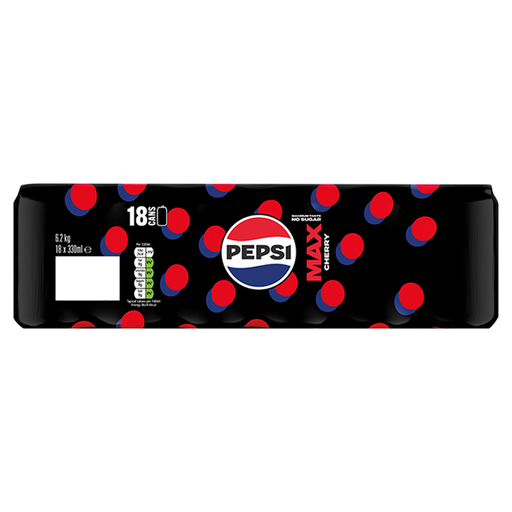
The 18 × 330ml format offers individual servings for visitors who prefer cherry-flavoured cola. Check its ingredients for caffeine and aspartame before including it for guests who avoid either.
 No image available
These individual cans add an apple-flavoured, non-cola choice for intermittent stays. If a guest avoids caffeine, check the current pack’s ingredients; check its listed sweeteners against guests’ preferences too.
Do not assume the terms describe the same sugar content. Tesco calls its Cloudy Lemonade “no added sugar”, while Pepsi UK lists 0g sugars per 100ml for Pepsi MAX. Read the nutrition panel and ingredients of the exact drink you plan to stock.
Pepsi MAX No Caffeine is a caffeine-free, zero-sugar cola according to Pepsi UK. Check sweeteners separately: its ingredient information lists aspartame, so it is not an option for someone with PKU.
Sugar-free alone does not establish suitability for someone with PKU. Avoid a drink if its ingredients list aspartame or E951, which contains phenylalanine, and check the warning on the exact pack.
No. The NHS says carbonated drinks are associated with dental erosion because of their acid content, regardless of whether they contain sugar or sweeteners. Keep water available alongside fizzy drinks.
Choose 2L bottles when a group is likely to share and finish them during a stay. For intermittent visits or individual guest servings, multipacks let portions remain unopened; compare total volume with how much you expect people to drink.