Households stocking the fridge
Individual cans make it straightforward to set out servings for several dinners. Check the can count against likely use and available fridge space rather than choosing a larger case on pack size alone.


Choose the flavour and ingredients before the pack size: regular cola suits a preference for that formulation, while a zero-sugar variant suits someone looking to avoid the sugar listed in regular cola. For a late TV dinner when caffeine matters, look for an explicitly caffeine-free can rather than assuming zero sugar means caffeine-free. Then check the number of 330ml cans against the meals and people you expect to serve.
The useful starting point for a TV dinner is whether the cans are for one meal, repeated evenings or people with different ingredient preferences.
Individual cans make it straightforward to set out servings for several dinners. Check the can count against likely use and available fridge space rather than choosing a larger case on pack size alone.
If regular cola is the flavour preference, compare its nutrition panel with the exact zero-sugar variant. Pepsi UK lists 15g sugars per 330ml can for Pepsi Classic and 0g for Pepsi Max; the latter contains sweeteners and carries a phenylalanine statement.
A zero-sugar cola is not necessarily caffeine-free. Pepsi UK lists caffeine in Pepsi Max but not in the ingredient list for Pepsi Max No Caffeine, so check the exact variant before serving.
Settle the flavour and ingredient requirements first, then choose a can count that fits how often the household will use it.
| Priority | What to check | Your needs |
|---|---|---|
| Flavour | Choose between cola, orange and other flavours the diners recognise. Check the exact variant, not just the brand. | I would rather have cans people want with the meal than a case that sits unopened. |
| Sugar and ingredients | Compare sugars on the same per-100ml or per-can basis. Pepsi UK lists 15g sugars per 330ml for Pepsi Classic and 0g for Pepsi Max; check the sweeteners on zero-sugar variants. | If these are for frequent dinners, I want to know what is in each can before choosing regular or zero-sugar cola. |
| Caffeine | Look for an explicitly caffeine-free variant and read its ingredient list. Pepsi UK lists Pepsi Max No Caffeine separately from Pepsi Max, which lists caffeine. | For a late meal, avoiding caffeine matters more to me than whether the can simply says zero sugar. |
| Pack fit | Check both can count and volume: 8 × 330ml is 2.64 litres, while 6 × 330ml is 1.98 litres. Allow for the number of diners and the space needed to chill cans. | I want enough individual servings for the dinners planned, without buying more cans than we are likely to use. |
More cans also take up more storage space and may outlast the occasions for which you wanted that flavour.
Count the likely servings across upcoming dinners, then compare packs by both can count and volume.
Pepsi UK lists 15g sugars in a 330ml Pepsi Classic can. The NHS says added sugar in fizzy drinks counts as free sugar and gives adults a daily guideline of no more than 30g.
If sugar content affects your choice, compare the nutrition panels of the regular and zero-sugar cans you are considering.
Coca-Cola GB and Pepsi UK list caffeine or caffeine flavouring in Coca-Cola Zero Sugar and Pepsi Max. Both also list sweeteners and a source of phenylalanine.
Check the exact can for caffeine, sweeteners and ingredient statements; choose a specifically labelled caffeine-free variant if needed.
Nutrition and ingredient details need to belong to the exact product and variant being served, not another cola with a similar name.
Read the current can label when the formulation matters, especially if you have compared information from different listings.
These examples show why the precise variant matters; a brand name alone does not establish sugar, caffeine or sweetener content.
Coca-Cola Zero Sugar is a cola option to compare when listed sugar content matters.
The Pepsi lines illustrate separate regular-sugar, zero-sugar and caffeine-free zero-sugar choices.
Fanta offers an orange-flavoured alternative to cola in 330ml-can multipacks.
Dr Pepper Zero is another flavour choice in an 8 × 330ml pack.
Tesco’s own-label Lemon & Lime Zero is a lemon-lime option in a six-can format.
These cans cover regular cola, zero-sugar cola, caffeine-free zero-sugar cola and two alternative flavours for a TV dinner. Choose by variant and pack count rather than assuming the products have the same ingredients.
 No image available
A 24-can cola option for evening meals when a specifically caffeine-free variant matters. Pepsi UK lists 0g sugars per 330ml for Pepsi Max No Caffeine; it contains aspartame and acesulfame K and carries a phenylalanine statement. Check the exact pack label.
 No image available
A 24-can regular-cola pack for diners who prefer the Original Taste variant. Check the current can’s nutrition panel if its sugar content affects your choice.
 No image available
A 24-can cola pack for households choosing the Zero Sugar variant. Coca-Cola GB lists 0g sugars per 100ml; its ingredient list includes sweeteners and caffeine flavouring and states that it contains a source of phenylalanine.
 No image available
An eight-can alternative when diners want Dr Pepper rather than standard cola. The Joybuy product information lists 0g sugars per 100ml, caffeine-containing flavourings, sweeteners and a source of phenylalanine.
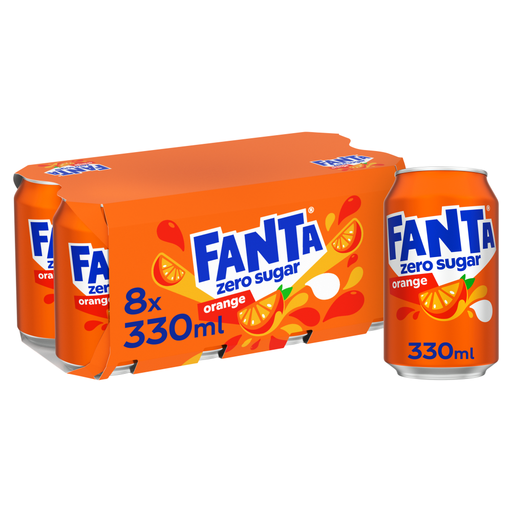 No image available
An eight-can orange-flavoured option for diners who do not want cola. The Joybuy product information lists 0.4g sugars per 100ml despite the Zero Sugar name; check the current can label for sugar content and caffeine if either matters to you.
No. Coca-Cola GB lists caffeine flavouring in Coca-Cola Zero Sugar, and Pepsi UK lists caffeine in Pepsi Max. If you want to avoid caffeine at a late TV dinner, choose an explicitly caffeine-free variant and check its ingredients.
Not necessarily. Coca-Cola GB and Pepsi UK list sweeteners in their Zero Sugar and Pepsi Max products, with a source-of-phenylalanine statement. Read the exact can label when an ingredient matters to someone drinking it.
Start with the number of diners and the dinners for which you want individual cans. An eight-can pack holds 2.64 litres and a six-can pack holds 1.98 litres; also consider how many you can store or chill and whether everyone wants the same flavour.