Shared-kitchen convenience seekers
You want a repeatable flat white without relying heavily on one person’s coffee-making skills. A milk system that users can remove and clean promptly matters as much as the drink controls.


Choose a one-touch bean-to-cup machine if several people want a repeatable milk-drink routine with fewer preparation steps. A compact assisted-manual machine suits a kitchen where users accept handling grounds and a portafilter in return for more control over milk texture; a traditional manual machine needs someone willing to take responsibility for preparation and upkeep. Whichever route you choose, agree on cleaning duties and check the exact machine’s size, milk-system care and access requirements.
You want a repeatable flat white without relying heavily on one person’s coffee-making skills. A milk system that users can remove and clean promptly matters as much as the drink controls.
Counter space or morning queues are concerns, but you are willing to handle ground coffee, a portafilter and milk steaming for a smaller assisted-manual setup.
You or another regular user will take responsibility for preparing espresso, steaming milk and maintaining a manual machine, rather than expecting every user to operate it without guidance.
Choose when: Several users want repeatable milk drinks with little coffee-making technique; Philips lists a flat white among the drinks on its Series 3300 EP3347/90.
Accept: Removable milk parts still need cleaning, alongside the machine’s other maintenance tasks.
Choose when: Space matters and users are willing to prepare coffee themselves; the Sage Bambino Plus combines a portafilter with adjustable automatic milk texturing.
Accept: Grounds disposal, portafilter cleaning and steam-wand care remain part of every user’s routine.
Choose when: Regular users specifically want to manage espresso and milk steaming themselves, as with the Gaggia Classic E24’s filter-holder and steam wand.
Accept: Preparation and manual maintenance need a committed owner rather than an expectation of one-touch drinks.
| Concern | What to check | Who this matters to |
|---|---|---|
| Shared clean-up | Check how milk-contact parts detach and clean, plus the instructions for waste disposal and descaling. | If several people make milk drinks, I need everyone to know what to clean after use so residue is not left for the next person. Around 42% of consumers would put shared clean-up first. |
| Queues, space and disturbance | Check operating clearance, water-tank access and whether a grinder is needed; consider when grinding noise would affect others. | When the counter is crowded or mornings are busy, I need a machine people can reach and use without holding up the kitchen. Space and disruption would come first for around 33% of consumers. |
| Espresso and milk control | Check whether milk texturing is automatic, manual or both, and who will prepare coffee and clean the wand. | If I want to adjust the espresso and milk texture myself, I am willing to take on the extra preparation and care. That hands-on control would be the main concern for around 25% of consumers. |
Cleaning a removable milk assembly is only one task. Water, coffee waste, drip trays and scheduled machine care still need attention.
Agree who cleans milk parts after use, empties waste and responds to maintenance prompts before the machine goes on the counter.
A portafilter workflow adds coffee preparation, used-ground disposal and steam-wand care to each drink.
Choose it when regular users will learn the process and take responsibility for cleaning; otherwise compare simpler shared-use workflows.
Depending on the machine, users may also need a separate grinder and coffee-preparation tools.
A machine can fit on the counter yet leave too little room to fill its tank, remove its tray or use a milk jug.
Check the exact model’s dimensions and component layout against the available counter and cupboard clearance.
For equipment under workplace control, the Health and Safety Executive recommends maintenance arrangements that include appropriate user checks, visual inspection and testing.
If the kitchen is at work, ask the responsible person how the appliance will fit into the site’s electrical-equipment checks and maintenance process.
Relevant to compact assisted-manual espresso, illustrated here by the Bambino Plus.
Relevant to one-touch bean-to-cup milk drinks, illustrated by the Series 3300 EP3347/90.
Relevant to traditional manual preparation, illustrated by the Classic E24.
Relevant to compact manual espresso with milk frothing, illustrated by the Dedica Arte EC885M.
These machines cover different ways to prepare espresso and milk in a shared kitchen: automatic bean-to-cup drinks, a capsule-based milk-drink workflow and more hands-on frothing or portafilter preparation. Check each model’s steps against the cleaning routine your users will follow.
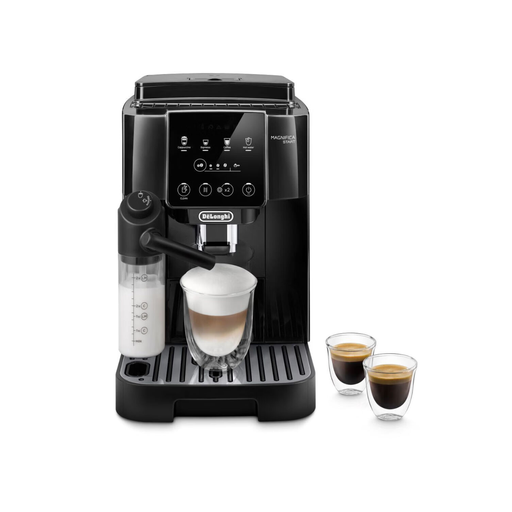 No image available
Consider this automatic bean-to-cup model when several users prefer button-led milk drinks; check whether its espresso and milk settings suit the flat whites they want.
Its product name specifies automatic milk preparation and four one-touch recipes. Agree on milk-system cleaning as well as the wider machine-care routine.
 No image available
Consider its capsule-and-milk workflow if users are happy to share the Lavazza A Modo Mio capsule system; check how they would make their preferred flat white.
The product name specifies an integrated hot-and-cold milk frother, glass mug and 1.1 L capacity. Check counter fit and frother-cleaning steps before purchase.
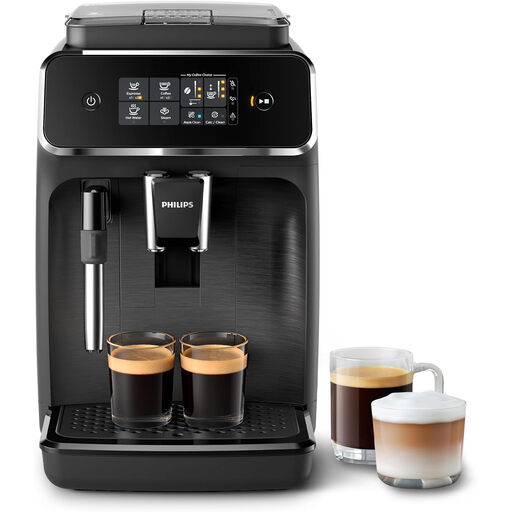 No image available
This bean-to-cup option suits users willing to froth milk themselves rather than expect an automatic flat-white drink.
Its product name specifies two coffee drinks, a ceramic grinder and a milk frother. Agree on post-use frother cleaning.
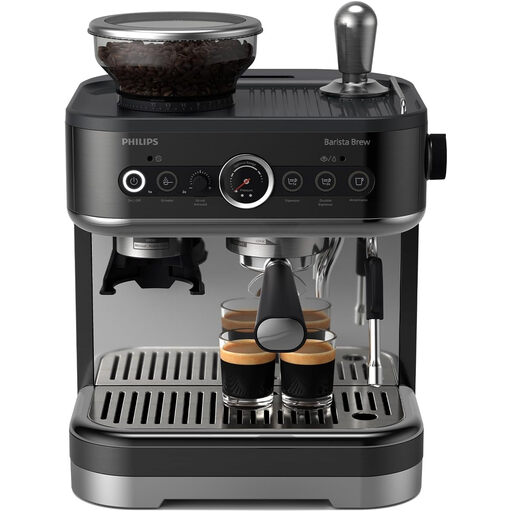 No image available
Consider this semi-automatic option when regular users want to prepare espresso and steam milk themselves.
Its product name specifies calibrated tamping and a steam wand. Check its working clearance and cleaning instructions, and agree who will handle the portafilter and wand after use.
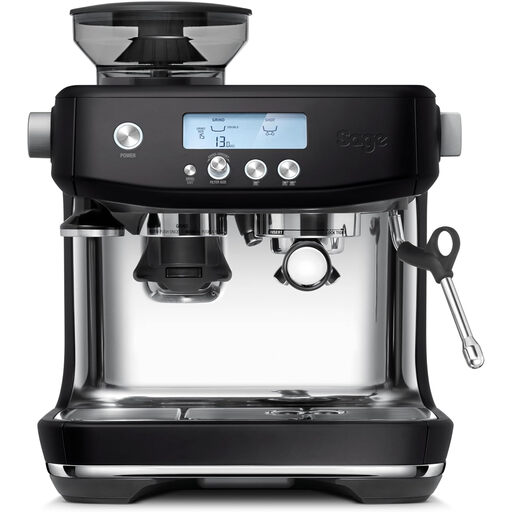 No image available
This manual portafilter route suits users who want to handle espresso preparation and milk steaming themselves.
Its product name specifies an integrated grinder with 30 settings and a steam wand. Check counter fit and assign responsibility for grounds disposal and wand care.
Bean-to-cup is the simpler route when several users want repeatable drinks with less preparation technique. A manual machine offers more direct involvement, but the group must accept coffee preparation, milk steaming and cleaning after use.
An automatic milk-drink or milk-texturing function can reduce the technique required, provided its available drink and milk settings suit what users mean by a flat white. Philips lists flat whites on its Series 3300 EP3347/90, while Sage provides automatic steam settings on the Bambino Plus; neither removes the need for milk handling and cleaning.
Agree who cleans milk-contact parts after each use and who takes care of waste, water and scheduled maintenance. If the kitchen is part of a food business, Food Standards Agency guidance also makes shared-facility cleaning and cross-contamination controls relevant to the business’s hygiene arrangements.
The Health and Safety Executive describes a risk-based maintenance approach for portable electrical equipment under workplace control, rather than one fixed testing action for every appliance. Ask the person responsible for the workplace how user checks, visual inspection and testing will be arranged as appropriate.