High-volume flatbread bakers
Anyone preparing repeated batches for a school fair, charity sale or similar event, where the number of usable trays and the pace of baking matter more than a long list of cooking programmes.


Choose a built-in double oven if you need separate cavities for batches with different timings or temperatures. If your kitchen accommodates only a standard-width single oven and the flatbreads use similar settings, look for a model with stated multilevel fan cooking. In either case, check tray space, installation requirements and your actual recipe before planning the sale.
Anyone preparing repeated batches for a school fair, charity sale or similar event, where the number of usable trays and the pace of baking matter more than a long list of cooking programmes.
Home bakers who need to work within a standard-width built-in space and must balance batch plans against the exact cabinet dimensions and electrical requirements.
Anyone planning to bag or box flatbreads before customers choose them. The way food is packaged and sold affects which ingredient and allergen information to check alongside the baking plan.
Choose the oven format around the number of batches and temperatures you need to manage, then check whether the appliance fits your kitchen and the trays you intend to use.
Choose it when: Separate cavities would help you manage batches with different cooking times or temperatures.
Bear in mind: The tall housing and electrical installation must suit the exact model; a second cavity does not establish how many trays will fit.
Choose it when: Your available space suits a single oven and you plan repeated batches at similar settings.
Bear in mind: One cavity cannot provide two independently controlled cooking temperatures.
Choose it when: You need a single appliance but would sometimes use independently controlled upper and lower zones, as offered by Samsung's NV7B5775XAK/U4.
Bear in mind: Split zones still occupy one physical cavity, so check usable tray dimensions in the configuration you plan to use.
| Concern | What to check | Who this matters to |
|---|---|---|
| Batch throughput | Compare usable cavities or zones, supplied shelves and trays, and space for your flatbreads. | If I have several batches to prepare, I need enough cooking space to keep the work moving without assuming every shelf can take my tray. Around 42% of consumers put batch management first. |
| Heat and browning | Check the exact model's fan or hot-air settings, stated multilevel use and temperature range. | When the flatbreads need consistent results across repeated trays, I want to test how my dough and baking surface perform before the sale. For around 33% of consumers, repeatable baking is the primary concern. |
| Kitchen fit | Match the required housing dimensions and electrical connection to your kitchen, not just the oven frontage. | If replacing my current oven would involve cabinet or electrical work, I need to know the new appliance can be installed where I intend to use it. Installation fit comes first for around 25% of consumers. |
A built-in double oven needs a suitable housing, and the cited AEG, Bosch and Neff models have model-specific installation and electrical requirements.
Measure the available height, width and depth against the exact installation instructions, then discuss the electrical connection with a qualified installer.
A cabinet change or professional electrical installation may add work before the oven can be used.
A named setting tells you which functions are available, not how every dough, topping or baking surface will brown on every shelf.
Check the stated fan or hot-air capability and temperature range, then test a representative batch using the trays and recipe planned for the sale.
Packaging food before customers select it can change the ingredient and allergen information required. The applicable duties depend on how the food is sold and the nature of the activity.
Decide whether the flatbreads will be sold loose or packaged before selection, and check the relevant food-safety and labelling guidance for your event. Ask the local authority if your registration position is unclear.
Packaging and allergen records may also need preparation time and materials.
Flatbreads with toppings or fillings that normally need refrigeration require a suitable storage and transport plan. Food Standards Scotland advises keeping foods that normally need refrigeration cool at community events.
Choose the filling and sale arrangements early enough to plan appropriate storage and transport.
Foods requiring refrigeration may call for cool boxes, ice packs or chilled transport.
Bosch offers built-in ovens relevant to both multilevel cooking and double-cavity batch planning.
The U2ACM7HN0B is a built-in double oven to consider if bread-baking, pizza, bottom-heat and hot-air settings are relevant to your recipe.
The OU5NP20B is a built-in double oven relevant to comparisons of cavity layout, fan cooking and installation fit.
Samsung's NV7B5775XAK/U4 offers a single-cavity format that can also operate with independently controlled upper and lower zones.
These choices include double ovens for managing separate batch stages and a single oven for repeated batches in one cavity. Compare each model's cooking settings, tray space and installation requirements with your baking plan.
 No image available
Consider this built-in double oven if separate cavities would help organise flatbread batches. Joybuy states a combined usable capacity of 105 L, comprising 71 L and 34 L cavities; Bosch lists 3D Hotair for up to three levels and a 50–275°C range for the MBA533BB3B.
Check usable tray positions and the installation instructions before ordering. A stated multilevel function does not guarantee identical results for your dough on every shelf.
 No image available
This single electric oven suits a plan built around one cooking cavity and repeated batches at similar settings. If several trays are central to that plan, check the model's stated multilevel cooking arrangements and supplied shelves.
Confirm the installation cut-out, electrical connection and temperature range against the exact model before choosing it for your recipe.
 No image available
Two cavities make this model relevant if you want to separate batch stages. Check the cooking functions and tray space of each cavity rather than assuming they work alike.
Confirm the appliance and housing dimensions in the installation instructions: the available product information gives its height as both 90 cm and 885 mm. Check the required electrical provision with a qualified installer.
 No image available
This double oven is an option when separate cavities matter to your batch plan. Check which cooking modes, shelves and tray sizes are available in each cavity for the flatbreads you intend to make.
Compare the installation dimensions, electrical requirements and usable temperature settings with your kitchen and recipe before ordering.
 No image available
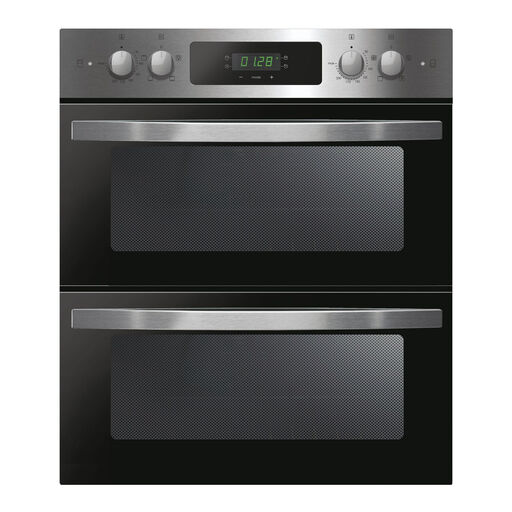
The built-under double-oven format is worth considering if it matches your kitchen layout and you want separate spaces for batch stages. Confirm the usable capacity, shelves and cooking functions of each cavity for your intended trays.
Check the exact installation dimensions, electrical connection and temperature range in the model's instructions before committing to a batch plan.
No: a single oven with stated multilevel fan cooking may suit repeated batches that use similar settings and fit its trays. Consider a double oven when separate cavities would help manage different timings or temperatures, provided your kitchen can accommodate and connect it.
Check the exact model's fan or hot-air function and temperature range first, then consider bottom heat or a bread or pizza setting if your recipe calls for one. Neff lists those functions on the U2ACM7HN0B, but a named setting cannot establish the result for your dough, toppings and tray; test a batch before the sale.
Match the manufacturer's required housing dimensions and electrical connection to your kitchen before ordering. For the AEG OU5NP20B, AEG states built-in dimensions of 875 × 560 × 550 mm and a hardwired-only connection; other models need their own installation checks.
The answer depends on how the flatbreads are packaged and sold and on the nature of your food activity. Food Standards Scotland says food prepacked for direct sale must carry the food name, an ingredients list and emphasised information for any of the 14 mandated allergens present. Decide on the sale format before preparing packaging, check the guidance that applies where your event takes place and ask the local authority if your food-business registration position is unclear.