Long-ride savoury snackers
A crisp bag offers a change from sweet food on an easier ride or at a stop. Count its carbohydrate alongside the rest of the food and drink you plan to carry, rather than treating the bag as the whole plan.


For an easier ride or a planned stop, an individual bag of flavoured crisps can be a savoury part of what you take, rather than your whole food and drink plan. Compare carbohydrate in the portion you will eat, check the exact flavour’s ingredients, and choose another familiar food or drink if crisps would be awkward to eat during a harder effort.
The useful portion and pack format depend on when you intend to eat, as well as the flavour you prefer.
A crisp bag offers a change from sweet food on an easier ride or at a stop. Count its carbohydrate alongside the rest of the food and drink you plan to carry, rather than treating the bag as the whole plan.
An individual bag makes the portion easier to identify before setting off. Consider where you will keep it and whether you would rather open it at a stop; British Cycling advises planning access to food and practising how you handle it.
Milk, barley ingredients and precautionary allergen statements differ between the specific flavours discussed here. Read the current pack for the variety you intend to take, rather than relying on its flavour name or another product from the same brand.
Start with the portion you would actually eat, then consider how you would carry and open it. Nutrition figures per 100 g are useful for comparing labels, but they are not figures for a whole bag unless the bag weighs 100 g.
| Priority | What to check | Your needs |
|---|---|---|
| Carbohydrate and timing | Read carbohydrate for the actual bag or portion. For rides over 90 minutes, consider it alongside all the other food and drink you plan to take; British Cycling gives 30–60 g carbohydrate per hour as a general rule of thumb for those rides. | I want a savoury option without mistaking one crisp bag for my entire longer-ride food plan. Walkers UK lists 13 g carbohydrate for a typical 25 g Cheese & Onion pack. |
| Portion and access | Check the weight of each inner bag, not just the multipack size. Decide where you will carry it and whether opening it at a stop would be more manageable. | A bag I can carry and open when I intend to eat matters more to me than a larger sharing pack. |
| Fat and salt | Compare figures on the same basis: per bag, per serving or per 100 g. Keep the food label separate from your drinking plan; a salt figure alone does not determine what you need to drink. | I want to know what is in the portion I will eat, particularly if I find some foods difficult to manage while riding. |
| Flavour and ingredients | Read the exact flavour’s ingredients, emphasised allergens and any precautionary statement on its current pack. Do not transfer details between potato crisps and formed-potato snacks. | I might enjoy a particular savoury flavour but still need to check its ingredients. Tyrrells lists barley malt vinegar and a may-contain-milk statement for Sea Salt & Cider Vinegar. |
Walkers UK lists 13 g carbohydrate for a typical 25 g Cheese & Onion pack. British Cycling’s general rule of thumb for rides over 90 minutes is 30–60 g carbohydrate per hour, considered across food and drink rather than from crisps alone.
Use the figure for the bag you will eat when considering everything else you intend to take.
Walkers Cheese & Onion contains milk, while Tyrrells Sea Salt & Cider Vinegar lists barley malt vinegar. Seabrook Salt & Vinegar Crunchies are also a different product type from its Sea Salt & Vinegar potato crisps.
Check the precise flavour, format and current pack whenever an ingredient or allergen matters.
Tyrrells lists its Sea Salt & Cider Vinegar crisps in both 40 g and 150 g sizes. A per-100 g nutrition figure is not the amount in either whole bag.
Compare like-sized portions, or use the label and the amount you intend to eat to work out your portion.
These manufacturer examples show why the exact variety, pack size and basis of its nutrition figures matter. They do not describe every flavour in each brand’s range or indicate which products are sold by Joybuy.
Cheese & Onion provides an example with nutrition stated for a typical individual 25 g pack.
Sea Salt & Cider Vinegar is listed in 40 g and 150 g sizes.
Mature Cheddar & Red Onion provides ingredient details and nutrition per 100 g.
Its Salt & Vinegar Crunchies are a formed-potato snack, distinct from its Sea Salt & Vinegar potato crisps.
Flame Grilled Steak Flavour is a ridged, savoury crisp example.
Strong Cheddar & Onion is listed in a 35 g bag as well as a larger size.
These flavoured crisp and potato-snack multipacks have stated individual pack sizes. Choose by the portion and flavour you would carry, then check the current product label for nutrition and ingredients.
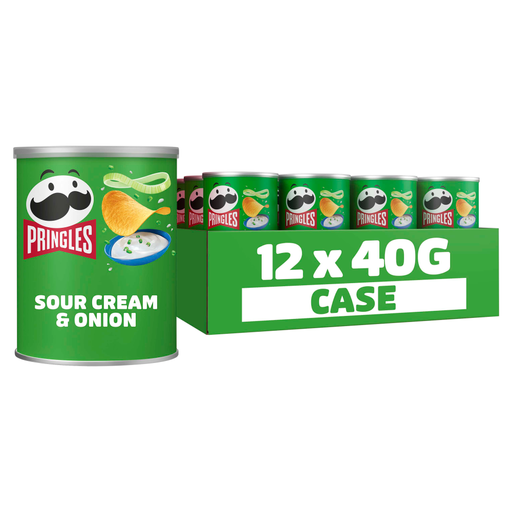 No image available
The 40 g portion is an option if you intend to pack a larger individual savoury snack. Check its carbohydrate per portion and the current ingredients before including it in your ride food.
 No image available
The 25 g bag gives you a stated portion to carry for a savoury break. Check the exact flavour’s ingredients, particularly if barley matters to you, and use its own nutrition label when planning food for the ride.
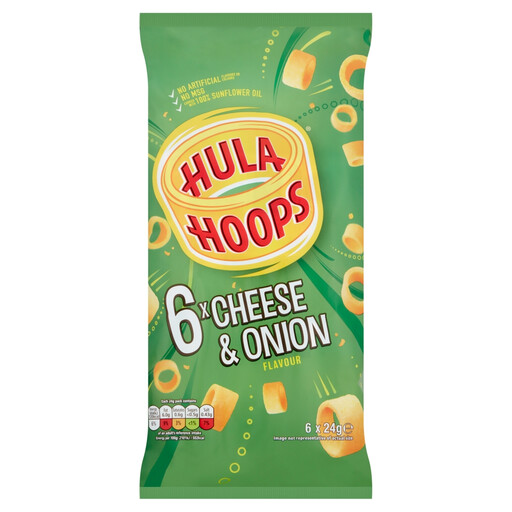 No image available
These 24 g bags offer another stated individual portion for a planned stop. Compare carbohydrate for one bag, and read its own ingredient and allergen advice rather than borrowing figures from potato crisps with a similar flavour.
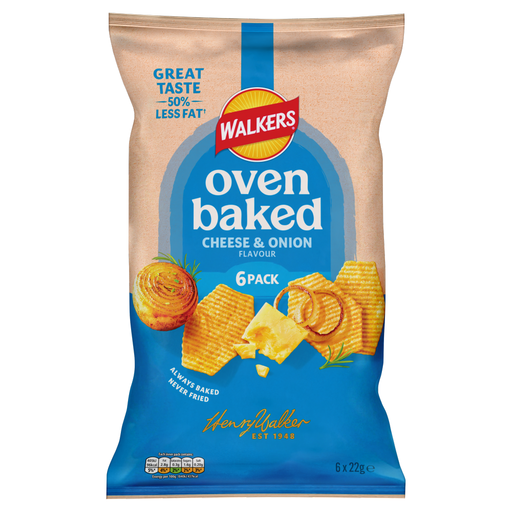 No image available
The multipack’s 22 g bags give you a defined portion to compare with other ride snacks. Judge its carbohydrate, fat and salt from this product’s label; the baked description alone does not answer how it fits your food plan.
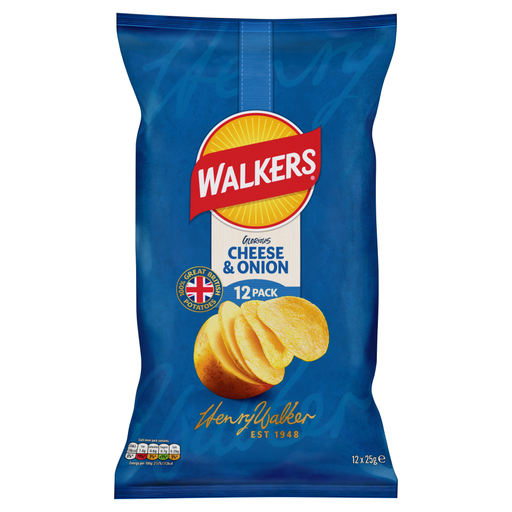 No image available
An individual 25 g bag is a defined portion for a savoury stop. Walkers UK lists 13 g carbohydrate, 7.4 g fat and 0.29 g salt for a typical 25 g Cheese & Onion pack; check this multipack’s current label, including its milk and may-contain advice.
No ride requires crisps specifically. British Cycling says additional fuel is generally unnecessary on rides up to about 90 minutes; a crisp bag on such a ride is a food choice, not a requirement.
Do not assume it will. British Cycling gives 30–60 g carbohydrate per hour as a general rule of thumb for rides over 90 minutes, while Walkers UK lists 13 g for a typical 25 g Cheese & Onion pack. Consider the bag alongside the rest of your planned food and drink.
British Cycling recommends practising your food choices in training rather than trying something new on event day. Check that you can carry and open the pack when needed, or plan to eat it at a stop.
Read the ingredients and any may-contain statement on the exact current pack. For example, Tyrrells Sea Salt & Cider Vinegar lists barley malt vinegar and says it may contain milk; another vinegar flavour need not have the same ingredients.
Follow the instructions on the pack you buy and keep inner bags sealed until you intend to eat them. Tyrrells recommends cool, dry storage for its Sea Salt & Cider Vinegar crisps.