What should you check?
Decide whether you need food for a long run or a snack at another time; then compare crisp labels on the same portion basis.
| Priority |
What to check |
Your needs |
| Long-run fuelling |
World Athletics lists 30–60 g carbohydrate per hour for events lasting 1–2.5 hours and up to 90 g per hour beyond 2.5 hours, subject to its guidance on carbohydrate types. Plan fluids separately and practise the approach during training. |
For a long run, I need a carbohydrate and fluid plan I have rehearsed, rather than assuming a bag of crisps serves the same purpose as my usual fuel. |
| Portion and nutrition |
Read carbohydrate and fat per 100 g for comparison, then check the figures for the amount you intend to eat. A 25 g individual bag and a sharing bag represent different portions. |
I want a savoury snack away from the main fuelling window and need to know what one bag—or my portion of it—contains. |
| Salt by flavour |
Compare salt per 100 g, then salt per bag or intended portion. Tyrrells lists 0.65 g/100 g for Lightly Sea Salted, KETTLE Chips lists 0.7 g/100 g for Lightly Salted, and McCoy’s lists 2.1 g/100 g for Salt & Malt Vinegar. |
If salt matters to me, I want to compare the exact flavours on the same basis—not assume that “sea salt” or a stronger flavour tells me how much a portion contains. |
| Dietary suitability |
Check the exact variety’s ingredients, dietary claims and allergen statements on the current pack. Walkers lists milk ingredients in Cheese & Onion; a plain-sounding flavour does not settle an allergy question. |
Before choosing a flavour, I need its own label to meet my dietary requirements, including any relevant cross-contact warning. |
Brand and flavour references
These examples show why it is worth comparing individual flavours and pack labels rather than making a decision from the brand name alone.
Tyrrells
Its Lightly Sea Salted potato crisps provide a plain-flavour reference for comparing labels.
- Tyrrells declares 0.65 g salt and 29.3 g fat per 100 g for Lightly Sea Salted.
- Compare those per-100-g figures with the amount you intend to eat; the flavour is not a substitute for a long-run fuelling plan.
KETTLE Chips
The Lightly Salted and Sea Salt & Balsamic Vinegar varieties illustrate differences within one range.
- KETTLE Chips declares 0.7 g salt/100 g for Lightly Salted and labels that variety gluten-free and suitable for vegans and vegetarians.
- Its Sea Salt & Balsamic Vinegar page declares 1.6 g salt/100 g, so check the particular flavour rather than applying the Lightly Salted figures across the range.
Walkers
Ready Salted and Cheese & Onion offer a clear example of why flavour-specific details matter.
- Walkers declares 52 g carbohydrate and 1.3 g salt per 100 g for Ready Salted; its 25 g pack lists 0.34 g salt.
- Cheese & Onion lists milk-derived ingredients. Check the current pack’s allergen information for either flavour.
Seabrook
Sea Salted is a crinkle-cut option with both per-bag and per-100-g figures on its product page.
- Seabrook declares 52.6 g carbohydrate and 1.3 g salt per 100 g; its 31.8 g bag lists 0.4 g salt.
- Use the 31.8 g bag figure when considering that pack, rather than treating the per-100-g figure as one bag’s intake.
McCoy’s
Its Salted and Salt & Malt Vinegar varieties have different declared salt levels.
- McCoy’s declares 1.3 g salt/100 g for Salted and 2.1 g/100 g for Salt & Malt Vinegar.
- McCoy’s Salted lists possible milk, soya, gluten and mustard; check the exact variety’s current allergen statement.
REAL Hand Cooked Crisps
Sea Salt and Sea Salt & Black Pepper provide another flavour-by-flavour label comparison.
- REAL declares 1.3 g salt/100 g for Sea Salt and 1.12 g/100 g for Sea Salt & Black Pepper.
- The salt figures do not establish how either flavour would fit an individual running or snack plan; check the portion and full label.
Crisps for snacks around training
These Joybuy options are flavoured or salted crisps to consider as occasional snacks around training, with sharing bags and individual-pack formats. Choose a pack by flavour, portion and its current ingredient and nutrition information—not as a replacement for planned long-run fuel.
 No image available
Sensations Thai Sweet Chilli Crisps 150g
A sweet-chilli flavoured option for an occasional savoury snack. The 150g bag is a sharing format, so check its serving information and current allergen label when deciding on a portion.
View on Joybuy
 No image available
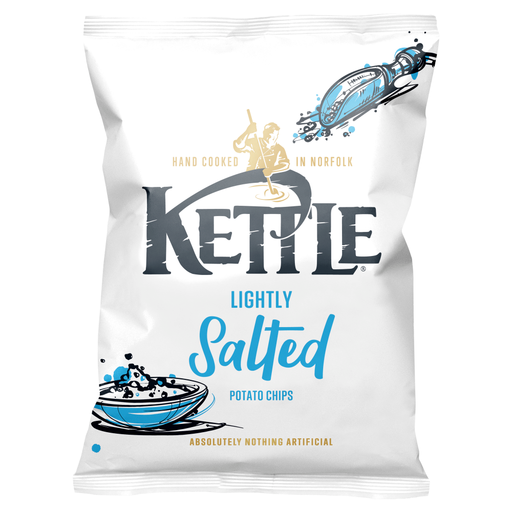
Kettle Chips Lightly Salted 130g
A lightly salted choice when you want a savoury snack rather than long-run fuel. KETTLE Chips declares 0.7 g salt and 53.7 g carbohydrate per 100 g for Lightly Salted. The manufacturer labels the variety gluten-free and suitable for vegans and vegetarians, but the retailer’s cross-contact information differs; check the current 130g pack carefully if you have an allergy.
View on Joybuy
 No image available
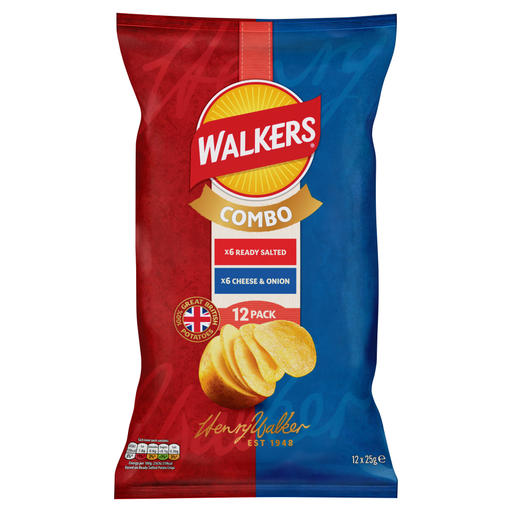
Walkers Ready Salted & Cheese & Onion 12 x 25g
Individual 25g bags offer a defined snack portion in two flavours. Walkers lists milk-derived ingredients in Cheese & Onion, so check each flavour’s current ingredient and allergen statement if dietary suitability matters.
View on Joybuy
 No image available
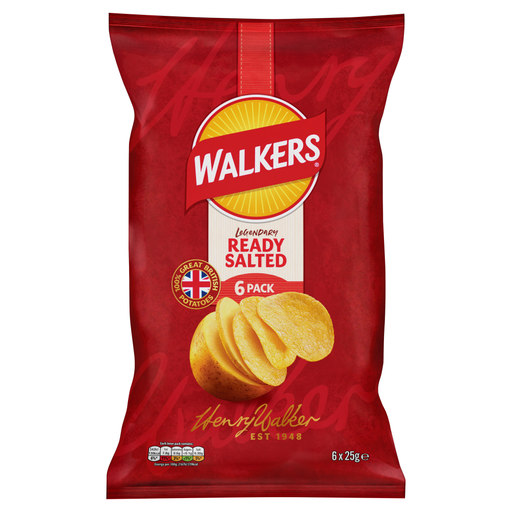
Walkers Ready Salted Crisps 6 x 25g
Six individual 25g bags make it straightforward to check the nutrition for one snack pack. Walkers declares 0.34 g salt per 25g bag and 52 g carbohydrate per 100 g for Ready Salted. Check the current pack for its allergen and cross-contact statements.
View on Joybuy
 No image available
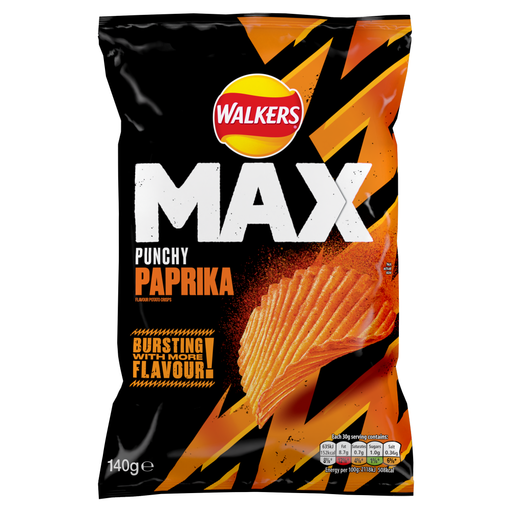
Walkers Max Paprika 140g
A paprika-flavoured crisp for an occasional savoury snack. The 140g bag is a sharing format; check the current pack’s serving, ingredient and allergen information before choosing your portion.
View on Joybuy
Questions about crisps and training
Can flavoured crisps replace gels or sports drinks on a long run?
Do not treat crisps as a direct replacement for a practised carbohydrate and fluid plan. World Athletics lists 30–60 g carbohydrate per hour for events lasting 1–2.5 hours and up to 90 g per hour beyond 2.5 hours, subject to its guidance on carbohydrate types. A crisp label may list carbohydrate, but it does not provide the same planned fuel-and-fluid approach.
Should I try a new crisp flavour for the first time on marathon day?
Keep race-day food choices within a strategy you have practised in training. World Athletics’ published endurance-nutrition advice calls for an individualised, well-practised approach, so race day is not the occasion to find out whether an unfamiliar snack fits yours.
Which of the compared crisps declare less salt?
For the specified flavours, Tyrrells declares 0.65 g salt/100 g for Lightly Sea Salted and KETTLE Chips declares 0.7 g/100 g for Lightly Salted. Those figures compare manufacturer labels for particular products, not their suitability as running fuel. Check the portion you would eat as well as the per-100-g value.
Are plain or lightly salted crisps automatically suitable for special diets?
No: check the exact flavour’s current pack. KETTLE Chips labels Lightly Salted gluten-free and suitable for vegans and vegetarians, as Seabrook does for Sea Salted, but other varieties can contain milk ingredients or carry cross-contact warnings. The retailer information for the listed Kettle Chips pack also differs from the manufacturer’s dietary claims, making the pack label particularly important for an allergy-sensitive purchase.
How does a crisp’s salt figure relate to the general UK guidance?
The NHS advises adults to have no more than 6 g of salt a day in total. A crisp label gives the amount in that product or portion; it does not establish an individual runner’s needs during exercise. Use the per-pack figure to understand the snack’s contribution, and follow any personalised advice you have been given.


