Parents planning casual holiday lunches
An individual bag makes the serving clear. With a sharing bag, portion the crisps before lunch and consider them alongside the rest of the meal rather than as its main component.


Choose a familiar flavour when preferences are mixed, and save chilli-led crisps for people who enjoy heat. For a school-holiday lunch, compare salt per portion and per 100g, decide how much to serve from a sharing bag, and check allergens on the exact flavour rather than relying on a brand-wide claim.
The useful choice depends on who will eat the crisps, how they will be served and whether anyone needs a particular ingredient or dietary check.
An individual bag makes the serving clear. With a sharing bag, portion the crisps before lunch and consider them alongside the rest of the meal rather than as its main component.
A familiar vinegar or cheese flavour may be easier to offer when tastes differ. Check before making a chilli or jalapeño variety the only option.
Look at the ingredients and precautionary allergen wording for the exact flavour. Vegetarian, vegan and gluten-free descriptions also need to apply to the particular product chosen.
Start with the eater’s flavour preferences, then check the portion, salt declaration and ingredients on the pack you intend to serve.
| Priority | What to check | Your needs |
|---|---|---|
| Salt | Read salt per pack or serving for the amount eaten, and per 100g to compare different bag sizes. NHS inform describes more than 1.5g salt per 100g as high and 0.3g or less as low. | I’m serving crisps regularly or alongside other salty foods, so the salt in this portion matters to the lunch as a whole. |
| Allergens | Check the exact flavour’s ingredients, emphasised allergens and may-contain wording. A dietary claim on one flavour does not establish the ingredients of another. | Someone eating lunch needs me to check milk, cereals containing gluten or another specified ingredient before I serve the crisps. |
| Flavour | Read the named flavour and ingredients for vinegar, cheese, chilli or jalapeño. Check preferences before choosing a strongly seasoned option for a shared lunch. | For a mixed group, I’d like a flavour people recognise; I’ll choose a chilli-led option only for someone who wants that heat. |
| Portion | Check whether the product is an individual bag or a sharing bag, and which serving size its nutrition figures describe. | A single bag makes packing lunch straightforward. If I buy a sharing bag, I’ll decide how much to serve rather than treat the whole bag as one portion. |
Salt differs between products and bag sizes: Seabrook Crisps lists 0.8g per 31.8g bag for its Sea Salt & Vinegar crisps, while Walkers UK lists 0.16g per 25g pack for Salt & Vinegar. Those are figures for different products and portions, not a brand-wide comparison.
Read both the portion figure and the per-100g figure on the crisps you are buying, especially when other lunch foods contain salt.
Seasoning can change the ingredients. Seabrook Crisps lists whey powder (milk) in Cream Cheese & Chive, while its Sea Salt & Vinegar product carries its own gluten-free, vegetarian and vegan descriptions.
Check the ingredients, allergen emphasis, may-contain wording and any dietary claim on the exact flavour and pack.
A serving figure on a sharing bag may describe only part of its contents. Reading the figure as though it covers the whole bag makes the amount eaten harder to judge.
Decide the serving before lunch and put that amount in a bowl or container.
Jalapeño and chilli flavours answer a different preference from vinegar or cheese. A group with unknown tastes may not all want heat.
Check preferences first, or offer a familiar flavour alongside the spicy one.
A brand can help you find a style of crisp, but nutrition, ingredients and dietary descriptions belong to individual products and flavours.
Walkers has familiar flavours such as Salt & Vinegar and a Salt & Shake option with salt in a separate sachet.
Tyrrells lists potato-crisp flavours including Sea Salt & Cider Vinegar, Smoked Paprika and Black Garlic & Sour Cream.
Kettle Chips describes its range as hand-cooked potato crisps with a choice of flavours.
Seabrook’s product information includes Sea Salt & Vinegar and Cream Cheese & Chive crisps.
Pipers offers flavours including Jalapeño & Dill and Anglesey Sea Salt.
REAL lists flavours including Sea Salt & Cider Vinegar, Sweet Chilli and Jalapeño Pepper.
These options include individually packed Walkers flavours and a Kettle sharing bag. Choose by the flavour and serving format you need, then check the exact pack for salt and allergens.
 No image available
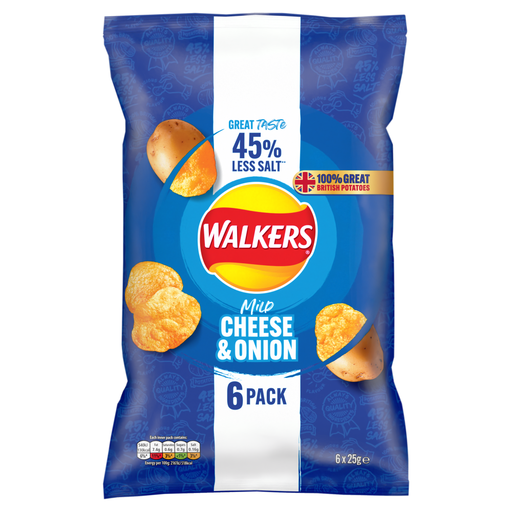
Six individual 25g bags suit lunches where a separate serving is useful. The product name carries a 45% less salt claim; compare the pack’s salt declaration and check its milk and precautionary allergen information before serving.
 No image available
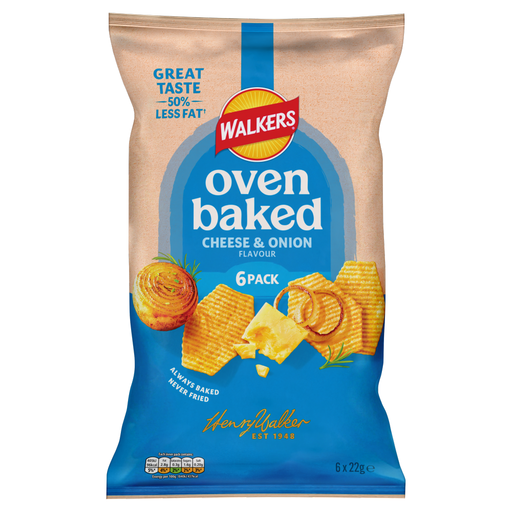
Six individual 22g bags provide a cheese-and-onion baked option. It is a baked potato snack rather than a traditional fried crisp, so check that this is the style wanted; read the pack’s milk and precautionary allergen information too.
 No image available
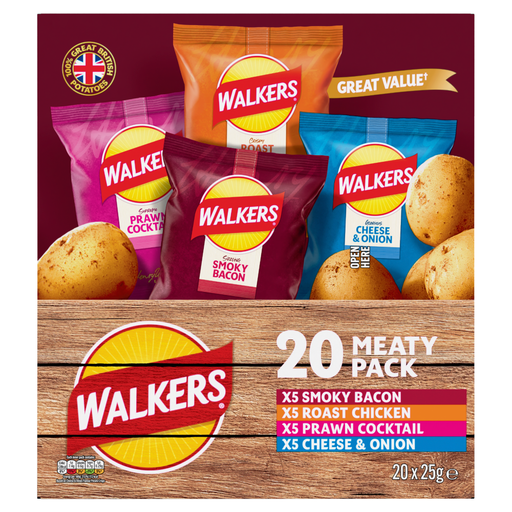
A variety pack of twenty individual 25g bags may help when household flavour preferences differ. Check which flavours are in the box, then read the salt and allergen details for each one rather than assuming they share a label.
 No image available
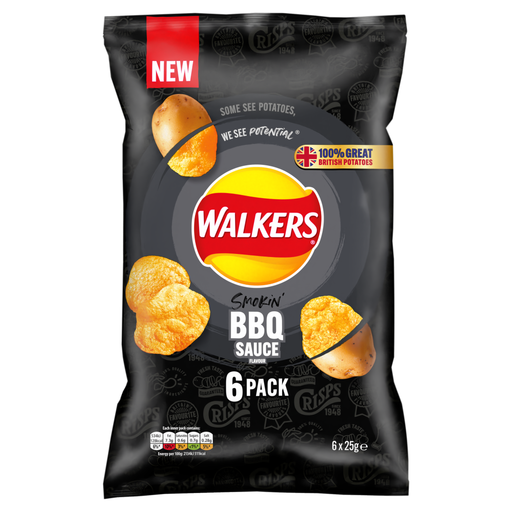
Six individual 25g bags offer a BBQ-flavoured choice for someone who wants that seasoning. Check the salt figure and the flavour’s soya and precautionary allergen information on the pack.
 No image available
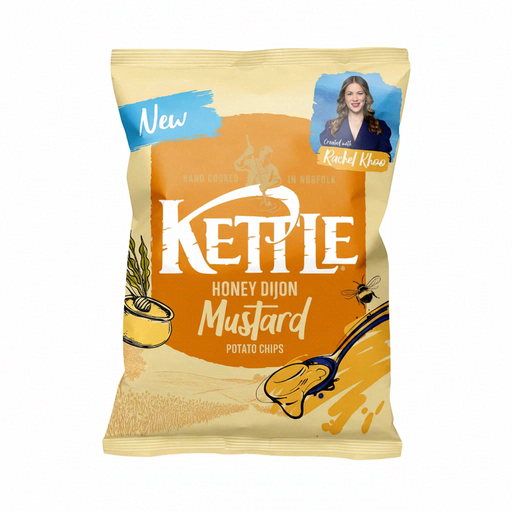
This 130g sharing bag suits a lunch where people want honey-and-mustard flavour and can serve their own portions. Decide the amount to put out and check the mustard allergen information on the exact pack.
Plan them as one part of lunch rather than its main food. NHS Healthier Families lists plain popcorn, plain rice cakes and raisins as alternatives to crisps in its lunchbox and lunchtime swaps.
Use salt per 100g to compare products, then salt per pack or serving to understand the amount you plan to serve. NHS inform describes more than 1.5g salt per 100g as high and 0.3g or less per 100g as low.
Consider salt from the whole day, not just the crisps. NHS inform states daily maximums of 3g for ages 4–6 and 5g for ages 7–10; the pack’s portion figure helps you see what the crisps contribute.
No; check the ingredients on the exact product. Seabrook Crisps, for example, lists whey powder (milk) in its Cream Cheese & Chive flavour.
Check how the food is supplied and read the information for that specific product. The Food Standards Agency and Food Standards Scotland state that, since 1 October 2021, UK food prepacked for direct sale must show its name and a full ingredients list with the 14 regulated allergens emphasised. Read the individual retail crisp packet when the crisps are supplied in one.