
24/7 Customer Support

Free returns

Same-day & Next-day Delivery

Quality Guaranteed

Unlock Your Welcome Offers: FREE Delivery | Up to 80% OFF | Free 30-day JoyPlus trial
Download the APP
Flavoured nuts can be convenient, satisfying and easy to serve, but attractive packaging does not always tell you what you are buying. A large bag may contain more coating than nuts, while a “premium” recipe may be unsuitable for your dietary needs or too strongly seasoned for casual snacking.
This guide from the Joybuy Product Recommendation Officer explains how to compare flavoured nuts, flavoured peanuts, seasoned cashews and spiced almonds before ordering. It also highlights practical options for UK lunchboxes, entertaining, gifting, travel and everyday sharing.
Words such as “honey roasted”, “Thai sweet chilli” or “truffle” describe the seasoning, not necessarily the amount of nuts in the pack. Check the ingredients list and quantitative ingredient declaration where available.
For example, the Mr Filbert’s Chicago Style Sweet & Salty Cashews contain 85% cashews, while the ChaCha Pecan Kernels with Maple Syrup & Lime contain 80% pecans. These figures provide a clearer indication of what makes up the product than the front-of-pack flavour description alone.
Some roasted nuts have a simple recipe of nuts, oil and salt. Others include sugar, flour, starch, glazing agents, flavour enhancers or sweeteners. None of these automatically makes a product unsuitable, but they affect taste, texture and dietary suitability.
Chocolate-coated nuts and honey roasted peanuts are typically sweeter choices. Garlic, wasabi, Tom Yum and chilli varieties may contain several seasoning ingredients and can be more intense than their product names suggest.
Nuts and peanuts are regulated allergens in the UK, and cereals containing gluten, milk, soya, sesame and mustard may also appear in coatings or seasoning blends. Always read the current packaging, including “may contain” information, particularly when buying for guests, children or someone with an allergy.
A product described as vegan-friendly may still be made in a facility handling other allergens. Product recipes and packaging can change, so the label should take priority over an online description.
Ingredients are listed in descending order by weight. A higher nut percentage generally means the nut itself plays a larger role in the eating experience. Compare this with your intended use:
UK nutrition panels are normally shown per 100g, which makes comparison easier between pack sizes. Flavoured nuts can vary considerably in energy, fat, sugars and salt depending on the coating.
For reference, Mr Filbert’s Chicago Style Sweet & Salty Cashews list 580 kcal, 20g sugars and 1.1g salt per 100g. KP Snacks Honey Roast Peanuts list 557 kcal, 17g sugars and 0.93g salt per 100g. The figures are not serving recommendations, so consider how much you plan to eat and whether the pack is intended for one person or sharing.
Small 70g to 120g packs can suit desk drawers, travel and individual treats. Larger 225g to 500g bags or tins are more practical for parties and households, but need careful resealing to preserve crunch.
Store roasted nuts in a cool, dry place away from direct sunlight, heat and moisture. Once opened, follow the product’s instructions. Some products recommend consuming within a week, while others advise using the contents within two weeks. Never eat an oxygen absorber or desiccant sachet supplied inside the packaging.
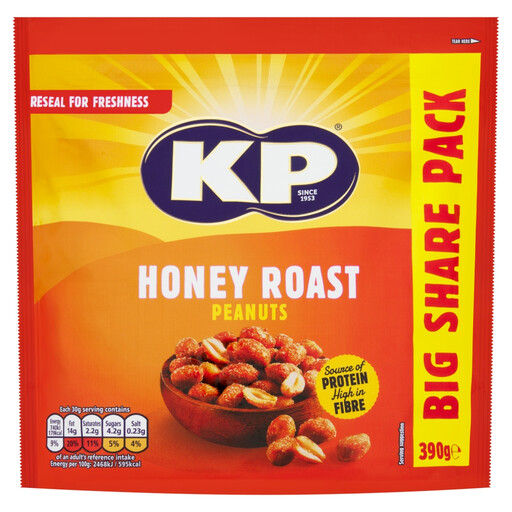
Why This Fits Their Persona: The 390g pack is suited to households, film nights and casual sharing, offering a familiar sweet and savoury profile without an unusual spice level.
The recipe is clearly listed, with peanuts, sugar, honey, sunflower oil, salt and gum arabic rather than an undefined coating.
390g sharing size; 17g sugars and 0.93g salt per 100g.
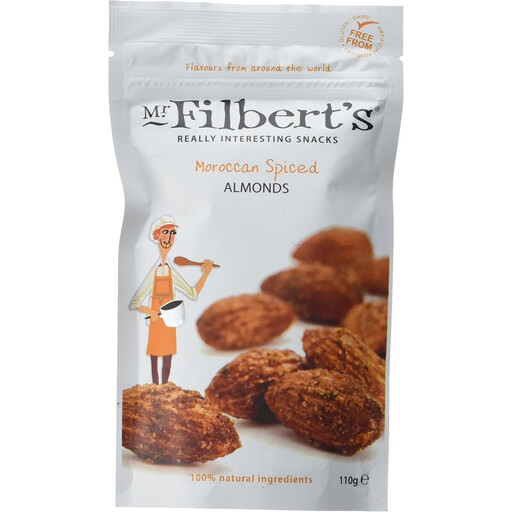
Why This Fits Their Persona: A 100g pack with Moroccan-style garlic, mint, aniseed, coriander and chilli is suited to gifting, drinks parties and charcuterie boards.
The listing identifies roasted almonds at 85% and provides a detailed spice list, making the flavour profile easier to assess.
23.7g protein and 0.7g salt per 100g; suitable for savoury snack boards.
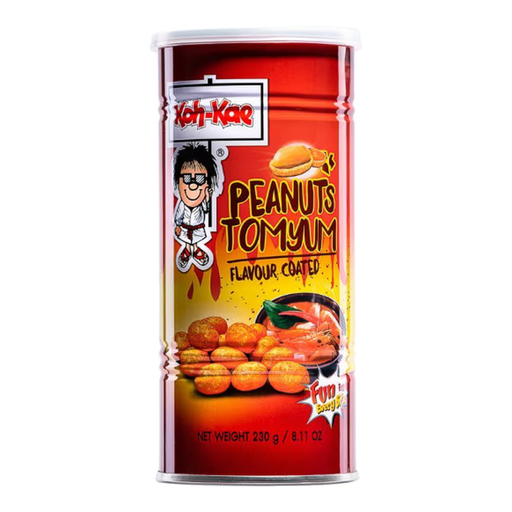
Why This Fits Their Persona: The 230g bag suits spice lovers, international snack collections, film nights and sharing platters where a distinctive Thai-inspired flavour is wanted.
Lemongrass, galangal, kaffir lime leaf, tomato powder and citric acid are stated, so shoppers can anticipate a sour, aromatic and spicy profile.
Ready to eat; vegan-friendly according to the supplied product information.

Why This Fits Their Persona: This smaller pack combines roasted almonds with dark, milk and white chocolate coatings, making it suitable for gifting or a portioned indulgence.
The pack identifies almonds at 40% and clearly lists milk in the chocolate recipe, helping shoppers check the main allergens.
Three chocolate varieties; 90g pack size for controlled sharing.
We have compiled a complete, real-time list of products that fully satisfy these strict selection criteria and UK safety regulations.
They can be convenient for adult lunchboxes, travel and office snacks, but whole nuts may present a choking risk for young children. Schools and childcare settings may also have nut-free policies. Check the school or venue rules and the allergen information before packing them.
Reseal the original bag tightly or transfer the nuts to an airtight container. Keep them in a cool, dry cupboard away from sunlight, heat and moisture. Follow the individual pack’s consumption guidance, as coated nuts can lose their crunch at different rates.
Larger packs of honey roasted peanuts, spicy nuts, mixed nuts and Thai-inspired coated peanuts are practical for gatherings. For more formal entertaining, seasoned cashews, Moroccan spiced almonds or Italian-style truffle and sea salt mixed nuts can be served alongside cheese, crackers and drinks. Always place the original packaging nearby so guests can check allergens before eating.