
24/7 Customer Support

Free returns

Same-day & Next-day Delivery

Quality Guaranteed

Unlock Your Welcome Offers: FREE Delivery | Up to 80% OFF | Free 30-day JoyPlus trial
Download the APP
Fleas and ticks can affect pets throughout the UK, whether your dog regularly explores parks or your cat mainly stays indoors. A flea and tick spot-on treatment for cats and dogs can be convenient, but choosing the wrong product may mean wasted money, incomplete coverage or an application that is unsuitable for your pet.
Before buying, check the species, weight range, minimum age, active ingredients and reapplication schedule. The following guide explains the practical details that matter when comparing cat flea treatment, dog flea treatment and flea and tick pipettes.
A product labelled for a “small” or “large” pet is not selected by appearance alone. Weight bands determine the amount of active ingredient in each pipette. A stocky small-breed dog may need a different product from a lighter dog with a similar height.
Weigh your pet recently and select a treatment whose stated range includes that weight. Never split a pipette or combine several doses unless the product label specifically instructs you to do so.
Some spot-on products are intended to kill adult fleas or repel external parasites, while others also contain an insect growth regulator designed to interfere with flea eggs and larvae. These are different functions.
For example, fipronil flea treatment products may target adult fleas and ticks, while (S)-methoprene is used in some formulations to inhibit the development of flea eggs, larvae and pupae. This may be relevant when fleas have already been noticed in bedding, carpets or soft furnishings. It does not remove the need to clean the home and follow the label instructions.
A pesticide-free formula may appeal to owners who prefer to avoid certain insecticides, but do not assume that a repellent product provides the same type or duration of control as a veterinary medicine. Check whether the pack says “for use as an insect repellent” or describes a flea and tick treatment, then compare the active ingredients and stated protection period.
Never use a dog product on a cat unless the label explicitly confirms it is suitable. Some dog parasite treatments contain ingredients that can be dangerous to cats. Keep treated animals apart until the application site is dry if the instructions require it.
For kitten flea treatment, check both the minimum age and minimum weight. The Itch cat product listed here is for cats and kittens over 8 weeks old and weighing at least 1 kg. Dog products in the selection are generally specified for puppies over 8 weeks old, with weight bands such as 2–10 kg, 10–20 kg and 20–40 kg. Always prioritise the individual product label.
Look for a clear ingredient list rather than relying on phrases such as “long-lasting protection”. Products in this guide use different approaches:
Protection periods vary by product and parasite. One product may state up to eight weeks against fleas but only four weeks against ticks. Another may state up to 12 weeks per pipette as a repellent. Compare the cost per month of intended use, not simply the number of pipettes in the box.
Bathing can also affect application. Some labels advise avoiding bathing for 48 hours after treatment. Read the enclosed leaflet and use the stated reapplication schedule rather than applying extra doses because fleas remain visible immediately after treatment.
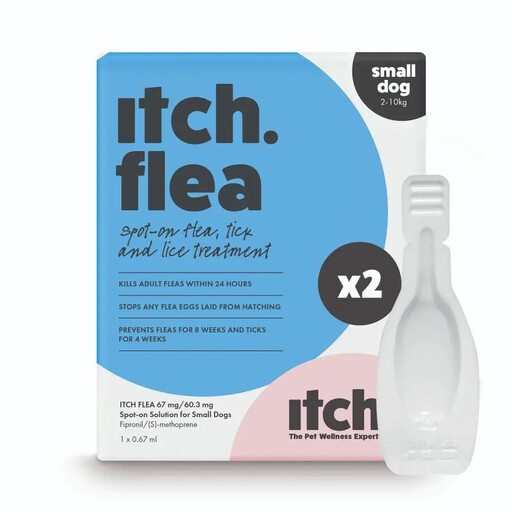
Why This Fits Their Persona: A straightforward option for owners beginning a regular small dog flea treatment routine, provided the dog weighs 2–10 kg and is over 8 weeks old.
The stated 2–10 kg band helps prevent guesswork, while fipronil and (S)-methoprene address adult parasites and flea development respectively.
Two pipettes; listed for puppies over 8 weeks and 2 kg; includes both named active ingredients.
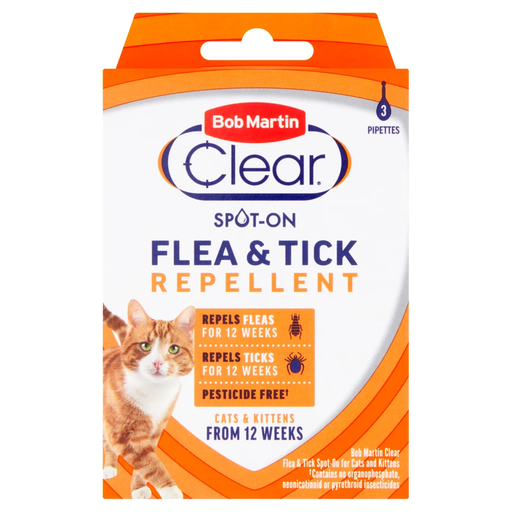
Why This Fits Their Persona: Suits cat owners who prefer a pesticide-free formula and want a simple topical application for cats or kittens from 12 weeks old.
The listing identifies it as an insect repellent and names its ingredients, making its intended use clearer than vague “natural protection” wording.
Three 0.9 ml pipettes; pesticide-free formula; stated protection of up to 12 weeks per pipette.
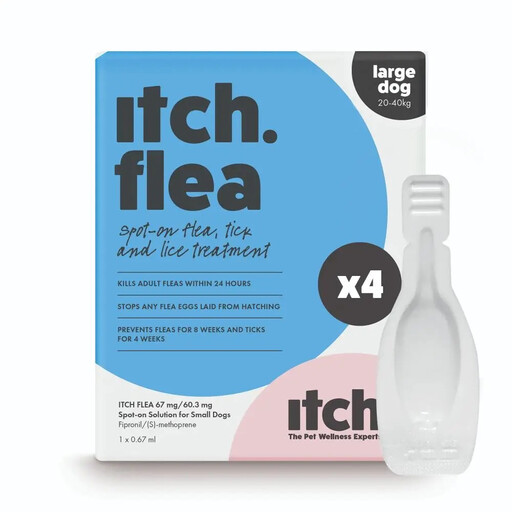
Why This Fits Their Persona: The four-pipette pack is practical for owners managing a larger, active dog and planning repeated applications according to the label.
The 20–40 kg range and weight-based dosing reduce the risk of selecting a small or medium dog treatment for a larger animal.
Four pipettes; fipronil and (S)-methoprene; stated suitability for dogs over 8 weeks and at least 2 kg.
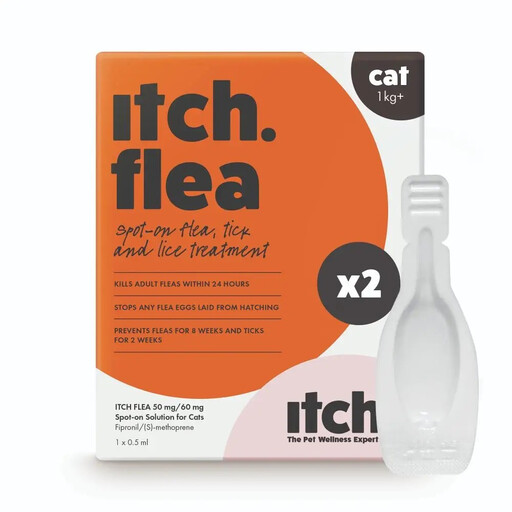
Why This Fits Their Persona: A cat-specific choice for households that want a named dual-action formula, provided the cat is over 8 weeks and weighs at least 1 kg.
The product is clearly labelled for cats, with a minimum weight and age, helping avoid the serious error of applying a dog formulation to a feline.
Two pipettes; fipronil and (S)-methoprene; listed action against fleas, eggs and larvae.
We have compiled a complete, real-time list of products that fully satisfy these strict selection criteria and UK safety regulations.
For medium dog flea treatment, compare products in the 10–20 kg category. Large dog flea treatment commonly covers 20–40 kg, while small dog flea treatment often covers 2–10 kg. If your pet sits close to a boundary, weigh again and follow the manufacturer’s stated range rather than estimating.
It depends on the product and parasite. Some fipronil-based products listed here state up to eight weeks for fleas and up to four weeks for ticks. The pesticide-free cat repellent lists up to 12 weeks per pipette. Reapply only according to the product label.
No, not unless the label specifically states that it is suitable for that species. Cat and dog formulations can use different ingredients and concentrations. Never substitute between species based on a similar body weight.