
24/7 Customer Support

Free returns

Same-day & Next-day Delivery

Quality Guaranteed

Unlock Your Welcome Offers: FREE Delivery | Up to 80% OFF | Free 30-day JoyPlus trial
Download the APP
Discovering fleas on your cat or in your home can be a frustrating experience. The constant scratching can leave your feline friend distressed, and the thought of an infestation is enough to make anyone's skin crawl. With so many products on the market, from spot-on treatments to household sprays, choosing the right one can feel overwhelming.
As a Joybuy Product Recommendation Officer, my role is to help you navigate these choices. This guide offers practical advice to help you select an effective and appropriate flea treatment for your cat, focusing on objective features and intended use, so you can make a confident decision for your pet and your home.
Before you buy, considering a few key factors will ensure you get a product that suits your cat's needs and your specific situation.
Flea treatments come in several formats, each with its own application method and purpose.
The ingredients determine how a treatment works. Some cat owners prefer a natural flea repellent for cats, which often uses plant-based extracts. Others may need a formula containing an insecticide, such as a fipronil spot on for cats, for a more direct approach to eliminating an active infestation. For complete control, look for products that not only kill adult fleas but also contain an Insect Growth Regulator (IGR) to kill flea eggs and larvae, preventing re-infestation.
Always check that a product is suitable for your cat's specific life stage and size. A kitten flea treatment will have a different formulation and dosage than one for an adult cat. If your cat is pregnant, nursing or has a pre-existing health condition, it is always a good practice to consult your vet before starting any new treatment.
Here are our recommendations, selected to address different needs, from natural repellents to comprehensive infestation control.
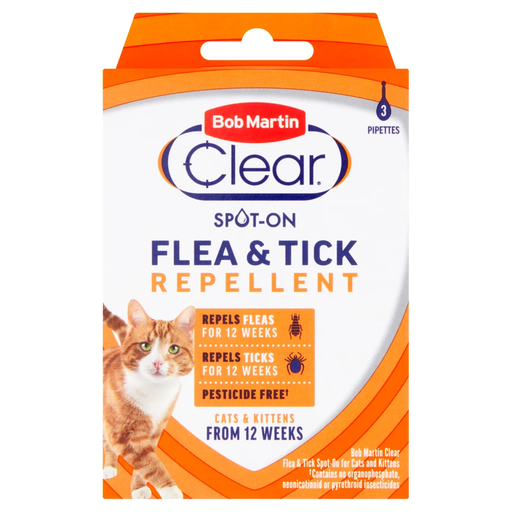
Why It Stands Out: This treatment offers a pesticide-free approach to parasite control. Instead of conventional insecticides, it uses a blend of Margosa Extract and Lavandin Oil to repel fleas and ticks. It's a gentler option that provides a protective shield for your cat.
Pros:
Who is it for? This is a suitable choice for cat owners who prioritise natural ingredients and are looking for a repellent-based, preventative solution rather than a chemical insecticide. It is designed for cats and kittens from 12 weeks of age.

Why It Stands Out: The Beaphar Flea Spray is a versatile insecticidal product that tackles fleas both on your pet and in your home. Its ability to be used on pet bedding and carpets helps to eliminate pests at the source, which is essential for managing a full-blown infestation.
Pros:
Who is it for? This spray is ideal for pet owners who need an immediate solution for both their animal and their living space. It is particularly useful when you suspect fleas are breeding in your home.
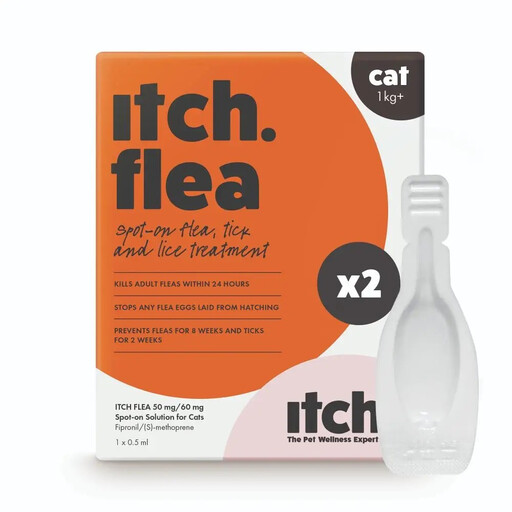
Why It Stands Out: This treatment provides a comprehensive approach to flea and tick treatment for cats. It features a dual-action formula containing Fipronil, which targets adult fleas and ticks and (S)-Methoprene, an insect growth regulator that stops flea eggs and larvae from developing. This combination effectively breaks the flea life cycle.
Pros:
Who is it for? This is a strong option for cat owners dealing with a persistent flea problem who need a fast-acting, comprehensive solution that targets all stages of the flea life cycle.
Every cat and home is different, and what works for one may not be the perfect fit for another. If you're looking for different formulations, active ingredients or application methods, there are many other solutions available.
Explore our full range of flea treatment for pets to find the ideal match for your needs.
The frequency depends entirely on the product. Most spot-on treatments provide protection for four weeks, though some, like the Bob Martin repellent, offer longer durations. Sprays may need more frequent application. Always read and follow the manufacturer's instructions on the packaging to ensure continuous and safe protection.
Yes, this is a crucial step for effective flea control. Only about 5% of a flea population (the adults) lives on your pet. The other 95%—the eggs, larvae and pupae—reside in your carpets, furniture and pet's bedding. Using a household flea spray is essential to eliminate the infestation completely and prevent fleas from returning.
No, you should never use a flea product intended for dogs on your cat unless the packaging explicitly states it is safe for both species. Many dog treatments contain permethrin, an insecticide that is safe for dogs but extremely toxic to cats and can cause severe neurological damage or even be fatal. Always use a product specifically formulated for felines.