
24/7 Customer Support

Free returns

Same-day & Next-day Delivery

Quality Guaranteed

Unlock Your Welcome Offers: FREE Delivery | Up to 80% OFF | Free 30-day JoyPlus trial
Download the APP
Choosing a new helmet can feel overwhelming. The market is flooded with options, all promising the perfect blend of safety and convenience. However, many UK riders find themselves disappointed with a purchase that fails to live up to its claims. A helmet is the single most important piece of gear you will ever buy, and getting it right matters.
As the Joybuy Product Recommendation Officer, my role is to help you navigate the market and focus on what truly counts. We will look past the marketing clutter and identify the common pitfalls that can lead to a poor investment, ensuring you select a helmet that serves you well on every ride.
Before you add a helmet to your basket, be aware of these frequent issues:
To avoid these traps, focus your attention on three non-negotiable parameters. These are the specifications that directly impact your safety, comfort and the helmet's long-term usability.
This is the most critical factor. The ECE 22.06 helmet certification is the latest and most stringent European safety standard. Unlike its predecessor, it involves a much more rigorous testing process:
Insisting on an ECE 22.06 certified helmet guarantees it is fully road legal and built to modern safety requirements.
A quality visor system enhances both safety and comfort. A motorcycle helmet with sun visor (often called a dual visor helmet) is a significant practical advantage for UK riders, who often face rapidly changing light conditions. An internal, drop-down sun visor allows you to adapt to glare instantly without needing to stop or fumble with sunglasses. Look for a main clear visor that is scratch-resistant and provides a wide, unobstructed field of view, which is especially important for a daily commuter or scooter helmet.
The outer shell provides the first line of defence. Materials like Acrylonitrile Butadiene Styrene (ABS) offer a reliable balance of impact resistance and affordability. Inside, the comfort liner is just as important. A removable and washable liner is essential for hygiene, especially for daily riders. Furthermore, features like dedicated cutouts for intercom speakers make the future installation of a Bluetooth system straightforward.
We have selected a few helmets that align with these core principles, matching them to the specific needs of different UK riders.
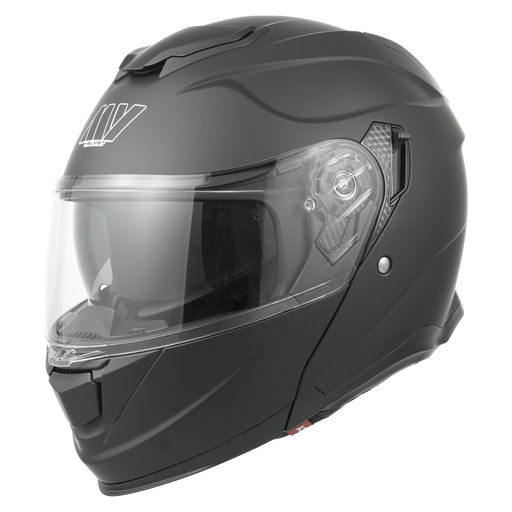
Why This Fits Their Persona: Ideal for navigating city traffic and quick stops. The flip-front mechanism offers convenience for paying for fuel or talking without removing the helmet, while the integrated sun visor is perfect for dealing with low sun during a morning or evening commute.
This helmet is fully ECE 22.06 certified, ensuring it is road legal and meets the latest UK safety standards, unlike many older or non-compliant models found online.
Features a dual visor system with a drop-down sun shield. It also includes reserved slots for straightforward installation of a Bluetooth intercom headset.
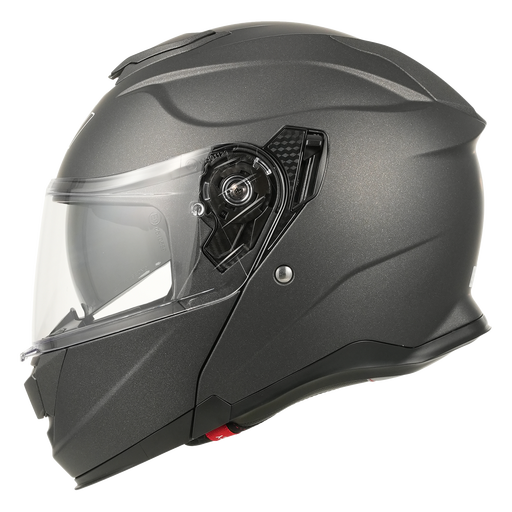
Why This Fits Their Persona: Built for comfort on extended journeys. The comfortable inner lining keeps you dry, while the dedicated space for a Bluetooth headset makes it easy to stay connected with a passenger or navigation system on long motorway stretches.
This helmet avoids the "Bluetooth-ready" trap by providing properly designed, accessible slots under the chin pads, simplifying the installation of an aftermarket intercom system without guesswork.
High-strength ABS shell with high-density EPS for shock absorption. The comfortable, moisture-wicking liner is ideal for all-day wear.
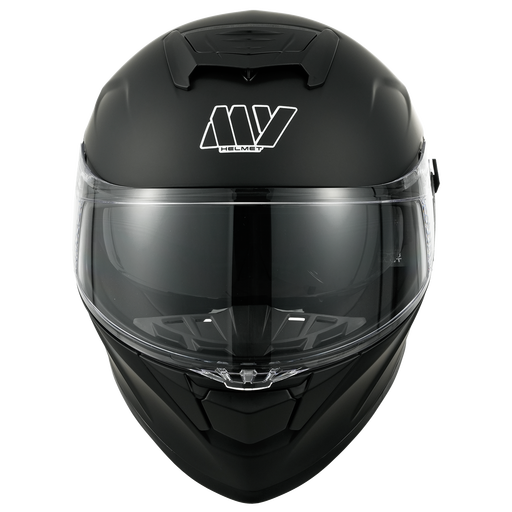
Why This Fits Their Persona: This helmet delivers the most critical modern safety and convenience features without a premium price tag. It is an excellent choice for new riders or those using a scooter for urban travel who need dependable, certified protection.
It provides the essential ECE 22.06 certification and a reliable flip-up mechanism, proving that you do not need to sacrifice core safety or functionality when seeking good value.
Features a removable and washable inner lining for easy maintenance. The integrated sun visor adds a layer of convenience typically found on more expensive models.
We have compiled a complete, real-time list of products that fully satisfy these strict selection criteria and UK safety regulations.
For the vast majority of modular helmets, the answer is no. You should only ride with the chin bar securely locked in the down, full-face position. The flip-up function is designed for convenience when you are stationary. Some premium helmets have a "P/J" dual-homologation rating, which certifies them for use in both positions, but unless this is explicitly stated, assume it is for full-face use only while riding.
Most manufacturers and safety bodies recommend replacing your helmet every 3 to 5 years. Over time, the materials in the comfort liner and the protective EPS foam degrade from exposure to sweat, hair products and the environment, reducing their ability to absorb impact. Crucially, you must replace your helmet immediately after it sustains any impact, even from being dropped onto a hard surface, as the damage may not be visible.
The ECE 22.06 standard is a significant step up in safety. It mandates a wider range of impact tests at different speeds and, for the first time, includes a test for rotational forces, which are a common cause of brain injury in accidents. It also places stricter requirements on visors and any official attachments. Choosing an ECE 22.06 helmet ensures your gear has been tested against the most up-to-date understanding of motorcycle safety.