
24/7 Customer Support

Free returns

Same-day & Next-day Delivery

Quality Guaranteed

Unlock Your Welcome Offers: FREE Delivery | Up to 80% OFF | Free 30-day JoyPlus trial
Download the APP
Tired of cluttered surfaces and looking for a way to reclaim your floor space? Floating shelves offer a brilliant solution, turning empty walls into stylish and practical storage. They can transform a room, allowing you to display your favourite books, plants and decor without the bulk of traditional bookcases.
However, with so many options available, choosing the right ones can feel overwhelming. This guide is designed to help you navigate the choices, focusing on material, strength and style to help you find the perfect wall-mounted shelves for your home.
Before you start adding items to your basket, a little planning goes a long way. Considering these key points will ensure you select shelves that are not only stylish but also safe and functional for years to come.
The material of your shelf defines its look and durability. Metal floating shelves, often made from aluminium or steel, offer a clean, industrial or minimalist aesthetic. They are typically very durable, easy to clean and often resistant to moisture, making them a great choice for kitchen wall shelves or bathroom floating shelves.
On the other hand, a wooden wall shelf brings warmth and a natural texture to a space. From solid woods to quality engineered boards, they suit a range of styles from rustic to modern Scandinavian. They are ideal as a floating bookshelf or as decorative shelves for a wall in your living room.
It is crucial to consider what you plan to display. For heavier items like hardback books, kitchenware or large plants, you will need heavy duty floating shelves. Always check the manufacturer's stated maximum weight capacity.
Equally important is your wall type. For plasterboard walls, shelves must be fixed directly into the wooden studs behind the board for maximum support. For solid masonry walls, you can typically mount them anywhere using the correct wall plugs and screws. A secure installation is key to performance.
Different rooms have different demands. In a bathroom, look for materials that are waterproof and rust-resistant. For a busy entryway, a shelf with integrated hooks can add valuable utility. In a living area, the focus might be more on aesthetics, where modern wall shelves can act as a feature piece, creating a focal point for your favourite objects. Thinking about the specific use case will help narrow down your options significantly.
Here are a few of our standout recommendations that balance design, function and quality craftsmanship.


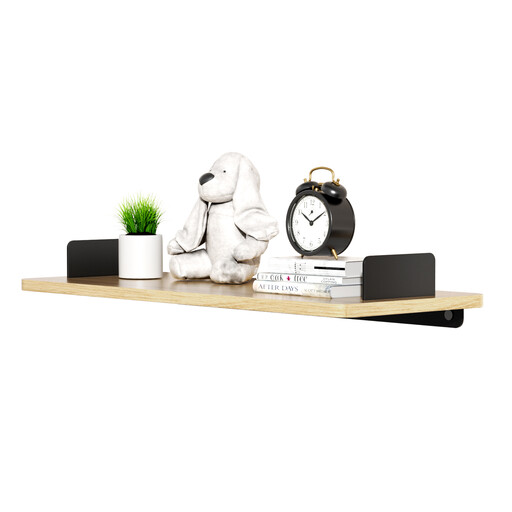
If these specific styles aren't quite the right fit for your vision, there is a wider world of shelving to discover. From different sizes to unique materials and configurations, the perfect shelf for your space is out there.
Explore our full collection of living room wall shelves to find the perfect match for your home.
The weight capacity of a floating shelf varies significantly based on its design, materials and how it is installed. The products featured here can hold up to 44 lbs (20 kg), which is suitable for books and heavy decor. Always check the manufacturer's specifications and ensure you mount the shelf securely to a solid wall or wall studs to achieve its maximum load-bearing potential.
For most people with basic DIY skills, installing floating shelves is a manageable project. Most kits come with all the necessary hardware (screws and wall plugs) and a set of instructions. The key steps involve measuring, ensuring the shelf is level and drilling securely into the wall.
Floating shelves need a solid anchor point. They are best installed on masonry (brick or block) walls or directly into the wooden studs of a plasterboard wall. Mounting heavy duty floating shelves onto plasterboard alone without hitting a stud is not recommended, as it will not provide enough support and could lead to the shelf falling.