
24/7 Customer Support

Free returns

Same-day & Next-day Delivery

Quality Guaranteed

Unlock Your Welcome Offers: FREE Delivery | Up to 80% OFF | Free 30-day JoyPlus trial
Download the APP
A suitable floor cleaner should remove everyday dirt without leaving a sticky film, dull haze or avoidable surface damage. Yet many bottles are marketed as “multi-surface” solutions when their instructions exclude important materials such as untreated wood, waxed floors or non-sealed tiles.
Before buying, UK households should look beyond fragrance and cleaning promises. The right choice depends on your floor finish, cleaning method, household needs and whether you require routine cleaning or disinfection.
A multi-surface floor cleaner may be suitable for sealed vinyl, laminate, ceramic tile or finished wood, but unsuitable for unfinished, oiled or waxed timber. Water-sensitive floors can swell, stain or lose their protective finish if exposed to excess moisture or an unsuitable chemical formula.
Always check the label for specific exclusions. If you are unsure, test the product on a small hidden area and follow the flooring manufacturer’s guidance.
Scented floor cleaner products, including citrus, lavender, wild orchid and aqua fragrances, can make a room feel fresher. However, fragrance does not indicate how well a formula removes grease or whether it will dry without streaks. Households with pets, children or scent sensitivities may prefer a lightly fragranced or fragrance-free option where available.
Ready-to-use sprays and floor cleaning wipes are practical for quick spills, hallways and small flats. However, a concentrated floor cleaning liquid or larger bottle may provide more applications for regular whole-home mopping. Compare the number of cleaning sessions, dilution instructions and pack size rather than judging value by the shelf price alone.
For most UK homes, look for wording such as sealed hard floors, washable floors or finished floors. This may include sealed wood, laminate, vinyl, linoleum, stone and ceramic tiles, depending on the label.
Do not assume a hard floor is sealed. Untreated timber, porous stone and non-sealed tiles require different care. Products containing bleach may also have narrower compatibility. For example, bleach cleaning sprays may be intended for hard surfaces but specifically exclude linoleum, textiles and porous materials.
A spray mop cleaner is useful when you want controlled application and quick drying. Ready-to-use formulas can reduce over-wetting, particularly on sealed floors. A traditional diluted cleaner works well for larger areas but requires accurate measuring and a well-wrung mop.
Floor cleaning wipes offer speed and disposable convenience, although they are designed for single use and must not be flushed down the toilet. Check whether the product is intended for a compatible mop system, as some cartridges and wet cloths are designed for specific devices.
Routine cleaning removes everyday dust, marks, grease and spills. A disinfectant floor cleaner is a separate category and should be selected only when the required hygiene application justifies it. Milton Disinfecting Fluid, for example, is listed for floors, walls, work surfaces and utensils, with bactericidal, fungicidal and virucidal action in 15 minutes according to the product information. Follow the label’s dilution, contact-time and rinsing instructions.
Never mix cleaning products, especially bleach-based products with acids, ammonia or other chemicals. Keep all bottles, concentrates and cartridges away from children and pets, and avoid eye or prolonged skin contact.
The following options match different cleaning routines rather than claiming one formula suits every home.
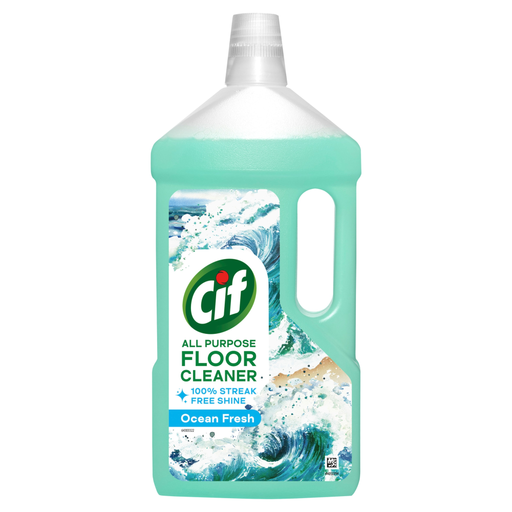
Why This Fits Their Persona: A practical diluted formula for households cleaning washable floors in kitchens, bathrooms and living areas.
The directions specify dilution in 5 litres of water, helping users avoid applying too much product and leaving residue.
Listed for linoleum, vinyl and ceramic tiles; available in a 950ml bottle with a rinse-free diluted-use option.
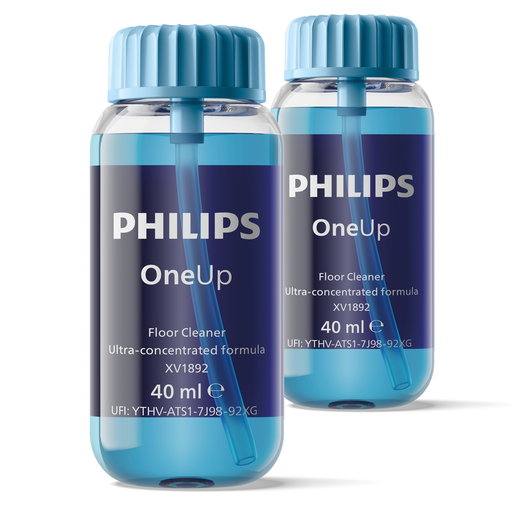
Why This Fits Their Persona: Designed for Philips OneUp Electric Mop owners who value measured dosing, compact storage and a repeatable cleaning routine.
The cartridge system avoids guesswork when adding concentrate, but compatibility must be checked before purchase.
Supplied as two 40ml ultra-concentrated cartridges; the listing states up to 40 cleaning sessions per cartridge when used as directed.
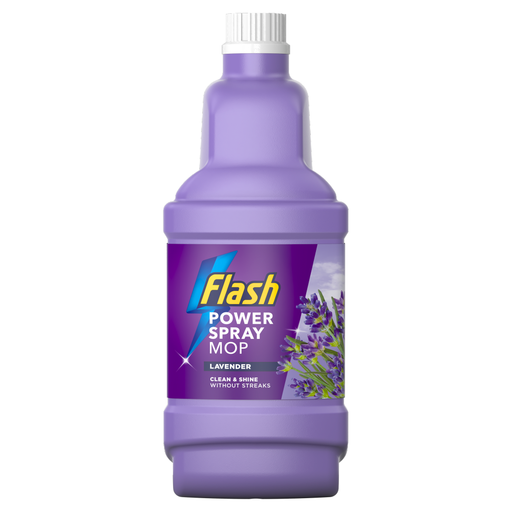
Why This Fits Their Persona: A ready-to-use option for quick clean-ups after meals, muddy footwear and everyday household traffic.
The pre-mixed formula and dual-nozzle spray help control application, reducing the temptation to soak the floor.
Ready to use with the Flash Power Spray Mop; listed as quick-drying and suitable for finished floors without rinsing.
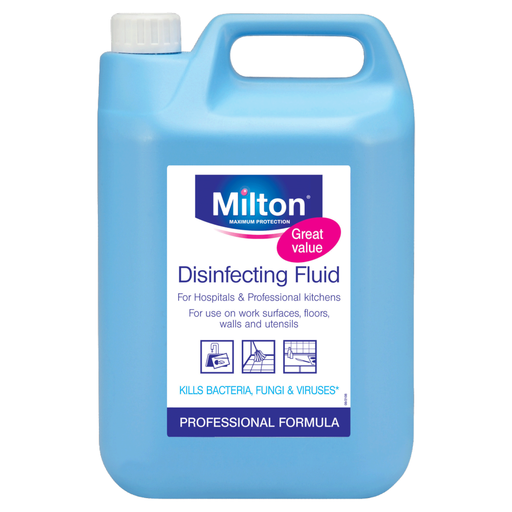
Why This Fits Their Persona: A larger-format option for professional environments, shared facilities and users with defined disinfection procedures.
It is clearly positioned as a disinfectant rather than an everyday fragrance cleaner, with label instructions and a stated 15-minute action time.
We have compiled a complete, real-time list of products that fully satisfy these strict selection criteria and UK safety regulations.
There is no single formula suitable for every sealed floor. Choose a product that explicitly lists your material, such as sealed wood, laminate, vinyl, tile or stone. Follow the label, use a small patch test when uncertain and avoid excessive water.
Only if the product is compatible with the spray mop. Some systems require a specific ready-to-use bottle, while electric mops may use dedicated cartridges. Using an unapproved concentrate can cause incorrect dosing or affect the device, so check the mop manual first.
Shelf life and storage guidance vary by formula. Keep the container tightly closed, upright and away from heat and direct sunlight. Check the product label for the stated shelf-life information, and do not use a product if its appearance, smell or packaging has noticeably changed.