
24/7 全天候客户支持

免费退货

当日/次日达

品质保障

开启新人专享福利: 全场免邮 | 低至 2 折 | 免费试用 30 天 JoyPlus 会员
下载 Joybuy
Keeping floors clean can feel like a never-ending task. From muddy footprints in the hallway to stubborn grime on bathroom tiles, finding the right tool for the job is essential. The market is filled with options, which can make choosing the correct floor mop a challenge. This guide is designed to cut through the clutter, offering practical advice to help you select a cleaning tool that fits your home and lifestyle.
We will explore what to look for when buying a mop and highlight a few standout options that cater to different cleaning needs, from quick daily touch-ups to deep-scrubbing sessions.
Before you decide, consider these key points to ensure you get a tool that makes your cleaning routine easier and more effective.
Not all mops are suitable for all surfaces. A traditional string mop might be too wet for laminate, while a delicate pad might not be tough enough for textured tiles. A microfibre mop is often a versatile choice for most sealed hard floors, including vinyl, tile and sealed wood, as it cleans effectively with minimal water. For delicate surfaces, always check the flooring manufacturer's cleaning recommendations.
Consider the type of cleaning you do most often. For daily spills and light dirt, a lightweight spray mop offers convenience, as it has an onboard cleaning solution and requires no bucket. For more demanding jobs, like tackling soap scum on a shower screen or deep-cleaning grout, an electric spin scrubber can provide the power needed to lift stubborn dirt with less physical effort, acting as an effective bathroom tile cleaner.
Features that reduce physical strain can make a significant difference. Look for adjustable handles to maintain good posture and consider a cordless cleaning brush for freedom of movement. Machine-washable mop pads are also a practical feature, offering a reusable and hygienic option that saves money over time.
Based on their features and suitability for common UK household cleaning tasks, here are our recommendations.
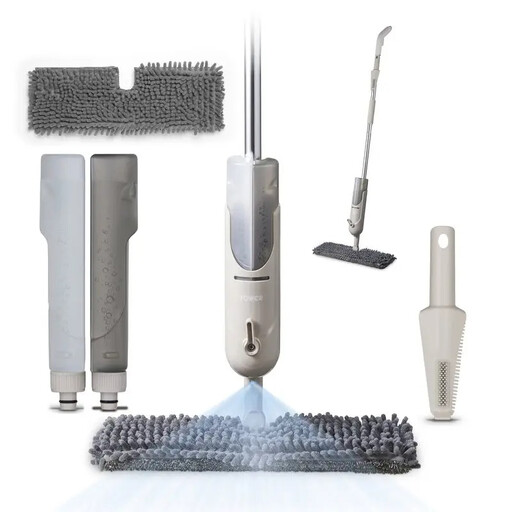
Why It Stands Out This Tower spray mop is built for efficiency, combining wet and dry mopping in a single tool. Its most notable feature is the dual chamber system, which allows you to carry two different cleaning solutions at once. This is particularly useful for homes with multiple floor types, such as tiles in the kitchen and laminate in the living room, as you can switch between solutions without stopping.
Pros
Who is it for? This is a great option for those seeking a versatile hard floor cleaner for daily maintenance. It is particularly well-suited for people with different types of sealed flooring who want a quick, bucket-free cleaning solution.
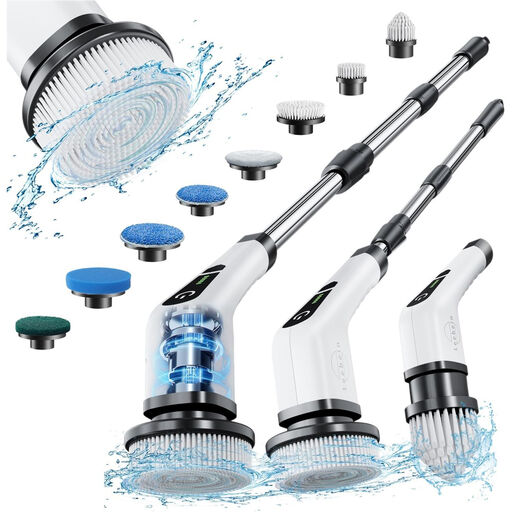
Why It Stands Out For jobs that require more than a simple wipe-down, this electric spin scrubber provides motorised power to do the hard work for you. It functions as a powerful cordless cleaning brush, designed to tackle tough grime on a variety of surfaces. With eight interchangeable brush heads, it can be adapted for cleaning everything from tile grout and shower screens to car wheels and outdoor furniture.
Pros
Who is it for? This tool is ideal for anyone who finds manual scrubbing difficult or time-consuming. It is an excellent choice for deep-cleaning bathrooms and kitchens, removing built-up soap scum and tackling any task that requires serious scrubbing power.
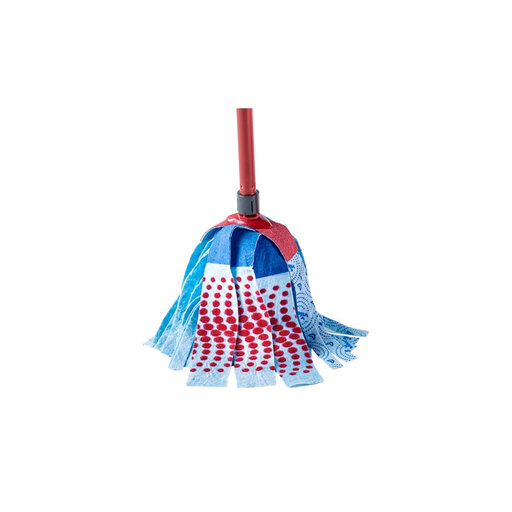
Why It Stands Out The Vileda SuperMocio is a modern take on the classic mop and bucket system, engineered for a thorough clean. The large microfibre mop head features a 3-Action design: a red non-scratch scourer for tough dirt, a blue microfibre zone for greasy residue and 3D red dots to pick up extra hair and particles. According to the manufacturer, its microfibre material is designed to remove over 99% of bacteria with just water.
Pros
Who is it for? This mop is a solid choice for those who prefer a traditional mopping system but want the benefits of modern microfibre technology. It is particularly effective for deep cleaning on durable floor surfaces like tile and vinyl.
While these selections cover a range of common cleaning needs, every home is different. If you are looking for a specific replacement or a different style of cleaning head, you can explore our wider selection of mop heads to find the perfect match for your system.
For regular household use, it is generally recommended to replace a mop head every two to three months. However, this depends on usage frequency and how well it is maintained. If a mop head starts to look overly worn, smells even after washing or no longer cleans effectively, it is time for a replacement. Machine-washable pads can often last longer with proper care.
This depends entirely on the finish of your wooden floor. Sealed or polyurethane-finished hardwood floors can typically be cleaned with a damp—not soaking wet—microfibre mop. For unsealed, oiled or waxed wooden floors, water-based cleaning is often not advised as it can cause damage. Always consult your flooring manufacturer's guidelines before using any mop.
A regular floor mop requires a separate bucket filled with water and a cleaning solution. A spray mop integrates a refillable bottle into its handle, allowing you to spray the cleaning solution directly onto the floor with the pull of a trigger. This makes it a more convenient, self-contained tool for quick clean-ups and smaller spaces, as it eliminates the need to carry a heavy bucket.