
24/7 Customer Support

Free returns

Same-day & Next-day Delivery

Quality Guaranteed

Unlock Your Welcome Offers: FREE Delivery | Up to 80% OFF | Free 30-day JoyPlus trial
Download the APP
A fluffy donut dog bed can give dogs and cats a soft place to curl up, lean against raised edges or stretch out indoors. However, appearance alone does not tell you whether a bed will suit your pet, your floor or your cleaning routine.
Before buying, look beyond the long plush fabric and rounded shape. A few easily missed details can turn a cosy-looking bed into an awkward purchase.
A listed diameter includes the raised bolster, so the usable sleeping area is smaller than the advertised measurement. A 60 cm doughnut dog bed may suit a small dog, but it is unlikely to provide enough room for a larger breed or a pet that sleeps fully stretched.
Measure your pet from nose to the base of the tail, then add room for movement. For pets that curl up, a snug fit may be welcome; for sprawlers, look for a larger round dog bed or a rectangular alternative.
Some products have a removable central cushion, while others have a removable outer cover. These are not the same. A large, filled bed may be difficult to fit into a standard UK washing machine even when the cover can be removed.
Check the care instructions, zip position and whether the cushion or cover is intended to be washed separately. Also allow the filling to dry completely before use, as damp padding can develop unpleasant odours.
Long pile fabric feels soft, but a bed can still move across laminate, vinyl or wooden flooring. This is particularly inconvenient for older pets, excitable puppies or cats jumping in and out.
If your home has smooth floors, look for a non-slip pet bed with rubber dots or nubs underneath. Place it flat, ensure the base has full contact with the floor and inspect the stitching and zips regularly.
Use the following as a starting point rather than a guarantee:
Product dimensions may vary by 2–3 cm for sewn items. Measure the space where the bed will sit as well as your pet, particularly if it is going beside furniture or in a crate-sized area.
PP cotton filling creates a soft, padded base and raised surround. A bolster around 20 cm high can provide a surface for leaning, but it may also reduce the internal sleeping area. Look for even filling without obvious thin spots.
A plush dog bed should feel cushioned without allowing your pet to sink directly onto the floor. For senior animals or pets that prefer firmer surfaces, a highly soft bed may not suit every sleeping position. If your pet has a diagnosed health condition, ask a veterinary professional about suitable bedding rather than relying on product descriptions.
Long plush polyester is designed to provide a warm, tactile surface, while linen-look or standard polyester panels can be easier to wipe. A hidden zip helps remove a central pad, but check whether the care label permits machine washing and which temperature or cycle is recommended.
Avoid bleach and harsh chemicals, keep the bed away from radiators and open flames, and follow the supplied label. Vacuum-packed beds commonly need 24–48 hours to expand; shaking and gently fluffing the filling can help restore its shape.

Why This Fits Their Persona: Its compact footprint is practical for a flat, bedroom corner or smaller UK home, and it is specified for cats and small dogs up to approximately 5.5 kg.
The hidden zip provides access to the inner cushion, while rubber nubs help limit movement on smooth flooring.
4 cm plush fabric, 20 cm thickness and a removable inner cushion support a simple everyday setup.
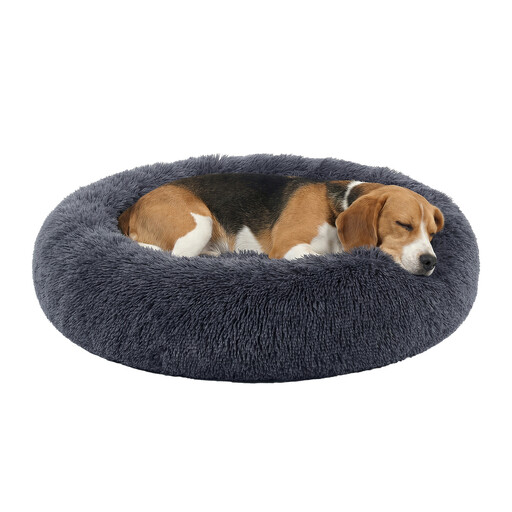
Why This Fits Their Persona: The neutral dark grey finish works with many interiors, while the 80 cm format gives small to medium dogs and cats more room than a compact bed.
The removable inner cushion and hidden zip make the cleaning arrangement clearer than a permanently filled bed.
Raised bolsters, plush fabric and PP cotton filling create a defined nest-like sleeping area.
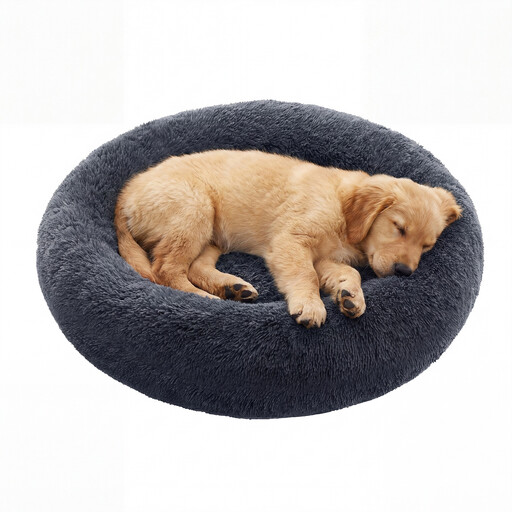
Why This Fits Their Persona: The generous diameter suits medium to large dogs up to approximately 30 kg or households with multiple cats that share sleeping space.
The product specifies a removable central cushion and advises regular inspection of stitching, zips and wear.
The 100 cm round design offers a broad resting surface and raised edges for pets that like to lean or curl up.
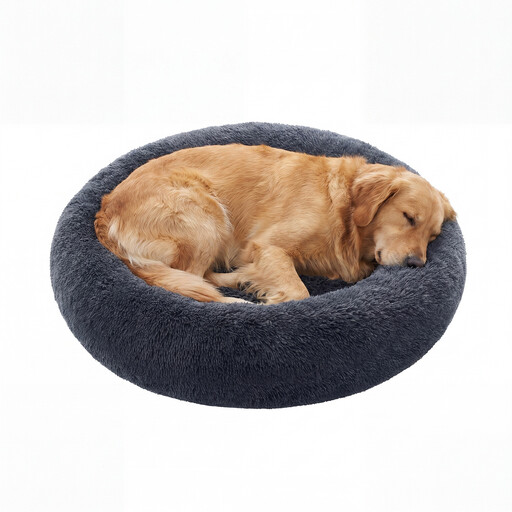
Why This Fits Their Persona: Its extra-large square footprint is intended for large dogs up to approximately 40 kg, multiple small pets or dogs that sleep stretched out.
The removable outer cover is designed for machine washing, avoiding the need to wash the entire filled bed.
A 20 cm bolster and 140 × 140 cm footprint provide a spacious, enclosed-feeling area for indoor use.
We have compiled a complete, real-time list of products that fully satisfy these strict selection criteria and UK safety regulations.
Place the bed on a dry, level surface away from direct moisture and heat sources. Introduce it gradually with a familiar blanket or toy, especially if your pet is cautious about new furniture.
Shake and fluff vacuum-packed filling before use, then allow the bed to regain its shape for up to 48 hours. Remove loose hair regularly and wash the removable part according to its care label. Air-dry thoroughly, and check seams, zips and exposed filling frequently. Pets that chew bedding should be supervised, particularly during the first few uses.
Raised bolsters can create a more enclosed, nest-like space that some pets find reassuring. This is a comfort feature rather than a guarantee of reduced anxiety. Place the bed in a quiet area and allow your pet to choose whether to use it.
Clean it when visibly soiled or when odour develops. Homes with multiple pets, muddy walks or shedding animals may require more frequent washing. Removing hair between washes can help maintain freshness.
Yes, provided the bed is placed securely and the cat can climb in and out easily. An oversized bed may suit multiple cats or a cat that likes to stretch, while a smaller cat bed may feel more enclosed for one animal.