
24/7 Customer Support

Free returns

Same-day & Next-day Delivery

Quality Guaranteed

Unlock Your Welcome Offers: FREE Delivery | Up to 80% OFF | Free 30-day JoyPlus trial
Download the APP
A fluffy doughnut dog bed can provide a soft, enclosed place for pets to rest, but appearance alone does not tell you whether it will suit your home or animal. A deep pile may look inviting in product photos yet become difficult to clean, while an oversized round bed can take up more floor space than expected.
Before buying, focus on the construction, usable sleeping area and cleaning instructions rather than promotional wording. The right choice should match your pet’s size, sleeping habits and the practical demands of a UK household.
A round dog bed’s stated diameter usually includes the raised outer bolster. The usable centre will therefore be smaller. A 60 cm round bed may suit a small dog or cat that curls up, but it is unlikely to provide enough room for a pet that sleeps stretched out.
Measure your pet from nose to tail base, then add room for turning. Also check the bed’s height and intended weight range. A bed that is technically large enough may still feel restrictive if the inner cushion is narrow.
“Washable dog bed” does not always mean that the entire bed can go into a standard washing machine. Some designs only allow the central cushion or insert to be removed. Others require spot cleaning of the outer bolster.
Look for a removable cushion dog bed with a clearly described zip opening and care instructions. Check whether the cover, central cushion or both may be machine washed. A thick PP cotton-filled insert can also take time to dry fully, so avoid returning damp bedding to your pet.
Long plush fabric creates a warm, tactile surface, but a bed can still move across laminate, wooden flooring or tiles. This may be inconvenient for energetic puppies and potentially less comfortable for older pets when entering or leaving.
If stability matters, choose a non-slip dog bed with rubber dots or another specified grip feature. Place it on a flat, dry surface and inspect the underside regularly for wear.
Use the following as a practical starting point:
These are product recommendations rather than a substitute for measuring your pet. Allow extra room if your dog sleeps on its side or frequently changes position. For households with several cats, compare the combined space needed with the bed’s central sleeping area; a cat bed for multiple cats may need more room than the outer diameter initially suggests.
Many plush doughnut beds use PP cotton filling, a synthetic fibre filling designed to create loft and cushioning. Check whether the filling is described as thick or supportive, but remember that softness is a user-perceivable comfort feature rather than a medical or therapeutic benefit.
Raised bolsters can give pets a surface to lean against and may suit animals that prefer a nest-like sleeping position. They should not be treated as a replacement for veterinary advice or as guaranteed anxiety treatment. For senior pets, prioritise a stable base and an entry height that your animal can manage comfortably.
Long plush polyester or fleece can feel warm and soft, making it suitable for an indoor calming doughnut pet bed setup. However, inspect the product details for:
No fabric is suitable for unsupervised chewing. Regularly inspect stitching, zips and exposed filling, and discontinue use if damage develops. Follow the care label, avoid bleach or harsh chemicals, and keep the bed away from radiators, open flames and excessive heat.

Why This Fits Their Persona: A compact option for a first-time pet-bed purchase, small flat, bedroom corner or cat sleeping area in a UK home. It is specified for small pets up to approximately 5.5 kg.
Its hidden zip allows the inner cushion to be removed for separate washing, while the stated non-slip rubber-nub base addresses movement on hard floors.
4 cm long plush fabric, 20 cm filling thickness and a stated 60 x 60 x 20 cm size.
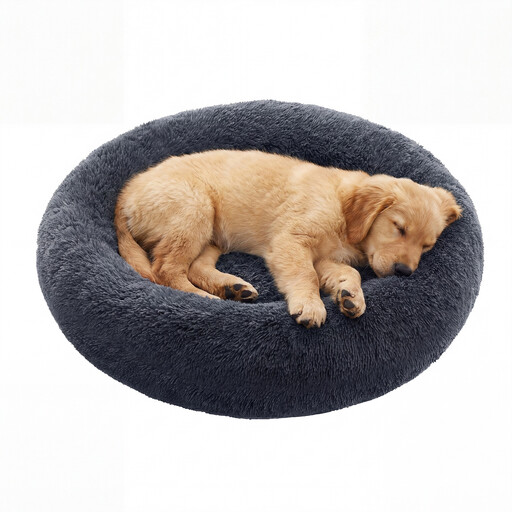
Why This Fits Their Persona: Suitable for owners wanting a larger, neutral-coloured indoor bed that can accommodate a medium or large dog, or several small pets that rest together.
The product information specifies a removable central cushion and a hidden zip, rather than relying on a fixed, difficult-to-clean centre.
100 cm diameter, long plush polyester fabric, PP cotton filling and a dark grey finish.
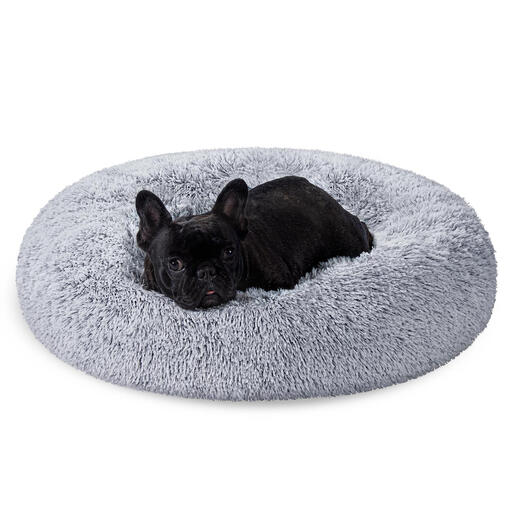
Why This Fits Their Persona: The 70 cm format is intended for small to medium dogs up to approximately 17 kg, giving active pets more room than a small dog bed without the footprint of a large model.
A specified non-slip underside helps address sliding, while the removable inner cushion makes routine cleaning more manageable.
20 cm thickness, PP cotton filling, 4 cm plush fabric and hidden-zip access.
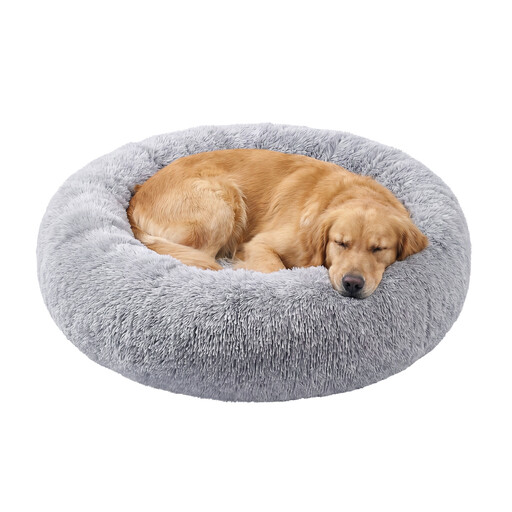
Why This Fits Their Persona: Designed for large dogs and households where a wide resting area is important. The 120 cm diameter can also suit pets that prefer to stretch out indoors.
The central insert is removable through the base zip for cleaning, and rubber dots are specified on the underside to help limit movement.
120 cm diameter, 20 cm height, plush fabric and PP cotton filling.
We have compiled a complete, real-time list of products that fully satisfy these strict selection criteria and UK safety regulations.
Allow a vacuum-packed bed to expand for around 24–48 hours. Shake and gently fluff the filling before use, then place the bed on a dry, flat surface away from direct moisture and heat. A familiar blanket or toy may help a cautious pet investigate the new bed.
Fluff the filling regularly to maintain its shape. Wash removable parts according to the care label, dry them completely and check that zips and seams remain secure before returning the bed to your pet. Pets that chew bedding should be supervised, especially during the first few uses.
Yes. The raised circular bolster can suit cats that like to curl up or lean against a soft edge. Choose the size according to the cat’s preferred sleeping position. A larger 100 cm or 120 cm model may be practical for multiple cats, provided there is enough room in the chosen area.
Choose a model with a stated non-slip base, ensure the rubber dots are clean and intact, and position the bed on a flat surface. The bed should be fully supported rather than placed partly on a rug edge or uneven flooring.
Wash frequency depends on shedding, outdoor access, accidents and household preferences. Spot clean minor marks promptly, wash removable parts when soiled and air the bed regularly. Always dry the filling thoroughly and follow the manufacturer’s care instructions rather than relying on a fixed schedule.