
24/7 Customer Support

Free returns

Same-day & Next-day Delivery

Quality Guaranteed

Unlock Your Welcome Offers: FREE Delivery | Up to 80% OFF | Free 30-day JoyPlus trial
Download the APP
Whether you're a professional caterer managing a large event, a home cook planning a family feast or a meal-prep enthusiast organising the week ahead, foil trays are an indispensable kitchen ally. Their convenience is undeniable, but not all are created equal. Choosing the wrong type can lead to frustrating spills, wasted food and unnecessary expense.
As a Product Recommendation Officer at Joybuy, I see many customers fall into the same traps. Before you add a pack to your basket, let's look at the common pitfalls that can turn a convenient solution into a culinary disaster.
To ensure you get a product that performs as expected, focus on these key specifications.
The sturdiness of a foil tray comes down to the thickness, or gauge, of the aluminium. While manufacturers rarely state the exact gauge, look for descriptions that mention "sturdy," "rigid" or "heavy-duty" construction. For large foil trays for catering, rigidity is paramount. A well-made tray will feel solid and resist bending when you apply light pressure to the sides. This structural integrity is what prevents the dreaded buckling when it's full of hot, heavy food.
Always check the dimensions, paying close attention to the depth in millimetres (mm).
If you need aluminium foil trays with lids, verify the lid's purpose. Is it a simple card cover for dust protection, or is it a secure, crimp-on lid designed for transport? Check if the lid is oven-safe. Most are not and are intended only for storage and transport after the food has cooled slightly. A good lid should fit snugly to keep food fresh and prevent spills.
To help you choose, we've matched some reliable options to common user needs.
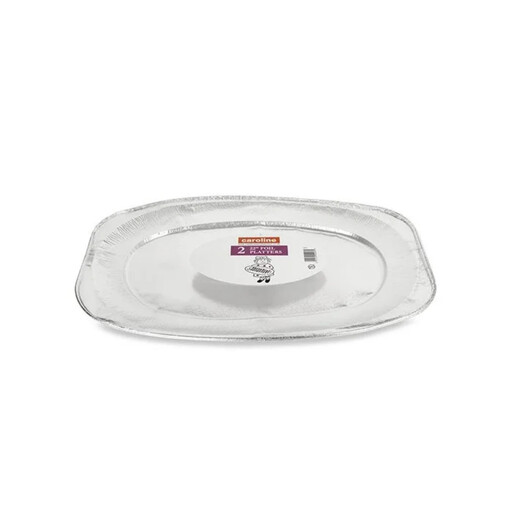
Why This Fits Their Persona: Perfect for hosting family gatherings or parties. This platter is designed for presenting food like sandwiches, pastries or canapés on a buffet table. It offers a clean, professional look with minimal fuss and reduces the amount of heavy serving dishes to wash up afterwards.
This is a platter, not a deep baking tray. Its 26mm depth is clearly stated and suited for presentation, avoiding the "misleading size" trap. Its sturdy construction is designed for carrying and serving, not buckling under the weight of party food.
Reusable and recyclable, offering better value and a more responsible choice. Ideal for both hot and cold party food platters.
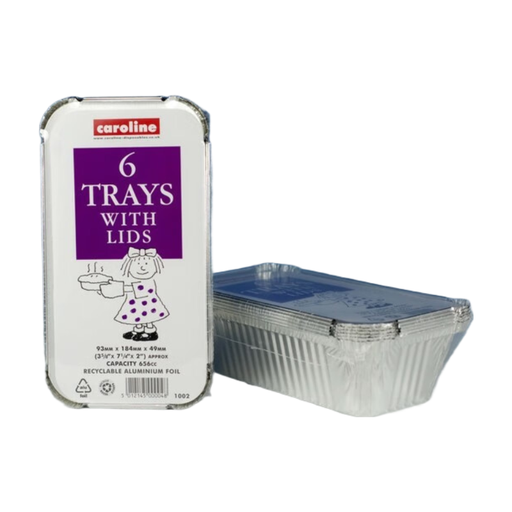
Why This Fits Their Persona: Ideal for batch cooking and portioning weekly meals. The 23oz (approx. 656ml) capacity is perfect for a single serving, and the pack of six is great for a working week's lunches. The trays are ovenable for easy reheating from the fridge or freezer.
This product directly solves the "lid let-down" by including secure-fitting lids designed for storage and transport. The 49mm depth provides ample volume for a proper meal, avoiding the shallow tray issue.
Oven-safe tray allows for direct reheating, and the included lids make it a complete solution for meal prep containers. Fully recyclable aluminium trays support more responsible disposal.
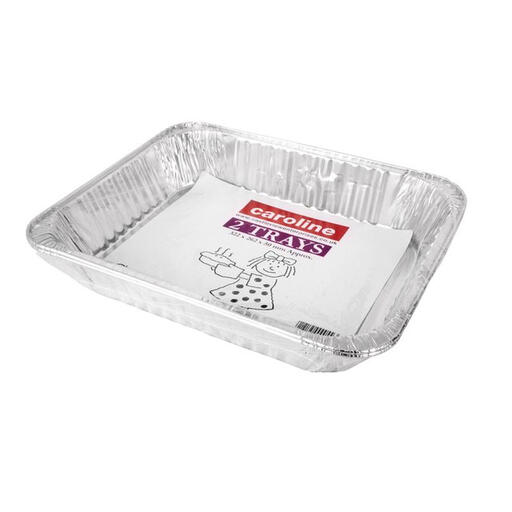
Why This Fits Their Persona: This extra-large tray is built for volume. It's perfect for preparing and serving hot food for buffet serving trays at events. The generous dimensions and depth can handle large quantities, reducing the number of containers needed and simplifying service.
It directly counters the "buckling tray" problem with its rigid construction designed for heavy contents. The 50mm depth is clearly specified, ensuring it provides the necessary volume for catering-sized portions of lasagne, curries or roasts.
Excellent capacity for batch cooking and events. The disposable design allows for quick, hassle-free clean-up, which is essential in a professional catering environment.
We have compiled a complete, real-time list of products that fully satisfy these strict selection criteria and UK safety regulations.
In most cases, yes. Aluminium is widely recycled across the UK. However, the trays must be clean and free from food residue. A quick rinse to remove grease and leftover food is usually sufficient. Always check the specific guidelines provided by your local council, as rules can vary.
As a general rule, you should not put metal, including foil trays, in a microwave as it can cause sparks (arcing) and damage the appliance. While some modern, smooth-walled foil containers are marketed as microwave-safe, it is crucial to verify this with both the tray manufacturer and your microwave's instruction manual. If in any doubt, the safest approach is to transfer the food to a certified microwave-safe dish before heating.
This is a simple but vital tip to prevent accidents. Always support the base of the foil tray from underneath with a flat, rigid item like a baking sheet, chopping board or sturdy tray. This is especially important when the container is full or has just come out of the oven. Lifting it only by the flimsy edges is the primary cause of buckling and spills.