
24/7 Customer Support

Free returns

Same-day & Next-day Delivery

Quality Guaranteed

Unlock Your Welcome Offers: FREE Delivery | Up to 80% OFF | Free 30-day JoyPlus trial
Download the APP
A foldable camping cart with wheels can save repeated trips between the car and campsite, but choosing one based only on capacity or attractive product photos can lead to disappointment. UK buyers should pay close attention to wheel design, frame strength and folded dimensions before ordering.
A suitable cart may also serve as a collapsible camping wagon, beach cart with wheels, garden and shopping trolley or portable utility wagon. However, not every model is designed for every surface or load.
A bag that holds 170 or 200 litres may look spacious, but volume and weight capacity are different measurements. Camping chairs, food boxes and blankets are bulky but relatively light; paving slabs, bottled drinks or gardening supplies are much heavier.
Always check both:
Do not assume that a larger bag automatically carries more weight. Distribute heavy items across the base and follow the manufacturer’s stated limit to reduce the risk of tipping or frame damage.
Small indoor casters may work on smooth flooring but struggle on grass, gravel, mud or sand. A beach cart with wheels needs a different wheel profile from a garden and shopping trolley intended for pavements.
For outdoor use, look for:
Even off-road wheels are not designed for high-speed transport. Pull the cart at a controlled pace, particularly when carrying glassware, camping stoves or other fragile equipment.
“Foldable” does not always mean compact enough for a small boot, shed or hallway cupboard. Check the folded height, width and depth, as well as whether the wheels remain attached when stored.
A foldable storage cart should be dry before folding. Fabric that is packed away damp after a rainy campsite or beach trip may develop unpleasant odours and deterioration over time. Wipe down the frame and wheels, allow the fabric to dry fully and store the trolley in a dry place.
A steel frame generally offers a firm structure for heavier outdoor loads, while 600D Oxford cloth is commonly used for tear-resistant cargo compartments. Check whether the frame has reinforced joints, secure stitching and a firm base.
For a heavy-duty outdoor trolley, the frame should feel stable when loaded rather than flexing excessively. A powder-coated or spray-painted finish may also help protect metal surfaces, but it does not remove the need to keep the frame dry and clean.
Large capacity camping carts are useful for bulky family equipment, but a deep compartment can make it difficult to retrieve items from the bottom. Consider whether you need one large open compartment or separate sections.
Before purchase, compare:
Avoid exceeding the stated limit. Heavy goods should sit low and centrally, with lighter items placed above them.
A cart with dual brake wheels can be useful when loading on a slight incline, at a picnic site or beside a market stall. Engage both brakes before leaving the cart unattended. Brakes help prevent movement while parked, but they do not compensate for uneven weight distribution or a steep slope.
Multi-directional or 360° swivel wheels can make a portable utility wagon easier to turn in crowded areas. For gravel, grass and uneven ground, however, wheel size and tread may matter more than swivel movement alone.
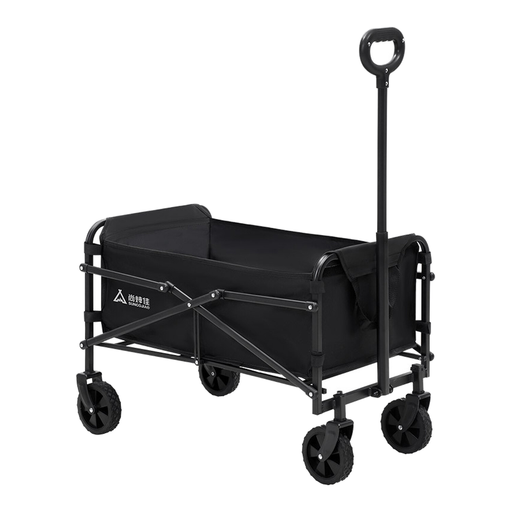
Why This Fits Their Persona: A practical option for occasional campers, picnic users and shoppers who want a spacious cart without carrying a separate trailer. Its listed 170L capacity suits bulky but varied loads.
The product information states both the 170L capacity and 100kg load capacity, helping buyers compare space with carrying ability rather than relying on volume alone.
Cold-rolled iron frame, 600D Oxford fabric, foldable design and multi-directional PVC wheels.
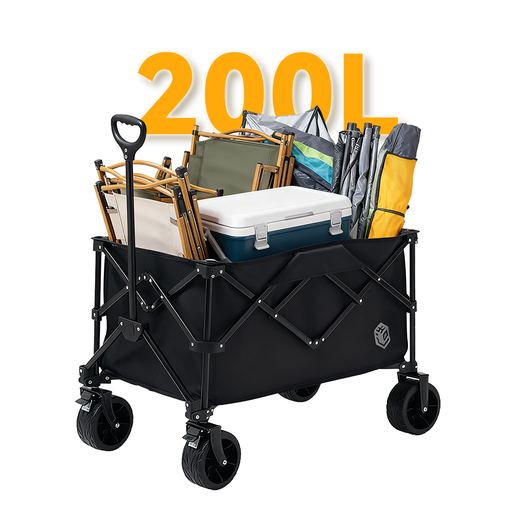
Why This Fits Their Persona: Suitable for families and frequent outdoor users who need substantial space for tents, chairs, picnic supplies or event stock.
Its specification lists a 200L main capacity, off-road PVC wheels and a double brake design, making the key outdoor-use details clear.
High-strength steel frame, 600D Oxford cloth, foldable construction and listed 400L stackable capacity.
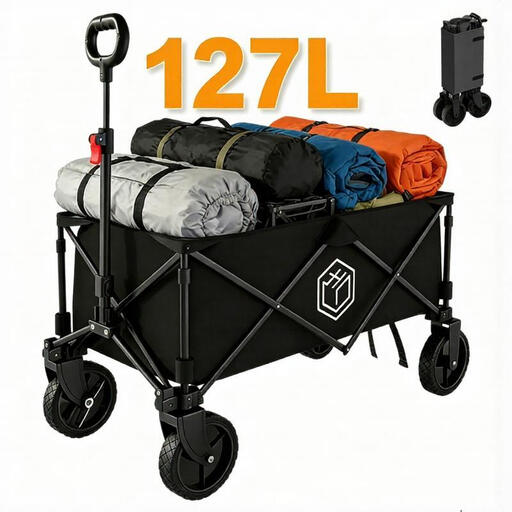
Why This Fits Their Persona: A match for users transporting heavier shopping, vending equipment, gardening materials or camping supplies where the stated load rating is a priority.
The product listing separates its 127L storage capacity from its stated 200kg load capacity, so shoppers can assess both measurements.
Spray-painted steel tubes, dual brake 360° swivel wheels, foldable storage and listed 250L stackable capacity.
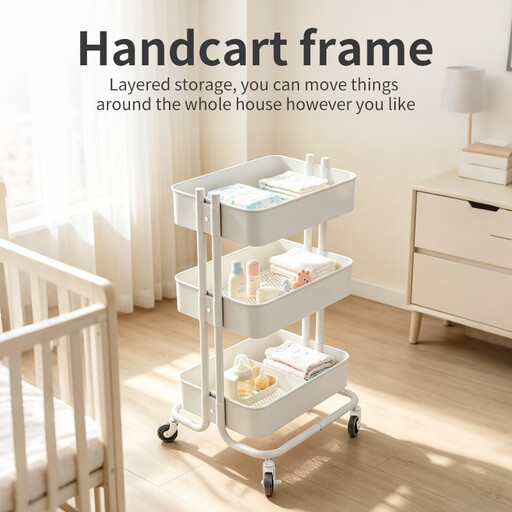
Why This Fits Their Persona: Useful for households, gardeners and market users who need an indoor wheeled storage trolley rather than a fabric camping wagon.
Its three open tiers make contents visible, while two lockable casters help keep the cart in place when used indoors.
Three-tier metal mesh construction, four rolling casters, two lockable wheels and a powder-coated finish.
We have compiled a complete, real-time list of products that fully satisfy these strict selection criteria and UK safety regulations.
Before using a foldable camping cart with wheels:
For public events, markets or campsites, check local access rules. Some venues restrict wheeled equipment in crowded areas or require clear pedestrian routes.
It depends on the wheel width and surface design. Larger off-road wheels may move more easily over firm sand, but soft, deep beach sand can still be difficult. Distribute the load evenly and pull slowly rather than forcing the cart through areas where the wheels sink.
Lifespan depends on load frequency, terrain, weather exposure and maintenance. Avoid overloading, keep the fabric dry, inspect wheel fittings and store the folded wagon away from prolonged damp. Regular cleaning is particularly important after use on beaches or muddy ground.
No. These are manually operated trolleys, so there is no electricity or fuel cost. Ongoing expenses are generally limited to cleaning and, where necessary, replacement wheels or other compatible parts. Check the product listing and retailer support information before assuming spare components are available.