
24/7 Customer Support

Free returns

Same-day & Next-day Delivery

Quality Guaranteed

Unlock Your Welcome Offers: FREE Delivery | Up to 80% OFF | Free 30-day JoyPlus trial
Download the APP
The struggle is a familiar one for any UK outdoor enthusiast: juggling tents, coolers, chairs and supplies from the car park to the perfect pitch. Whether you're setting up for a weekend festival, finding a spot on a crowded beach, or simply managing the weekly shop, transporting bulky items can be a real chore. A foldable camping wagon offers a straightforward solution, saving your back and making one-trip transport a reality.
But with so many options available, how do you choose the right one? This guide is designed to help you understand the key features to look for in a collapsible cart with wheels. We'll break down what matters most, from load capacity to wheel design and present a few recommendations to help you find a model that suits your needs.
Choosing the right utility wagon involves more than just picking the one with the largest capacity. Consider these factors to ensure your choice is practical for your intended use.
The first thing to consider is how much you need to carry. A wagon's load capacity, typically measured in kilograms, indicates the maximum weight it can safely handle. For light duties like carrying picnic supplies, a model with a capacity around 100 kg may suffice. However, for heavy-duty tasks like hauling camping equipment or gardening supplies, you'll want to look for a heavy duty folding trolley with a robust, spray-painted steel frame and a capacity of 200 kg or more.
The wheels are critical for performance, especially on varied UK terrain.
The main advantage of a foldable camping wagon is its portability. Check the folded dimensions to ensure it will fit comfortably in your car boot or storage space at home. Many models are designed for a "one-second fold" or feature a concertina-style collapse, making them incredibly convenient to pack away after use. The material of the cargo bin, often a durable 600D Oxford fabric, is also important as it needs to be both tough and flexible enough to fold neatly.
Here are a few foldable wagons that offer a great balance of features, durability and practicality.

Why It Stands Out: This model is a true workhorse. With a substantial 200 kg load capacity and a heavy-duty steel tube frame, it's built to handle serious weight. The dual brake system on the 360° swivel wheels adds a layer of safety, preventing it from rolling away on slopes.
Pros:
Who is it for? Families on long camping trips, stall vendors or anyone who needs to move a significant amount of heavy equipment in a single journey.
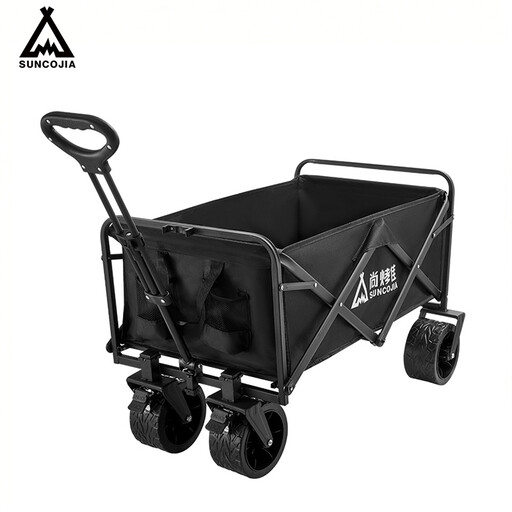
Why It Stands Out: This cart is specifically designed for challenging environments. Its wide, shock-absorbing wheels make it an excellent festival wagon or beach trolley, capable of gliding over sand, mud and bumpy ground where standard wheels would struggle. The enormous 350-litre volume means you can pack everything you need and more.
Pros:
Who is it for? Beach-goers, festival attendees and anyone who frequently navigates soft or uneven ground.
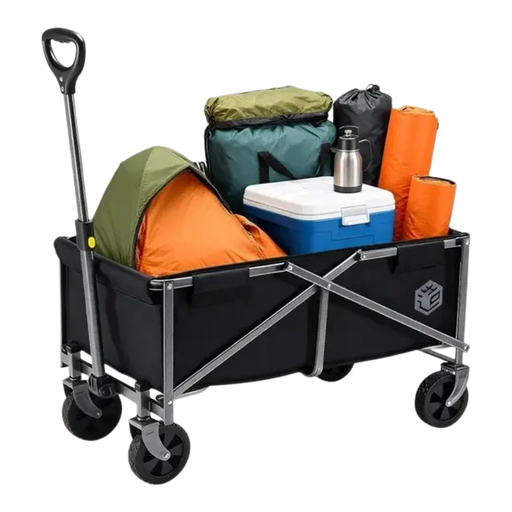
Why It Stands Out: Convenience is the key feature of this model. Its quick-folding mechanism and lightweight design make it exceptionally easy to transport and store. While more compact, it still offers a respectable 100 kg load capacity and a durable double-layer fabric construction, making it a versatile utility wagon.
Pros:
Who is it for? Individuals or couples on shorter trips, for use as a garden cart or for running errands and managing the weekly shop.
A foldable wagon is a fantastic tool, but sometimes you need to keep your hands free. If your adventures call for a more mobile solution, consider exploring a durable backpack.
For those treks where a wagon isn't practical, a reliable black hiking backpack can be an invaluable companion. Click to browse our collection of hiking backpacks designed for comfort and capacity.
Load capacities vary significantly between models. Lighter-duty carts may hold around 70-100 kg, which is ample for picnics or light shopping. Heavy-duty models, often built with reinforced steel frames, can support 200 kg or more, making them suitable for transporting bulky camping gear, tools or event equipment. Always check the manufacturer's specified load capacity before purchasing.
Yes, but the type of wheels is crucial. A collapsible cart with wheels that are wide and designed for off-road use will perform much better on sand than one with thin, standard wheels. The wider surface area helps prevent the wheels from digging into the sand, allowing for a much smoother pull.
Maintenance is generally straightforward. The fabric liner on most wagons is removable and can be cleaned with a damp cloth and mild soap. The metal frame should be wiped dry after use, especially if exposed to moisture, to prevent rust. It's also good practice to periodically check that all wheel fastenings and frame joints are secure and to lubricate the wheel axles if they begin to squeak.