
24/7 Customer Support

Free returns

Same-day & Next-day Delivery

Quality Guaranteed

Unlock Your Welcome Offers: FREE Delivery | Up to 80% OFF | Free 30-day JoyPlus trial
Download the APP
A foldable camping wagon can save repeated trips between the car and your pitch, garden, beach spot or market stall. However, a large-looking wagon is not automatically suitable for heavy gear or uneven ground. Product descriptions often highlight capacity and folding convenience while leaving practical limitations less prominent.
Before buying a camping cart with wheels, check three common pitfalls:
Choose capacity according to the items you normally transport. A large capacity outdoor wagon is useful for tents, chairs, cool boxes and picnic equipment, while a smaller folding trolley may be easier to lift and store.
The load rating is equally important. For example, a wagon rated for 100 kg should not be treated as a 150 kg carrier simply because its fabric compartment is spacious. Look for a clearly stated maximum load and consider the combined weight of equipment, food, shopping or garden materials.
A steel or metal frame can provide a firm structure, while Oxford fabric, PVC and reinforced stitching affect the cargo bag’s resistance to everyday wear. Check whether the fabric can be wiped clean and whether the frame should be dried before storage.
Wheel choice should match the surfaces you use most often:
A beach trolley needs to cope with sand and loose surfaces, whereas a garden trolley may prioritise stability and easy cleaning. No wheel design removes the need to pull slowly on slopes or uneven terrain.
A one-pull open-and-fold mechanism can make a wagon more practical for regular trips. Confirm whether assembly is required, whether the handle is adjustable and how large the wagon becomes when folded.
Before loading, ensure the frame is fully open and locked. Keep fingers clear during folding, distribute weight evenly and never exceed the stated maximum. Follow the supplied care instructions: several fabric wagons specify wiping rather than machine washing, and dry storage helps reduce the risk of rust or damp-related wear.
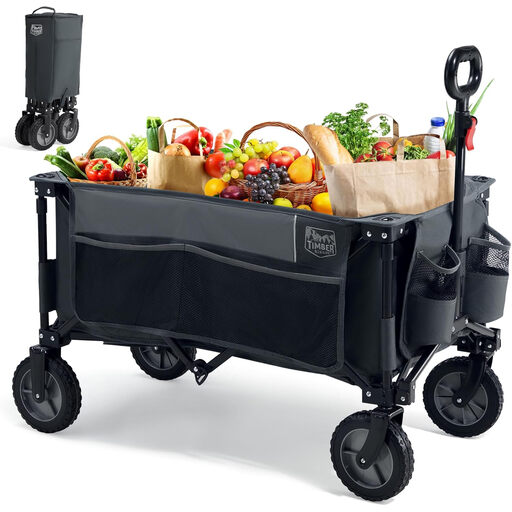
Why This Fits Their Persona: A practical starting point for shoppers, families and occasional campers seeking one folding trolley for picnics, gardening, shopping and beach trips.
Its specifications state both a 200-litre volume and a 100 kg maximum load, helping buyers distinguish space from weight capacity.
One-pull opening, adjustable handle, cup holders and zipped side pockets; no assembly is required.
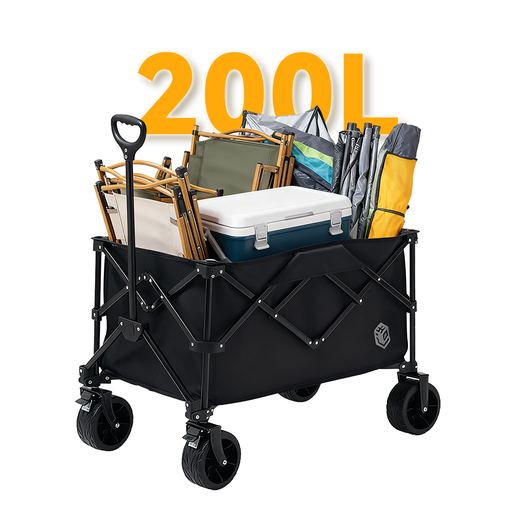
Why This Fits Their Persona: Suits regular outdoor users who want generous storage, foldable transport and added control when moving gear around campsites or gardens.
The listing specifies off-road wheels and double brakes rather than relying only on a general “outdoor” description.
200-litre capacity, high-strength steel frame, 600D Oxford cloth and a foldable design; the description also states 400-litre stackable capacity.
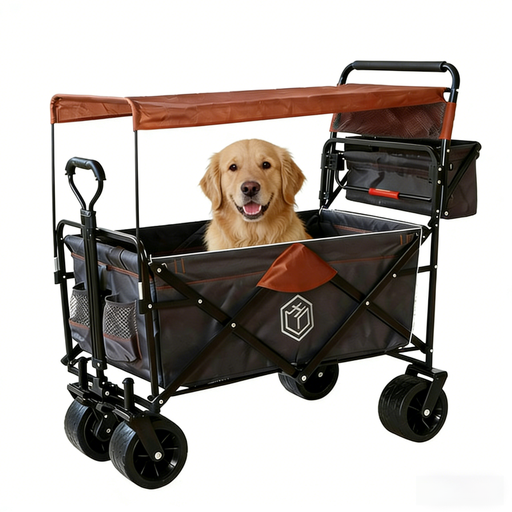
Why This Fits Their Persona: Designed for users transporting substantial equipment for camping, picnics, vending or moving, particularly where wheel performance and load rating are priorities.
Its listing states a 260 kg load capacity, dual brake wheels and an off-road tank-wheel design, giving clearer information for demanding loads.
150-litre cargo space, reinforced carbon steel frame, detachable canopy and safety belt.
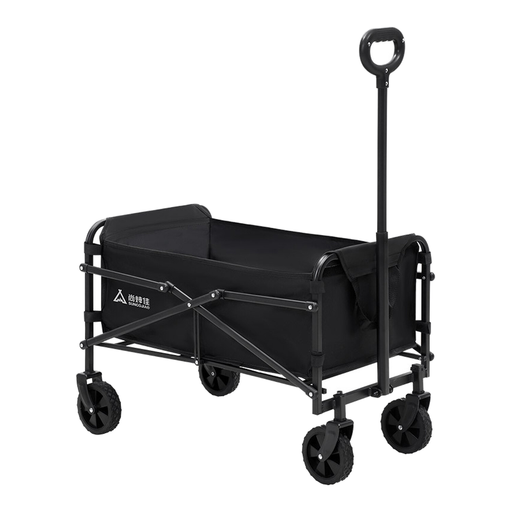
Why This Fits Their Persona: Useful for grocery runs, parcels, fishing, sports equipment and beach outings where a portable utility cart with a 170-litre bag is practical.
The specifications state a 100 kg load capacity and note that minor assembly, including wheel attachment, is required.
600D Oxford fabric, cold-rolled iron frame, PVC wheels and multi-directional wheel movement.
We have compiled a complete, real-time list of products that fully satisfy these strict selection criteria and UK safety regulations.
Many models use a one-pull opening mechanism and need no assembly. Others may require wheels to be attached. Always check that the frame is fully extended and locked before loading, and keep hands away from hinges during folding.
Lifespan depends on load frequency, terrain, storage and maintenance. Staying below the stated maximum load, avoiding harsh chemicals, cleaning off grit and storing the wagon dry can help reduce wear. Wheels, fabric and frame joints should be checked regularly for damage.
No. A folding trolley is manually pushed or pulled, so it has no fuel or charging cost. The practical effort required depends on the total load, wheel design, surface and slope. On sand, gravel or grass, lighter and evenly distributed loads are generally easier to control than concentrated heavy items.