
24/7 全天候客户支持

免费退货

当日/次日达

品质保障

开启新人专享福利: 全场免邮 | 低至 2 折 | 免费试用 30 天 JoyPlus 会员
下载 Joybuy
A foldable shopping trolley can make supermarket trips, market visits and everyday errands easier to manage. However, the wrong model may become awkward to pull, difficult to store or unreliable when fully loaded.
For UK shoppers, especially older users, carers and people with limited hand or wrist strength, the most important question is not simply how large the bag looks. Handle position, wheel design, frame construction and safe loading limits all affect whether a trolley is genuinely practical.
This guide from the Joybuy Product Recommendation Officer explains the main buying traps, the specifications worth checking and suitable options for different shopping routines.
A large-looking bag does not always provide useful internal space. Some designs have thick frames, narrow openings or tapered bases that reduce the room available for tins, bottles and bulky packaging.
Check whether the listing provides a litre capacity, internal dimensions or stated load limit. If none is supplied, avoid assuming that a tall bag can safely carry a full weekly shop.
“Heavy-duty” can refer to the fabric, metal frame or wheels, but not necessarily all three. A reinforced bag may still be uncomfortable if the handle flexes under load. Likewise, a robust frame may be paired with small wheels that struggle over kerbs and uneven pavements.
Look for specific material information, such as a metal or aluminium alloy frame, reinforced fabric and the number and type of wheels. A stated load capacity is more useful than a general durability description.
A stair-climbing shopping trolley may help with certain steps, but it still needs controlled handling. It should not be overloaded, dragged rapidly or used as a substitute for a lift where one is available. Always check that the trolley is fully opened and locked before loading it, and use care on stairs, slopes and uneven surfaces.
For an elderly-friendly grocery cart, the handle should offer a comfortable grip and a sensible pulling height. An ergonomic handle may make steering easier, but shoppers should also check whether it is adjustable, fixed or padded. A trolley that is too low can encourage awkward bending, while one that is too high may be harder to control.
If hand or wrist strength is limited, consider a model that can be pulled smoothly without requiring constant pressure on a narrow handle.
A metal frame generally gives the trolley its structure, while the fabric basket determines how groceries are contained. Blended fabric and metal construction can offer a practical balance between weight and support. Aluminium alloy may suit shoppers prioritising portability, while carbon steel or reinforced steel can be suitable where a more substantial frame is preferred.
The wheels should be checked separately. Plastic or PVC wheels may be suitable for pavements and shop floors, but wheel diameter, spacing and swivel function influence manoeuvrability. A shopping trolley with wheels that are too small may catch on cracks or kerbs.
A large-capacity shopping trolley is useful only if it remains manageable when full. Compare:
A portable shopping cart with a large stated capacity may be more suitable for bulky outdoor loads than a conventional supermarket trolley, but it can take up more space when unfolded.
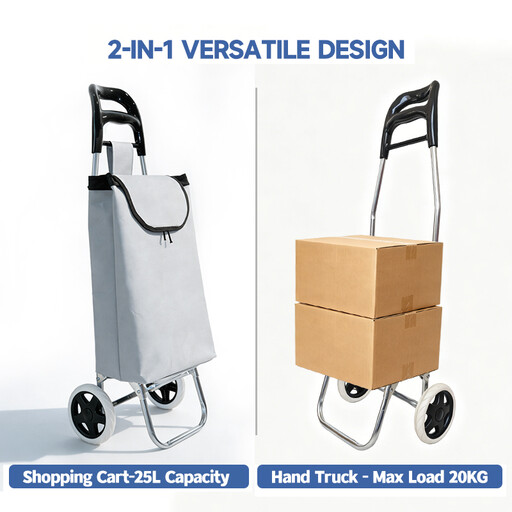
Why This Fits Their Persona: A practical option for regular supermarket trips, market visits and household errands where a folding frame and spacious basket are useful.
The listing identifies a blended fabric and metal frame, rather than relying only on a general “heavy-duty” label. It also advises checking the locking mechanism before loading.
Ergonomic handle, large-size basket and collapsible design for storage in a car, cupboard or under a bed.
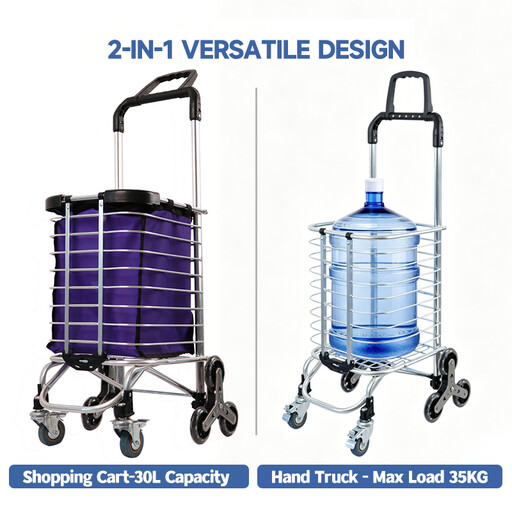
Why This Fits Their Persona: Suitable for shoppers who want an adjustable handle and a foldable aluminium alloy frame for frequent home and supermarket use.
The product specification names the frame material and adjustable handle. Check the supplied load limit and folded measurements before ordering.
Aluminium alloy frame, adjustable handle and multi-functional positioning for shopping and home use.
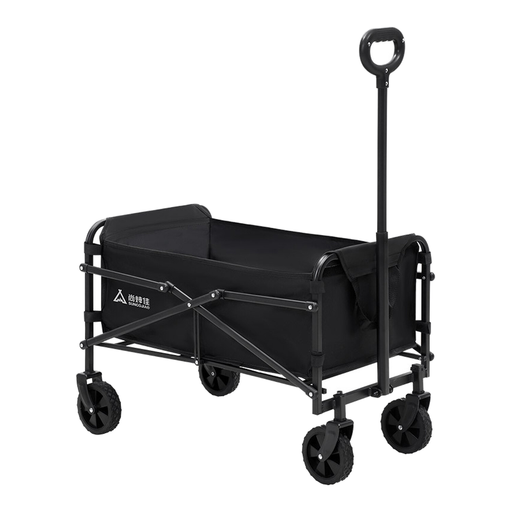
Why This Fits Their Persona: Designed for shoppers and households moving bulky loads for groceries, camping, picnics, parcels or beach trips.
The listing gives measurable figures: 170-litre cargo capacity and a stated 100 kg load capacity. Loads should still be distributed evenly and kept within the supplied limit.
600D Oxford fabric bag, cold-rolled iron frame and multi-directional swivel wheels; minor wheel assembly is required.
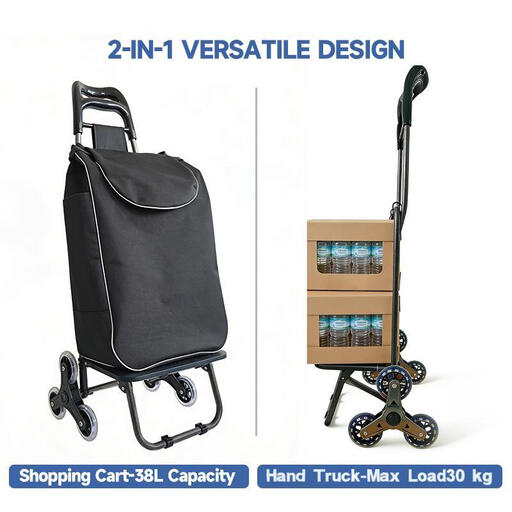
Why This Fits Their Persona: A relevant format for UK homes or routes involving steps, provided the user follows the product instructions and can control the loaded trolley safely.
Its product title identifies a stair-climbing design, but users should still verify wheel arrangement, load guidance and folded dimensions on the product page.
Large-capacity format, ergonomic handle and foldable construction for storage between shopping trips.
Before buying a foldable grocery cart, use this checklist:
Lifespan depends on load frequency, surface conditions, storage and maintenance. Regularly wipe away dirt, keep the frame dry and inspect wheels, screws and locking points. Avoid exceeding the stated capacity, as repeated overloading can place stress on the frame and wheel fittings.
A stair-climbing shopping trolley may be designed for steps, but it still requires careful handling. Keep the load secure, use the handrail where appropriate and avoid carrying more than you can control. Standard two-wheel models should not automatically be treated as suitable for stairs.
A manual wheeled shopping bag has no battery or fuel cost. The practical costs are transport, storage and eventual replacement of wheels or other parts. Larger models may also be heavier to lift, so compare empty weight as well as capacity when choosing a portable shopping cart.