
24/7 Customer Support

Free returns

Same-day & Next-day Delivery

Quality Guaranteed

Unlock Your Welcome Offers: FREE Delivery | Up to 80% OFF | Free 30-day JoyPlus trial
Download the APP
A foldable shopping trolley can make supermarket trips, market visits and household organisation considerably easier. However, the wrong design may be awkward on pavements, difficult to store or unable to handle the weight shown in its listing.
Marketing language can also make comparison difficult. A “large-capacity shopping trolley” may have a generous internal volume but a modest load rating, while a “stair-climbing shopping trolley” may still require careful handling on steps. Before choosing, focus on the specifications that affect everyday use rather than appearance alone.
Litres describe available space, not how much weight the frame, base and wheels can safely carry. A bag may hold a large weekly shop, but bottles, tins and cleaning products can quickly create a heavy load.
Check both:
Never exceed the stated rating. Distribute heavy items low down and evenly to reduce tipping.
Some carts collapse flat, while others fold only partially. Check the folded height, width and depth against your cupboard, boot or under-bed storage space. Also confirm whether wheels, handles or fabric bags need to be removed before folding.
For occasional supermarket trips, a compact collapsible shopping cart may be more practical than a large wagon. For camping or gardening, a bigger frame can be worthwhile if you have suitable storage.
Small wheels may work well inside shops but struggle on kerbs, gravel or uneven pavements. Larger off-road wheels usually provide more clearance, although they can increase the folded size and overall weight.
A brake is particularly useful when loading on a slope or leaving a cart temporarily unattended. Do not assume that swivel wheels automatically make a trolley stable: check the wheel layout, base width and brake design.
A heavy-duty shopping trolley may use steel, carbon steel, aluminium alloy or a blended fabric-and-metal construction. Steel generally provides a solid frame, while aluminium can reduce carrying weight. The fabric, stitching and base panel are also important because they contain the load.
For outdoor use, look for practical details such as:
A metal 3-tier rolling storage trolley is a different product category from a grocery cart. Its open shelves are useful for bathrooms, kitchens, salons and offices, but it is not designed to replace a covered shopping bag.
An ergonomic or adjustable handle can make pulling more comfortable, but the correct height depends on the user. The handle should allow a natural arm position without forcing the shoulders upwards.
For an elderly-friendly grocery cart, assess the handle grip, frame balance and starting resistance. A trolley that is easy to pull on a flat shop floor may feel different on a kerb or ramp. If a listing describes a stair-climbing design, treat this as a feature to verify against the instructions rather than a reason to pull a fully loaded cart up ordinary stairs.
Before first use, unfold the cart completely and engage every frame lock. Check that wheels are firmly attached and that brakes hold the cart on a slight incline. For a folding shopping trolley, keep fingers clear of hinges and locking points.
Outdoor wagons may need minor wheel assembly. For example, the SUNCOJIA cart includes a frame, cargo bag and four wheels, with wheel attachment typically required. A collapsible wagon with no assembly may be preferable if quick setup matters.
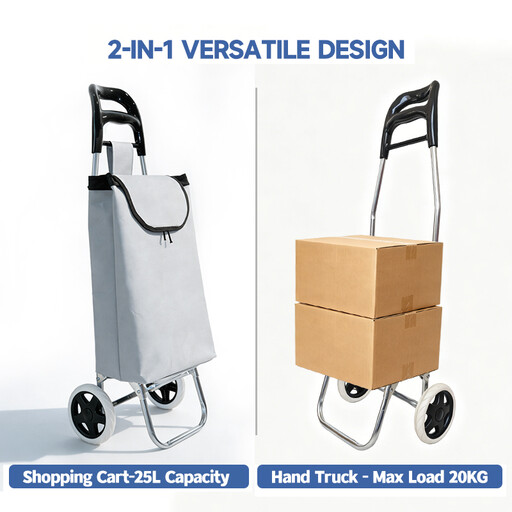
Why This Fits Their Persona: A practical option for regular supermarket trips, market visits and daily errands where compact storage and a roomy interior are priorities.
Its listing identifies a foldable frame, ergonomic handle and large capacity. Buyers should still confirm the maximum load before filling it with heavy groceries.
Foldable construction; ergonomic handle; large-sized frame for grocery transport.
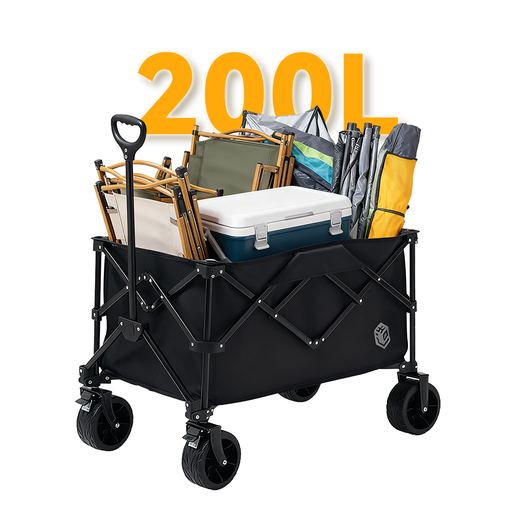
Why This Fits Their Persona: Suitable for families, campers, gardeners and market users who need substantial outdoor capacity and a cart that stores between trips.
The specification identifies 200L capacity, off-road PVC wheels and double brakes, making the key capacity and stopping features easier to compare.
200L cargo volume; foldable steel frame; off-road wheels with double brakes.
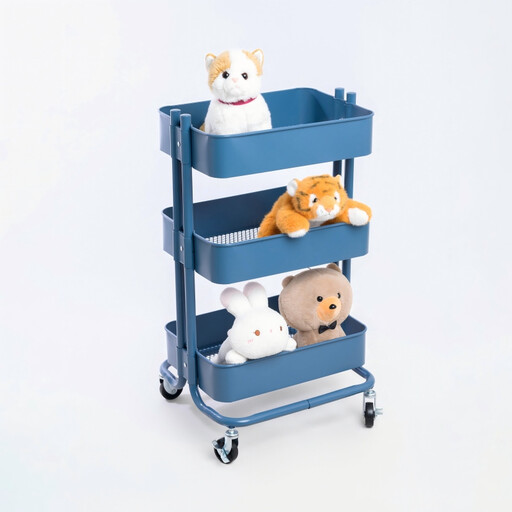
Why This Fits Their Persona: A useful choice for homeowners, carers, salons and compact workspaces needing a mobile storage organiser rather than a road-going grocery cart.
The three open mesh tiers show the available storage layout clearly, while two of the four swivel castors can be locked when stationary.
Three mesh shelves; four 360-degree swivel castors; two lockable wheels; powder-coated metal finish.
Before ordering a wheeled grocery cart or foldable utility cart, confirm:
For products supplied in the UK, review the product documentation and any applicable conformity information provided on the listing. Product markings and instructions should not be treated as a substitute for checking whether the design suits your particular route or load.
We have compiled a complete, real-time list of products that fully satisfy these strict selection criteria and UK safety regulations.
They can be, provided the handle height, pulling resistance and total loaded weight are manageable. An ergonomic handle may improve grip comfort, but users should still check the trolley’s balance and avoid overloading. A carer may also prefer a design with a stable base and accessible brake.
Lifespan depends on load frequency, pavement conditions, storage and maintenance. Wipe mud and moisture from wheels and metal parts, dry fabric before folding, and inspect hinges, stitching, wheel attachments and screws regularly. Avoid dragging a fully loaded trolley up kerbs or stairs unless the instructions specifically permit it.
A manual trolley has no electricity or fuel cost. The practical costs are storage space, replacement wheels or bags and possible delivery charges. Larger outdoor wagons may also be heavier to lift into a car, so compare folded weight as well as capacity before purchasing.