
24/7 Customer Support

Free returns

Same-day & Next-day Delivery

Quality Guaranteed

Unlock Your Welcome Offers: FREE Delivery | Up to 80% OFF | Free 30-day JoyPlus trial
Download the APP
A foldable shopping trolley can make supermarket trips, market visits and daily errands easier, particularly if carrying bags is uncomfortable. However, attractive product listings do not always show the details that matter most on pavements, kerbs, bus journeys or narrow hallways.
Before buying, look beyond a large capacity figure or phrases such as “heavy-duty”. The frame, wheel design, safe load limit and folded dimensions will determine whether the trolley remains practical after regular use.
A large bag may hold plenty of groceries, but that does not mean the frame or wheels can safely carry a heavy load. Check both:
A 40-litre trolley may suit a weekly shop, while a large camping wagon may be more suitable for bulky outdoor equipment. Do not assume that a bigger bag is automatically easier to pull.
A stair-climbing shopping trolley may use multiple wheels or a special wheel arrangement to help move over individual steps. It still requires controlled lifting or pulling, particularly on steep, wet or uneven stairs. Users should check the product instructions and avoid exceeding the stated load limit.
For ordinary pavements, kerbs and supermarket floors, a well-balanced shopping trolley with wheels may be easier to control than a stair-focused design. Wheel size, spacing and handle height are often more important than promotional wording.
A trolley that fits a product photograph may not fit behind a door, beneath a bed or in a car boot. Measure the available storage space before purchasing. An adjustable ergonomic handle can also make a noticeable difference for taller users or anyone who finds low handles uncomfortable.
The trolley should open fully and lock securely before loading. Avoid using any model that feels unstable, catches when folded or has wheels that wobble.
Aluminium frames can offer a balance between low weight and rigidity. Steel or carbon steel frames may suit heavier loads but can increase the overall weight. The bag should be made from a fabric that is easy to wipe clean, such as Oxford fabric or another stated durable textile.
For a portable shopping trolley used on UK pavements, look for:
PVC wheels can work well on flat and moderately uneven surfaces. They are not a guarantee of smooth movement over deep gravel, high kerbs or stairs, so match the wheel design to your route.
For grocery shopping, a stated capacity of around 40–45 litres may provide useful space without making the trolley too bulky. The Foldable Shopping Trolley with Cooling Compartment lists a 43-litre capacity and a 35 kg maximum load. Its aluminium frame, Oxford fabric bag and PVC wheels are specified in the product information.
Larger carts have different uses. The ochama Collapsible Compact Camping Wagon lists 127 litres of interior capacity and a 200 kg load capacity, while the SUNCOJIA Foldable Cart lists 170 litres and a 100 kg load capacity. These figures are intended for bulky transport and outdoor activities rather than necessarily replacing a compact supermarket trolley.
Always follow the lower practical limit if the load is awkward, top-heavy or difficult to control.
A shopping trolley with cooler compartment may be useful for chilled groceries, picnics or drinks. Check whether the cooler is integrated, removable and sufficiently insulated for your intended journey. A lashing strap can help secure larger items, while a removable shoulder bag may be useful when carrying goods away from the trolley.
For camping, beach outings or moving parcels, a folding camping cart with swivel wheels may be more appropriate than a traditional grocery trolley. For routine supermarket use, compact folding and easy steering may matter more than maximum volume.
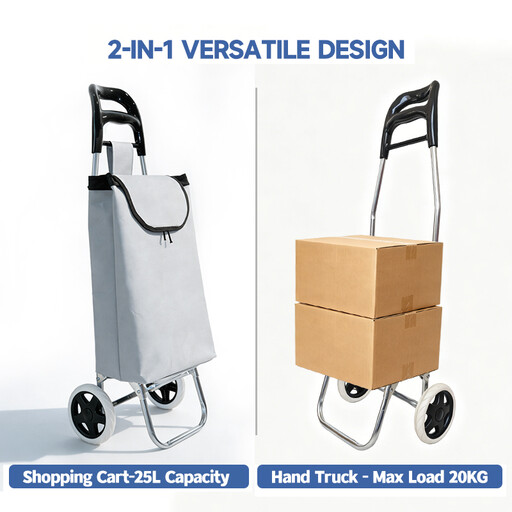
Why This Fits Their Persona: Its large-size folding format suits regular supermarket trips and daily errands when a compact, reusable alternative to disposable carrier bags is required.
The listed ergonomic handle and foldable design address two common issues: uncomfortable pulling and inconvenient home storage. Check the stated load limit before filling it.
Large-size basket, ergonomic handle and collapsible storage format.
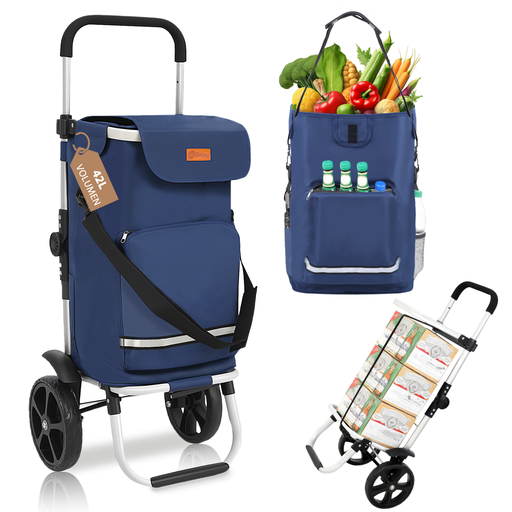
Why This Fits Their Persona: This suits shoppers who want one trolley for groceries, chilled items, picnics and occasional load carrying.
The listing gives specific figures: 43-litre capacity, 35 kg maximum load and 3.8 kg product weight. This makes comparison more straightforward than relying only on “large capacity” wording.
Aluminium frame, integrated cooler compartment, adjustable handle, shoulder bag and lashing strap.
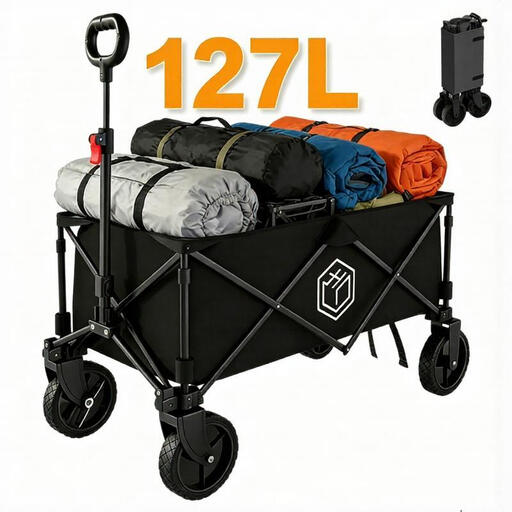
Why This Fits Their Persona: Its larger format is aimed at camping, picnics, vending, beach trips, grocery runs and moving bulky supplies rather than only carrying a small supermarket shop.
The listing states both the 127-litre interior and 200 kg load capacity, helping distinguish it from smaller grocery trolleys. Users should still check terrain, braking and handling before loading heavily.
Collapsible construction, dual brake, 360-degree swivel wheels and heavy-duty steel tubes.
We have compiled a complete, real-time list of products that fully satisfy these strict selection criteria and UK safety regulations.
It can be, provided the handle height, trolley weight and wheel movement suit the user. Look for an ergonomic or adjustable handle, a stable base and a clearly stated load limit. A lighter aluminium model may be easier to manoeuvre, while a large steel cart could become difficult to control when fully loaded.
Lifespan depends on load frequency, storage conditions, wheel wear and how often it is used on uneven ground. Do not exceed the specified capacity. Wipe fabric and frames clean, keep the trolley dry before folding and check wheels, fasteners and locking mechanisms regularly.
Most manual folding shopping trolleys have no electrical running costs. Routine care generally involves cleaning, drying and checking the wheels and frame. Replacement parts, if available, vary by product, so review the retailer’s warranty and returns information before purchase.