
24/7 Customer Support

Free returns

Same-day & Next-day Delivery

Quality Guaranteed

Unlock Your Welcome Offers: FREE Delivery | Up to 80% OFF | Free 30-day JoyPlus trial
Download the APP
Foldable sunglasses can be useful for commuting, holidays and outdoor activities, particularly when a full-sized pair is inconvenient to carry. However, compact design alone does not guarantee comfortable wear, reliable UV protection or useful visibility behind the wheel.
The key is to look beyond appearance and check the lens specification, frame construction and folded dimensions before buying. This guide explains the main pitfalls and highlights suitable options for different UK lifestyles.
A very dark lens may reduce visible brightness without providing adequate ultraviolet protection. For everyday use, look for clearly stated UV400 protection, which refers to coverage of ultraviolet wavelengths up to 400 nanometres. A product listing should identify the UV specification rather than simply describing the lenses as “sun-blocking” or “high protection”.
UV protection is also different from glare reduction. Anti-glare sunglasses may use an anti-reflective coating to reduce reflections, but this does not automatically mean the lenses are polarised or suitable for every driving condition.
Some portable sunglasses rely on small hinges or complex folding points that may loosen with frequent use. Check the frame material, hinge design and care instructions. TR90 sunglasses are made from a lightweight thermoplastic material commonly used for flexible eyewear frames, although the material name alone does not guarantee long-term durability.
A compact pair should also unfold into a stable shape. Loose temples, uneven alignment or excessive pressure around the nose can make sunglasses uncomfortable during long journeys.
Marketing images can make sunglasses appear highly portable, but the folded thickness determines whether they will fit into a coat pocket, handbag, glove compartment or travel pouch. Check the folded dimensions where available, as well as the supplied case. A pair that folds flat but has no protection against keys, coins or other hard objects may develop scratches quickly.
For regular outdoor wear, prioritise a stated UV400 rating. This is especially important during bright UK summer days, winter driving and overseas travel. Look for clear information about the lens material and coating rather than relying on colour or price.
High-definition nylon lenses can offer a lightweight alternative to glass, but they still need careful handling. If the listing mentions a scratch-resistant or dual-layer coating, treat this as added protection against everyday wear—not as permission to store the sunglasses loose in a bag.
An anti-reflective coating can help reduce distracting reflections from pavements, vehicle interiors and other surfaces. The Beneunder FD421 listing specifies an OAR anti-reflective coating and a stated glare-reduction figure. These are product specifications supplied by the manufacturer, so buyers should still consider their own visual comfort and driving conditions.
For driving sunglasses, select a lens tint that preserves useful contrast and does not make it difficult to see road signs, cyclists or changing light levels. Sunglasses should not be worn in low-light or night-time conditions unless specifically appropriate for that situation.
Lightweight sunglasses are more comfortable when worn for several hours. The FD421 is listed at 26g, with a tri-fold design that reduces its thickness to approximately 35mm when folded. Its listed frame width is 5.71 inches, with a 0.63-inch bridge width.
Always compare these measurements with a pair you already own. “Oversized” frames may provide broader coverage, but they can feel loose on smaller faces or interfere with hats and headphones. Check the returns policy and avoid forcing the hinges during folding or unfolding.
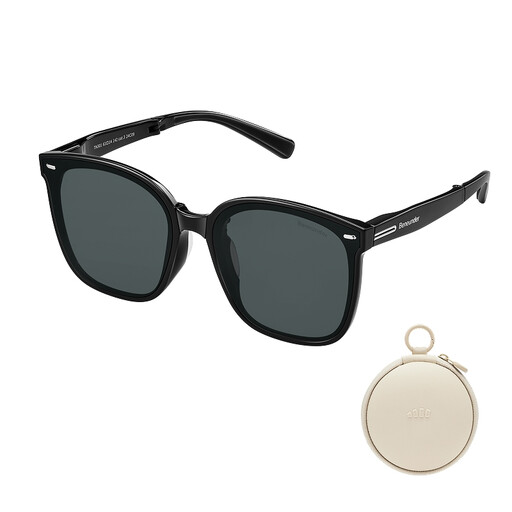
Why This Fits Their Persona: A practical choice for shoppers who want one compact pair for commuting, holidays and everyday outdoor use without carrying a bulky case.
The listing provides specific UV400, weight and folded-thickness information instead of relying only on vague portability claims.
TR90 frame, 26g listed weight, tri-fold design and blush-toned frame with UV400 nylon lenses.
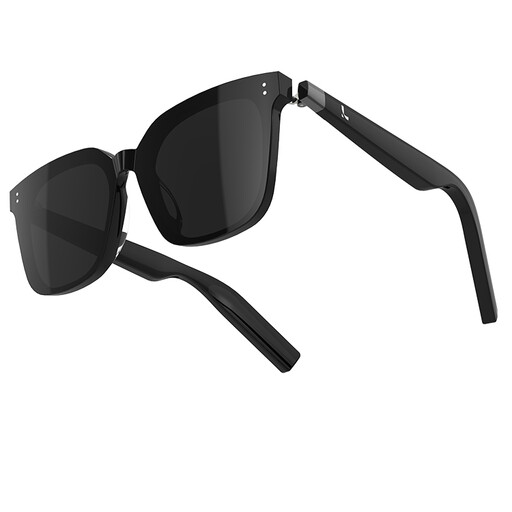
Why This Fits Their Persona: Suits commuters and travellers who want eyewear combined with hands-free audio and phone connectivity, rather than a conventional pair alone.
Its listed specifications separate the eyewear features from the electronic functions, making it easier to assess whether the added technology is genuinely useful.
Listed 33g weight without lenses, TR90 temples, prescription-lens compatibility and Bluetooth 5.3 connectivity.
Why This Fits Their Persona: Designed around compact storage and glare-conscious outdoor use, making it suitable for drivers who keep sunglasses in a vehicle or travel bag.
The specified anti-reflective coating addresses reflections, while the supplied case and scratch-resistant coating help with repeated transport.
Listed OAR anti-reflective coating, dual-layer protective coating, oversized lenses and a slim folded profile.
We have compiled a complete, real-time list of products that fully satisfy these strict selection criteria and UK safety regulations.
They can be suitable for daytime driving when the lenses provide clear vision, appropriate tint and stated UV protection. Anti-glare coatings may reduce reflections, but they do not remove every source of distraction. Avoid wearing tinted sunglasses in poor light or at night, and choose a secure fit that does not slip while driving.
Lifespan depends on hinge quality, storage and handling. Frequent folding places more stress on the temples than a fixed frame, so careful use and case storage matter. Scratch-resistant coatings can help with everyday marks, but they are not completely scratch-proof.