
24/7 Customer Support

Free returns

Same-day & Next-day Delivery

Quality Guaranteed

Unlock Your Welcome Offers: FREE Delivery | Up to 80% OFF | Free 30-day JoyPlus trial
Download the APP
A foldable utility trolley can make camping trips, grocery runs, gardening jobs and household organisation considerably easier. However, product listings often focus on capacity or attractive styling while leaving out the details that affect everyday usability.
The wrong trolley may be difficult to steer when loaded, awkward to store or unsuitable for the surfaces around your home. Before buying, check these common pitfalls and compare the features that matter most for UK use.
A large litre figure does not always mean the trolley will comfortably carry bulky or heavy items. Some descriptions may also mention a “stackable capacity”, which should not automatically be treated as the usable interior volume for one load.
Think about what you normally transport:
Check the stated capacity, dimensions and maximum load separately. A trolley with more volume is not necessarily appropriate if its frame or wheels are not designed for heavier contents.
Small indoor casters can be suitable for a bathroom or kitchen but may struggle on grass, gravel or paving. Conversely, larger off-road wheels can take up more storage space and may be less convenient in narrow hallways.
A collapsible camping wagon should have wheels suited to outdoor surfaces, while a rolling storage trolley for indoor use should turn smoothly in confined spaces. Brakes are also important if you regularly stop on a slope, near a kerb or on a slightly uneven floor.
Look for clear information about:
A trolley may be described as foldable but still occupy considerable space when folded. Before ordering, check the folded dimensions and whether the handle, wheels or fabric compartment remain exposed.
A useful folding mechanism should be straightforward to operate without forcing joints or trapping fingers. For safety, keep hands clear while opening or closing the frame, and store the trolley securely away from children when not in use.
The load rating is one of the most important specifications for a heavy-duty utility cart. Do not confuse the maximum supported weight with the volume rating. A large-capacity folding wagon can hold plenty of equipment but may still be unsuitable for dense items such as tools, drinks or paving materials if the load rating is low.
Steel frames generally provide a firm structure, although the overall durability also depends on the joints, base, stitching and wheel attachment points. If the product uses fabric, check whether it is described as reinforced or abrasion-resistant. A 600D Oxford cloth body, for example, is a useful objective indicator of fabric weight and construction, but it does not remove the need to follow the stated load limit.
For outdoor transport, wider wheels with a suitable tread can make movement easier across grass, gravel and compacted paths. A portable camping cart with off-road PVC wheels may be more appropriate for picnics or beach equipment than a narrow indoor organiser.
For indoor use, four 360-degree swivel casters can make a wheeled storage cart easy to reposition around furniture. Lockable casters help prevent unwanted movement when the trolley is being used as stationary shelving.
Stability also depends on how weight is distributed. Place heavier items low and keep the load within the manufacturer’s stated limit. Avoid pulling a heavily loaded trolley quickly over kerbs or steps unless the product specifically supports that use.
A 3-tier metal trolley is useful where visibility and quick access matter more than a fully enclosed compartment. Open mesh shelves can suit bathrooms, kitchens, salons, craft areas and offices because items remain visible and air can circulate.
A fabric wagon is generally more suitable for large, irregularly shaped items. Consider whether you need:
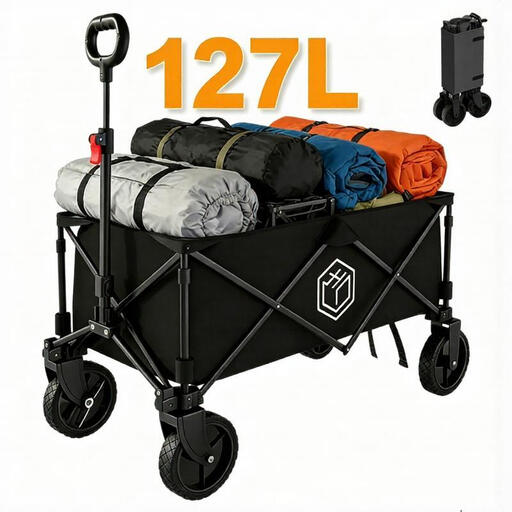
Why This Fits Their Persona: A practical option for shoppers who want one foldable trolley for groceries, picnics, moving smaller loads and occasional outdoor trips without choosing a very large wagon.
Its stated 127L capacity and foldable construction are presented alongside a 200kg load capacity, making it easier to compare volume and weight rather than relying on one headline figure.
Foldable format, 360-degree swivel wheels, dual brakes and a spray-painted steel tube frame.
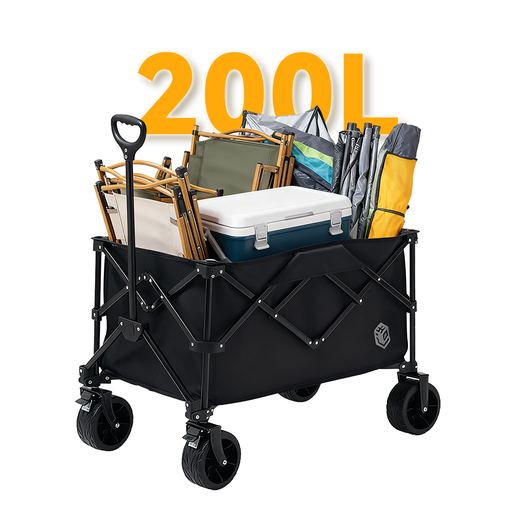
Why This Fits Their Persona: Suitable for households that regularly carry bulky camping equipment, picnic supplies, gardening items or beach gear and have enough storage space for a larger folded wagon.
The specification identifies a steel frame, 600D Oxford cloth and off-road PVC wheels, while also stating the 200L capacity. These details give more context than capacity alone.
Large 200L compartment, off-road wheels, double brakes and no assembly required.
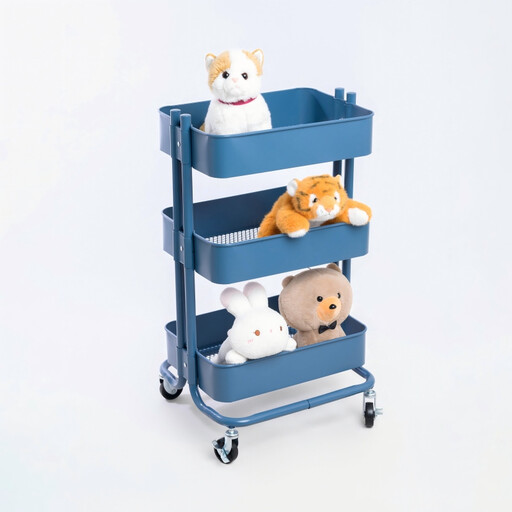
Why This Fits Their Persona: A strong match for home organisers, salons, offices and kitchens where smaller items need to remain visible, separated and easy to move between rooms.
The three-tier layout avoids placing all items in one deep compartment, while lockable casters address the problem of a trolley rolling away when parked.
Heavy-gauge steel mesh, three open shelves, four swivel casters and two lockable wheels.
We have compiled a complete, real-time list of products that fully satisfy these strict selection criteria and UK safety regulations.
It can be, provided the wheels, handle and load rating match your route. For pavements, supermarket trips and short journeys, a folding shopping trolley with swivel wheels may be convenient. If your route includes kerbs, gravel or grass, choose a model with wheels described for outdoor or off-road use. Always check the folded size before taking it on public transport or storing it in a car.
Lifespan depends on frequency of use, load distribution, terrain and storage conditions. Do not exceed the stated load limit, drag the trolley over obstacles or leave fabric and metal parts exposed to persistent damp. Wipe surfaces with a damp cloth, avoid harsh chemicals and store the trolley in a dry place. These steps can help reduce corrosion, fabric wear and wheel damage.
Most manual trolleys have no electricity or fuel costs. Ongoing expenses usually relate to cleaning, wheel replacement or occasional hardware maintenance. A trolley used outdoors may require more frequent cleaning than an indoor 3-tier organiser. Engaging the brakes when parked and avoiding overloading can also reduce unnecessary stress on the wheels and frame.