
24/7 Customer Support

Free returns

Same-day & Next-day Delivery

Quality Guaranteed

Unlock Your Welcome Offers: FREE Delivery | Up to 80% OFF | Free 30-day JoyPlus trial
Download the APP
A pair of foldable UV400 sunglasses can be useful for commuting, holidays and everyday outdoor use, particularly when space is limited. However, compact designs vary considerably. A low-quality hinge may loosen, lenses may create distracting reflections, and a fashionable frame may not suit your face or driving position.
Joybuy’s Product Recommendation Officer has filtered the practical details that matter most, so you can compare products without relying on vague marketing language.
A dark tint does not automatically indicate adequate ultraviolet protection. Look for a clearly stated UV400 rating, which refers to protection against ultraviolet wavelengths up to 400 nanometres. The product listing should also provide material and coating information rather than simply describing the lenses as “sun blocking”.
For UK shoppers, check the product page for compliance information, supplier details and care guidance. Sunglasses should not be used for direct solar viewing, including eclipse observation.
“Foldable” can mean anything from a frame that folds once to a multi-fold construction that fits into a small case. If you carry sunglasses in a cross-body bag, coat pocket or cabin luggage, compare the folded thickness and weight as well as the open frame dimensions.
A compact pair that is awkward to unfold or has exposed lenses may be less convenient in daily use. A protective case and a soft cleaning cloth are useful additions for frequent travellers.
Anti-glare sunglasses and polarised sunglasses are not necessarily the same. An anti-reflective coating can reduce reflections from the lens surface, while polarised lenses are designed to filter certain reflected light. Check the product specification to see which technology is actually included.
For sunglasses for driving, glare reduction can be helpful in bright conditions, but the lenses should not make traffic signals, road signs or changing light difficult to see. Avoid very dark lenses at night or in low-light conditions.
The central specification is UV400 protection. Nylon and polycarbonate lenses are commonly used in lightweight sunglasses because they can reduce overall weight and offer impact resistance compared with traditional glass.
Several products below use high-definition nylon lenses. Their listings state UV400 protection and provide numerical coating information. Treat those figures as product specifications, not as a medical or therapeutic guarantee.
TR90 sunglasses use a thermoplastic frame material valued for flexibility and low weight. It can be a practical choice for foldable designs because the frame needs to tolerate repeated opening and closing. Nevertheless, TR90 does not make a frame indestructible. Hinges should still be handled gently and stored away from heavy pressure.
Look for additional fit features such as soft temple pads, flexible hinges or adjustable nose pads. These can make a noticeable difference during long walks, driving or rail journeys.
Measure or compare the frame width, bridge width and temple length against sunglasses you already find comfortable. Oversized sunglasses may provide broader visual coverage, but a wide frame can feel loose on a narrow face or interfere with hats and headphones.
Cat-eye designs often have a more distinctive outline, while Boston-style frames tend to offer a rounded, adaptable appearance. Consider the lens height too: a shallow lens may leave more light entering from above or below, depending on the fit.
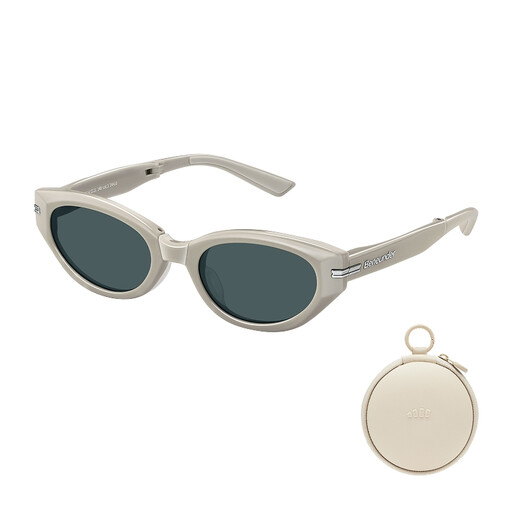
Why This Fits Their Persona: A practical entry point for commuters and occasional travellers who want a compact frame with a cat-eye shape and a neutral grey-brown colourway.
The listing identifies UV400 protection, an OAR anti-reflective coating and a foldable TR90 frame rather than relying only on a dark lens or style description.
Air-cushion nose pads, soft temple pads and five-point elastic hinges are specified for a more secure fit.
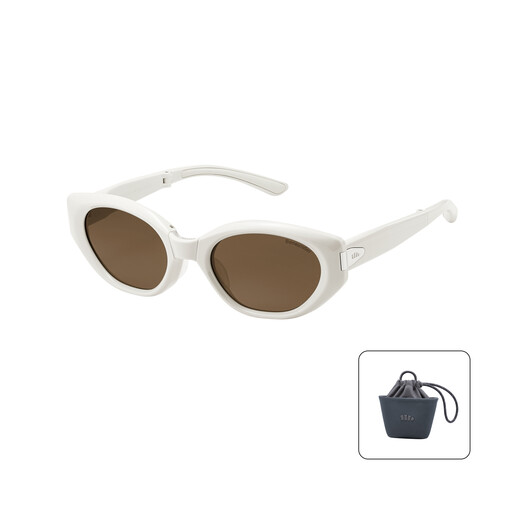
Why This Fits Their Persona: Suitable for shoppers prioritising adjustable comfort, lens coatings and a polished style for regular everyday wear.
The specification lists UV400, anti-reflective, oleophobic and scratch-resistant coatings, helping buyers distinguish documented features from general claims.
The listed weight is 0.97 oz, with three-position adjustable temples and dual-axis butterfly nose pads.
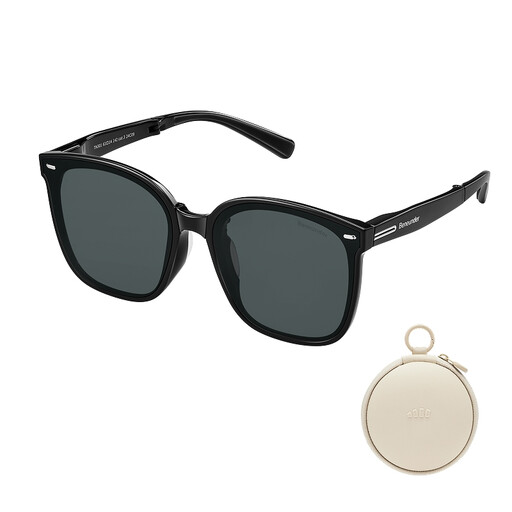
Why This Fits Their Persona: Designed for people who want broad oversized coverage and a compact pair for driving, holidays, daily walks and commuting.
The product details specify a tri-fold design, a folded thickness of 35 mm and a weight of 26 g, making portability easier to assess before purchase.
The listing states UV400 nylon lenses, OAR anti-reflective coating and a frame width of 5.71 inches.
We have compiled a complete, real-time list of products that fully satisfy these strict selection criteria and UK safety regulations.
They can be suitable for daytime driving when the lenses provide clear vision and an appropriate tint. Check for reflections, distortion and fit before driving. Sunglasses should not be worn in darkness or conditions where they reduce visibility, and they should not replace prescription eyewear where that is required.
Lifespan depends on hinge use, storage, lens care and exposure to heat or pressure. A TR90 frame may tolerate regular folding, but repeated force can still loosen hinges. Keeping the pair in a case and cleaning it correctly can help preserve the frame and coatings.
Some models use anti-reflective coatings, while others use polarised lenses. These technologies should not be treated as identical. Read the individual specification to confirm whether the pair offers anti-reflective, polarised or both types of glare-related lens technology.